
Classification of poultry breeds and characteristics of laying hens
6 min read
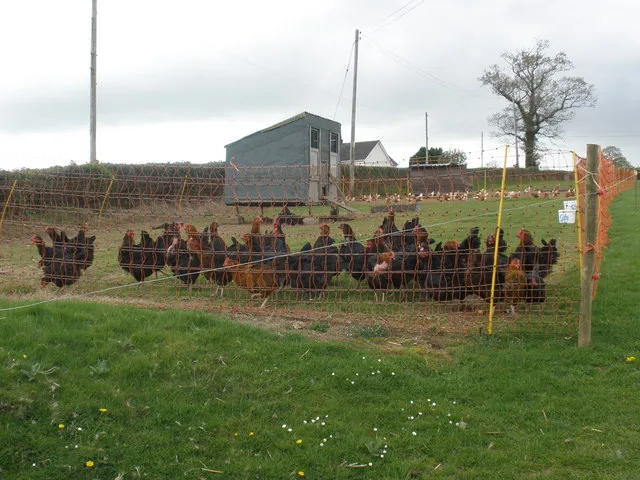
Classification and characteristics of poultry
Chicken breeds, as suggested by Academician M. F. Ivanov, are classified according to their productivity type (egg-laying, meat, and dual-purpose; now egg-laying are called egg-type, and dual-purpose are called meat-and-egg type), as well as the country or major region where the breed was developed (for example, Mediterranean, Asian).
Main duck breeds are divided into meat, meat-and-egg, and egg types. All breeds of geese and turkeys belong to the meat type.
Within a breed, poultry varies significantly in productive qualities. For instance, some meat-and-egg chicken breeds possess more pronounced signs of meat productivity, while others incline toward the egg type. Breeds are best adapted to the conditions in which they were developed and for which they are primarily intended to be raised.
Egg-type chicken breeds
Leghorn. This breed is of a specialized egg-laying productivity type. It was developed in the USA, where over 100 years ago, local light chickens with white, brown, and black plumage were imported from Italy. As a result of long-term breeding work using ever-improving selection methods, the most widespread high-productivity breed in many countries of the world was created, which is economically efficient for egg production.
The spread of Leghorns across different continents and selection, which varied somewhat in direction and methods, combined with the influence of environmental conditions, led to the development of lines that are differentiated by productive qualities. Breeding material of this breed (hatching eggs and day-old chicks) has been repeatedly imported into our country from the USA, Canada, and other countries.
Leghorns have a delicate, dense constitution. The head is light, wide, and deep with a large leaf-shaped comb; the neck is fairly long and thin; the back is long and wide; the tail is raised and well-feathered; the abdomen is voluminous; the shanks are quite thin; the skin has a yellowish tint. In young hens, the beak and shanks are yellow; the plumage is dense and white. Birds with other plumage color variants have no industrial significance.
| Indicator | Weight (kg) / Egg production |
| Hen weight | 1.8 kg |
| Rooster weight | 2.5 kg |
| Egg production | 200—240 eggs |
Chickens do not brood; mobility and viability are high.
About 200 eggs or more. Chickens do not brood, which contributes to their high, steady egg-laying. Egg weight is 58—65 g.
Crossbreeding lines of Russian White chickens with lines of other breeds selected for egg production makes it possible to obtain hybrid layers that exceed the birds of the original breeds and lines in productive qualities and viability. The Russian White chicken breed is significant for preserving the genetic diversity of the domestic poultry breeding stock as one of the conditions for improving breeds and obtaining high-productivity hybrid layers. Work on improving this breed is carried out by breeding farms in various zones of our country.
Meat breeds and breed groups of chickens
Cornish (Cornish chickens). The breed was created based on the selection of Indian game chickens in England and the USA. Their body is massive. The chest is wide and deep; the muscles of the chest and legs are strongly developed. The head is very deep and wide with a pea-shaped comb and a thick, short beak. The shanks are thick and yellow. The plumage is fairly dense. Cornish with dominant white plumage are of the greatest importance.
| Indicator | Value |
| Hen weight | 3—3.5 kg |
| Rooster weight | 4—4.5 kg |
| Egg production | 110—130 eggs |
Cornish are widely used for broiler production as the paternal line when crossbreeding with White Plymouth Rocks. Game breeds of chickens were used.
Fig. 23. Cornish breed chickens. Fig. 24. White Plymouth Rock breed chickens.
in the development of Cornish of ancient origin. Game chickens are distinguished by a strong build, wide chest, and muscular legs with large, strong spurs. Their body is upright, and the head is wide with a strong beak. The neck musculature is highly developed.
Plymouth Rock. The breed was created in the USA in the second half of the last century through reproductive crossbreeding. Despite the fact that different breeds were used during development to obtain birds with various plumage colors, all varieties have much in common in terms of body type and conformation.
Plymouth Rock is a large bird. Its body is massive and oval-shaped. The head is large with an upright small leaf-shaped comb. The legs and beak are yellow. In the most common varieties, the plumage is white. Besides white Plymouth Rocks, there are varieties with other plumage colors; among them, barred Plymouth Rocks have become the most widespread. These and other varieties with colored plumage are inferior to White Plymouth Rocks in meat qualities and commercial conditions of feathers and down and have no industrial significance.
White Plymouth Rock hens weigh 2.7–3.4 kg, cocks — 3.6–4.3 kg. Egg production is 160–180 eggs, with the best layers producing over 200 eggs. White Plymouth Rocks are the primary breed used for broiler production. Interline hybrids from Plymouth Rock maternal lines and Cornish paternal lines grow rapidly and utilize feed efficiently; the carcasses and meat are of high quality. In our country, they are bred in many pedigree farms.
Adler Silver. This breed group was developed at the Adler poultry farm by crossing Russian White hens, New Hampshires, Plymouth Rocks, and Yurlov Crowers, followed by selection and culling of the best crossbred poultry and subsequent breeding "in-itself".
The bird is quite large, with well-developed breast and leg muscles, a broad back, and small wings and tail. The comb is leaf-shaped; the plumage is white, the hackle feathers are black with a light border, and the primary and tail feathers are black. Hens weigh 2.6–2.8 kg, cocks — 3.3–3.5 kg. Egg production is about 200 eggs. Egg mass is 58–62 g. Chicks grow and feather quickly. Adler hens can be used as a maternal form when crossing for broiler production. They are bred at the Adler poultry farm and other farms.
Kuchinskaya Jubilee hens. This breed group was developed at the "Kuchinsky" pedigree farm. To create it, crossbreeds of various breeds (Plymouth Rock, Rhode Island Red, New Hampshire, Australorp, Leghorn) were used with the application of introgressive crossing with Livny cocks.
Kuchinskaya hens have a broad and deep chest; a long and broad back; and a rather short and thick neck. The head is broad and deep with a small leaf-shaped comb. The plumage is rather loose, the feathers are yellowish with dark speckles on the golden hackle, the end of the tail
Fig. 25. Kuchinskaya Jubilee breed hens, black. The cocks have red plumage, black chests and tails, and golden hackles. Kuchinskaya hens are large. Hens weigh 2.8–3.5 kg, cocks — 3.8–4.5 kg. Egg production is 180 eggs, with the best hens producing 250 eggs or more. Egg mass is 58–62 g. Young stock grows rapidly. Experiments have shown that broilers obtained by crossing Kuchinskaya hens with Cornish and other breeds yield a lot of meat and demonstrate high feed conversion efficiency. This breed is raised at the "Kuchinsky" pedigree farm in the Moscow region.
Read next
Poultry For agronomists
Main meat-type duck and turkey breeds for poultry farming
Poultry For agronomists
Main meat breeds and breed groups of ducks and geese
Poultry For agronomists