
Optimal conditions for keeping laying hens and stocking density rates in cages
16 min read
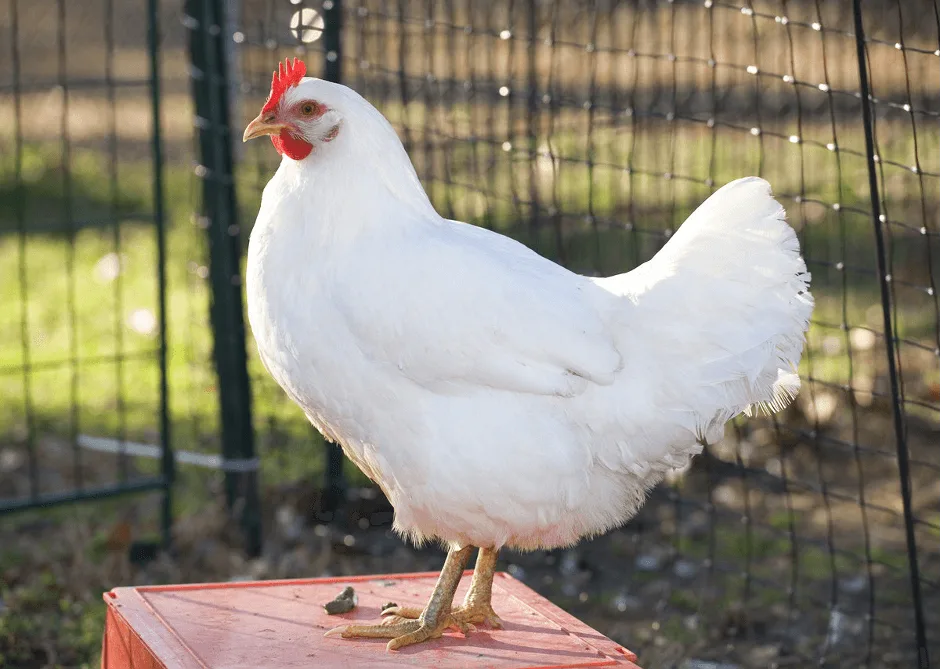
[| When organizing the housing for cage layers, it is necessary to create conditions that ensure high egg production, survival of the livestock, efficient feed utilization, and improved egg quality. This is achieved by adhering to a set of conditions, including appropriate placement of the birds in cages, air exchange in the facilities, air temperature and humidity regimes, lighting schedule, care for the birds, and balanced feeding. | Using a special system for assembling the layer flock ensures uniform production throughout the year.
Placement of hens in cages. [Replacement pullets are transferred to the adult flock at the age of 5 months, but they must be placed in layer cages before the onset of egg production, no later than at the age of 140 days. Transplanting pullets that have started laying from one facility to another causes a drop in productivity and even molting, which entails a temporary cessation of egg laying. '
At some poultry farms, it is customary to place replacement pullets in cages for layers at the age of 120—125 days. As studies conducted at VNITIP have shown, pullets adapt more easily to changes in conditions at an earlier age. 'At the Borovskaya poultry farm in the Tyumen region, at the poultry farms of the Bratsevskoye production association in the Moscow region, and in a number of other farms, layer cages were retrofitted to accommodate pullets as early as 60—70 days old and leave the birds in the same cages until the end of their use. This method of housing has a positive effect on productivity and survival of hens, but its disadvantage is that all mechanisms intended for egg collection remain unused for a long time.
The stocking density of caged layers is determined by the number of hens in one cage and the cage area per bird (or the number of birds per 1 m² of cage area); in addition, the length of the feeding front must be taken into account.
The choice of optimal stocking density is of great economic importance. With more spacious placement, egg production is usually higher than with a higher stocking density. Increasing the stocking density up to certain limits contributes to an increase in egg production per cage or per bird place. However, further increases in stocking density can have a negative effect on egg production and survival of the birds, which leads to a decrease in the total egg collection. In practice, one should determine the stocking density of layers that would ensure maximum egg production with the lowest costs. =
Experiments conducted at VNIIPP have shown that the influence of stocking density on hens varies depending on the number of birds in the cage: larger groups make it possible to increase stocking density. For example, when placing 3 hens in a cage, the average area per bird should be larger than when placing 10 hens in one cage. The stocking density of hybrid layers of different crosses also varies slightly. For heavier layers, the stocking density should be slightly lower than for lighter ones.
Although there are experimental data indicating the possibility of obtaining good egg production with a cage area averaging 350 cm² per layer or less, it is still not recommended to place caged layers based on a cage area of less than 400 cm² per bird. The length of the feeding front per layer should be. я #0 %в ‚Ventilation and temperature regime. The normal temperature in facilities for caged layers is considered to be 16-18°C with a relative air humidity of 60—70%.] In the hot season, especially in the southern regions of the country, it is practically impossible to maintain the temperature in the poultry house at the indicated level, and even with good ventilation and cooling of the incoming air, the temperature in the poultry houses slightly exceeds 20° C. At the Tashkent poultry farm, with an outside air temperature of 40° C and humidity of only 22—32%, it was possible to maintain the air temperature in the room for layers within 26° C and air humidity at 55—60% using air conditioners, which had a positive effect on the productivity and survival of the birds. |
At low outside air temperatures, the proper temperature regime in the room is created through heating and warming the incoming air. The proper operation of the ventilation system is of decisive importance for the normal life activity of hens under cage housing; even short-term interruptions in the operation of fans can cause a decrease in productivity and bird mortality. Table 39 shows the fresh air intake rates that are used when calculating the ventilation system.
Table 39. Estimated amount of fresh air supplied to facilities for caged layers (m³ per kg of livestock animal live weight per hour)
Design winter air temperature (°C) Period of the year —10 —15 —20 | —25 | —30 —40 Cold 1.8 1.6 1.5 1.4 1.4 1.4 Transitional 3.8 3.8 3.8 3.8 3.7 3.6 Warm 5.0 4.9 4.9 4.7 4.7 4.1 or longer or shorter stable lighting! Reduction of the lighting duration is allowed only in case of induced molting.
The lighting regime for laying hens is adjusted according to the age of the bird. The starting duration of daylight must correspond to the one at which the rearing of replacement pullets was completed. Subsequently, the day length is gradually increased.
Lighting regimes in different types of poultry houses
In windowless poultry houses, the lighting regime is regulated according to one of two schemes. The choice of scheme depends on the cross of the bird and its current productivity. If by 15 months the egg production of the hens remains high, there is no need to extend the day length beyond 18 hours. For some crosses, the maximum lighting duration can be limited to 16 hours. The day length can be increased once a month by 1 hour at once or weekly by 15 minutes.
| Age of bird, months | Option I of day length, h-min | Option II of day length, h-min |
|---|---|---|
| 5–5.5 | 8–30 | 8–30 |
| 5.5–6 | 9–00 | 9–00 |
| 6–7 | 9–30 | 9–30 |
| 7–8 | 10–00 | 10–00 |
| 8–9 | 11–00 | 11–00 |
| 9–10 | 12–00 | 12–00 |
| 10–11 | 13–00 | 13–00 |
| 11–12 | 14–00 | 14–00 |
| 12–13 | 15–00 | 15–00 |
| 13–14 | 16–00 | 16–00 |
| 14–15 | 17–00 | 17–00 |
| 15–16 | 18–00 | 19–00 |
| 16–17 | 18–00 | 21–00 |
| 17–18 | 18–00 | 23–00 |
In poultry houses with windows, managing lighting is more difficult, as it is necessary to take into account the geographical latitude, the time of hatching, and the natural day length. If the start of egg-laying coincides with the first half of the year, when the day is increasing, layers are kept under natural light until it begins to shorten. Then, artificial supplementary lighting is connected to maintain or gradually increase the day length. If the sexual maturity of pullets falls on the second half of the year (a period of shortening days), additional lighting is applied from the first months of egg-laying.
A differentiated lighting regime based on the bird's age has proven its effectiveness in practice. In experiments, a group of 22,604 layers kept under the experimental scheme produced 3.01 million eggs, of which 1.79 million were category I eggs. In a control group of equal size under the old lighting scheme, 2.77 million eggs were collected, including 1.32 million category I eggs. The introduction of the new regime allowed for an increase in total egg collection by 8.7% and improved the yield of category I products by 35.6%.
Illumination control in cages and culling rules
When keeping layers in multi-tier batteries, it is important to achieve even light distribution across all cages. Excessive brightness is as harmful to the bird as a lack of lighting. According to practical tests, the average egg production of hens in cages with an illumination of 18–65 lux was 217 eggs. In more brightly lit cages (92–163 lux), this figure dropped to 207 eggs.
Bright lighting of cage batteries (200 lux and above) is especially dangerous in the first months of egg-laying. It triggers feather pecking in the birds.
- Normal illumination at the feeder — 10–70 lux
- Dangerous illumination threshold — more than 200 lux
- Increase in egg collection in experiments — 8.7%
- Increase in category I egg yield — 35.6%
Basic care for layers in mechanized and automated cage batteries boils down to monitoring equipment operation, maintaining sanitation, and timely removal of weak individuals. Regular culling allows for increasing the average herd productivity, improving feed conversion, and reducing production costs. At the same time, it is important to avoid unnecessary disturbance to the birds.
Do not perform mass sorting of layers in cages. Unnecessary disturbance to the birds leads to a decrease in egg production. Limit yourself to careful targeted culling of weak individuals.
Culling of birds should be targeted, assessing external signs that change depending on the physiological state and productivity. Layers showing signs of external depression or refusing feed are subject to inspection. During the examination, the following indicators are evaluated:
- pigmentation of the comb, wattles, beak, and legs;
- molting activity;
- condition of the abdomen and pubic bones;
- refusal of feed and general depressed state.
As the flock ages, the number of hens to be culled naturally increases. The maximum permissible percentage of forced and zootechnical culling is determined individually for each farm. If actual culling exceeds this standard, it is necessary to promptly check the quality of feed, rations, and microclimate parameters.
To monitor the condition of the birds and their feeding, control cages are designated in work areas. Hens from these cages are weighed monthly to determine the average bird weight. Up to the age of approximately 10–12 months, the bird's live weight gradually increases, and then it remains more or less stable. Significant changes in weight, both in terms of increase and decrease, primarily indicate errors in feeding. Cage batteries and the premises must be kept clean. After the cages and premises are emptied of birds, they are cleaned, washed, and disinfected, following the instructions of veterinary staff. Caged layers are generally used for egg production during the first year of laying. However, in some cases, for example, due to a shortage of replacement pullets, caged layers are also kept during the second year of laying. In this case, to increase the intensity of egg production and improve egg quality, the hens are subjected to induced molting, the technique for which does not differ from that used for parent stock hens (see page 160).
| Year-round stocking of laying hens. A feature of large poultry farms is the uniform production of products throughout the year, which is achieved by multiple stocking of laying hens. | The flock size of each individual batch of layers gradually decreases from the day of its stocking (at 5 months of age) as a result of mortality and culling of the birds. Usually, 70–80% of the hens remain from the initial number of layers by the end of the laying cycle. The intensity of egg production in hens also decreases with age. As a result, the total egg collection from each batch of layers gradually decreases.
‚ For ensuring uniform egg production, the flock of layers must be replenished several times a year. The method of year-round stocking of a layer flock, developed in the early 1940s by S. I. Smetnev, forms the basis of the technological process for egg production at poultry farms.
When stocking a layer flock, the same principle is observed as that applied during the rearing of young birds: each batch of birds is received in a separate, previously completely emptied, cleaned, and disinfected poultry house or building hall. After the established period of use of the layers is over, all remaining hens are sent for slaughter and the premises are vacated. The preventive downtime in the use of the premises must be at least 20 days. The larger the poultry farm, the more rhythmically the production process can be organized.
The main indicators characterizing the egg production of hens and egg output. The main indicator characterizing the egg production of hens is the egg production per average layer, which is determined by the ratio of total egg collection to the average flock size. This indicator largely depends on the degree of culling of the birds. Therefore, it is useful to supplement it with the indicator of egg production per initial layer, which is determined by the ratio of total egg collection to the initial flock size. This indicator is applicable to individual batches of layers; it is especially important to use it in experimental work. Egg production per initial layer depends on the intensity of egg production and flock survival. In practical work, it is of great importance to determine egg production per bird place. To calculate this, the total egg collection over a period (usually a year) is divided by the total number of bird places in the given department. But when young birds are received into a layer department long before the start of laying, it is also advisable to determine an indicator such as the utilization of bird places. It is calculated as the ratio of the average flock size of all birds in the given department to the total number of bird places, expressed in percent. For the analysis of production efficiency, it is essential to determine the turnover of the layer flock: the total number of incoming 5-month-old pullets divided by the average flock size of layers. With an equal number of replacement pullets accepted for stocking, this indicator will be higher the more significant the bird culling is. When planning egg production at a poultry farm, the maximum permissible flock turnover is specified.
Standards for culling and egg production of layers. Culling and the level of egg production of layers depend on many factors: the cross used, conditions of feeding and maintenance, etc. Therefore, there cannot be uniform standards for all farms. Taking into account the achieved level of bird productivity, approximate standards for culling and egg production of layers are developed, which are refined on farms depending on planned tasks and specific conditions.
Based on the standards presented in Table 41, Table 42 calculates the movement of the layer flock and egg production in a poultry house with a capacity of 30,000 hens. In this example, replacement pullets were accepted into the department at the age of 135 days in the middle of December of the previous year in the amount of 30.3 thousand birds. During December, 300 birds were culled, and on January 1, 30,000 birds were transferred to the layer group. At the end of the year, all remaining hens are sent for meat, and after a 20-day preventive break in the middle of January of the following year, a new batch of pullets is accepted into the poultry house.
Table 41. Approximate standards for culling and egg production of caged layers
5—6 100.0 1.5 1.50 99.6 6
6—7 98.5 1.5 1.52 97.7 16
7—8 97.0 1.5 1.55 96.3 21
8—9 95.5 1.5 1.57 94.7 24.5 -
9—10 94.0 1.5 1.60 93.5 24 10—11 92.5 1.5 1.62 91.7 23 1—2 91.0 2.0 2.20 90.0 21.5 12—13 89.0 2.0 2.25 88.0 20.5 13—14 81.0 3.0 3.45 85.5 19.5 14—15 84.0 3.0 3.57 82.5 11.0 15—16 81.0 3.0 3.10 79.5 16.5 16—17 78.0 78.0 100.00 63.0 15.5
Placement of 30.3 thousand pullets in a poultry house designed for 30,000 caged layers is entirely acceptable, as in this case, the calculated stocking density will be slightly exceeded in only a small number of cages. After culling the pullets, the stocking density is brought to the norm.
In our example, egg production per average layer amounted to 225 eggs, and egg production per initial layer was 199 eggs. Egg production per bird place in this case coincides with the egg production per initial layer, since on January 1, the poultry house was completely filled with layers. The utilization of bird places is 88.5%, which in this example also coincides with the average flock size of layers as a percentage of the initial flock size. The layer flock turnover was 1.13, or 113%. It should be borne in mind that while observing the same standards for the next year in the same premises, the indicators characterizing egg production and egg output will be slightly different, which is due to the preventive break and the maintenance of replacement pullets in the poultry house for 15 days.
Table 42. Livestock movement of poultry and gross egg yield in a poultry house for 30,000 poultry places
Stocking schemes. Production rhythm at poultry farms is ensured by a specific ratio between the capacity of rearing facilities and laying hen facilities. The technological schedule, which is drawn up for at least a year, specifies the duration of rearing young birds in each specific poultry house, the duration of the preventive break, the specific poultry house to which replacement pullets are transferred for laying, the period of laying hen usage, and the duration of the break in the laying hen facility.
For example, if replacement pullets are transferred to the laying hen facility at the age of 135 days, the duration of the so-called production cycle in the laying hen facility will be: rearing of replacement pullets 15 days, maintenance of laying hens 360 days (this period is determined by standards), and a break — 20 days, totaling 395 days. The production cycle in the rearing facility consists of the duration of rearing (in this case 135 days) and a break, which must be at least 20 days. If a break of 23 days is provided, the cycle will be 158 days. The ratio between the cycles in the laying hen facility and the rearing facility will be: 395: 158 = 2.5. It follows from this that under this technological scheme, for every five poultry houses or laying hen halls, there must be two premises for rearing young birds.
Each subsequent poultry house for caged laying hens is stocked with replacement pullets every 79 days after the previous one. For example, if pullets were received into poultry house No. | on January 1 from poultry house A of the rearing facility, then pullets will arrive in poultry house No. 2 on March 21 from poultry house B, in poultry house No. 3 — on June 8 from poultry house A, in poultry house No. 4 — on August 26 from poultry house B, and in poultry house No. 5 — on November 13 from poultry house A. Then again, but on January 31, poultry house No. | is stocked, and so on.
S.I. Smetnev 295 Other technological schemes are also possible, the choice of which depends on the availability of premises, the type of equipment, production targets, and other specific conditions.
Read next
Poultry For agronomists
Technological features of keeping laying hens in battery cages
Poultry For students
Technological systems for keeping poultry in industrial poultry farming
Poultry For agronomists