
Methodology for accelerated selection of promising cultivar-rootstock combinations for intensive horticulture
8 min read
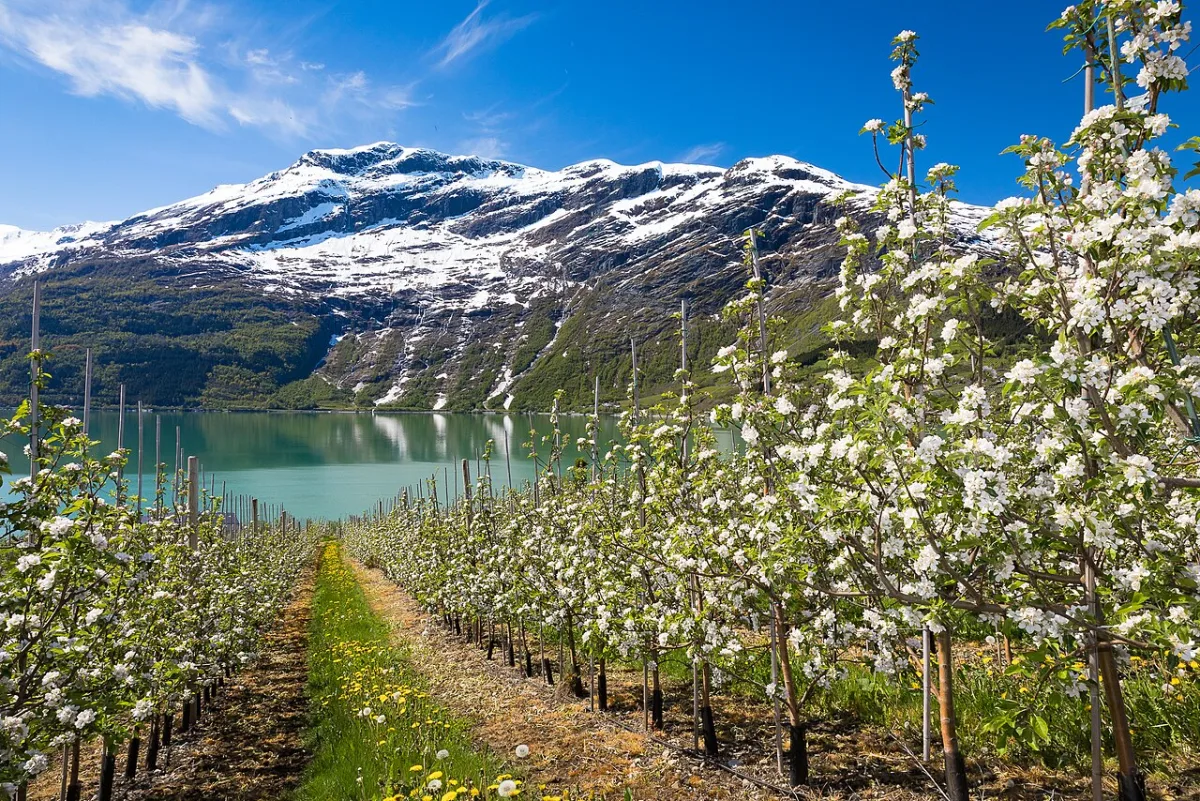
One of the ways to intensify the horticulture industry is the accelerated, targeted selection of the best scion-rootstock combinations in relation to specific soil and climatic conditions, cultivation technologies, etc.
Grafting combinations suitable for establishing intensive orchards, as is known, must be characterized by precocity, sufficiently high potential productivity, restrained growth, and responsiveness to intensive cultivation technology. To produce such nursery plants in specific environmental conditions, it is necessary to have a list of optimal combinations of fruit crop cultivars and rootstocks (from among those zoned and promising) that ensure the manifestation of these properties. Meanwhile, to assess the prospects of using grafting combinations in fruit growing, it has been customary to conduct long-term (15–20 years) field trials until now. In this regard, it seemed appropriate to determine reliable criteria for accelerated (within one year) selection of optimal scion-rootstock combinations.
As a result of research conducted in 1984–2013 in orchards of different ages fruit crops at the "Tsentralnoye" experimental farm of the North Caucasus Regional Research Institute of Horticulture and Viticulture, the "Kuban" training farm of the Kuban State Agrarian University, farms in the south of Russia, and under controlled conditions of a climatic chamber (temperature 25+2 °C, photoperiod 14 hours, illuminance 35,000 lux), the biological foundations for early diagnosis of the most important properties of scion-rootstock combinations were created. We have obtained data indicating the similarity in the direction and intensity of metabolic processes in the shoots and roots of a grafted fruit plant during all age periods. Thus, the possibility and validity of early (in the first year of life) diagnosis of the most important properties of grafting combinations have been theoretically proven.
Taking this position into account, diagnostic criteria have been established and methods have been developed for the early diagnosis of compatibility, potential productivity, and vigor of scion-rootstock combinations, as well as their responsiveness to mineral nutrition. The application of these criteria makes it possible to determine the prospects of grafting combinations for establishing intensive orchards within one year (rather than after 15–20 years, as was previously the custom). Such criteria are various biological parameters of the grafted plant that most accurately reflect its physiological state. For example, to forecast the potential productivity of fruit crop scion-rootstock combinations in their first year of life, we propose using indicators of photosynthetic activity, carbohydrate and nitrogen metabolism, as well as the absorptive activity of the roots of grafted plants. The accuracy of the early diagnosis of the potential capabilities of scion-rootstock combinations, performed in the first year of life, is confirmed by the actual productivity of the same combinations in the orchard.
According to the results of the rapid assessment, in the conditions of the Krasnodar Territory, for the Renet Simirenko apple cultivar, the best rootstock ensuring the highest productivity is M2; for the Korey cultivar, the SK1 and M7 rootstocks; for the Kuban cultivar (bred by SKZNIISiZ), M3 and SK1; for Florina, MM106 and SK2; for the Stanley plum cultivar, the AP-1 rootstock; and for the Ispolinskaya sweet cherry cultivar, VC-13.
The potential capabilities of the Stark, Lamburne, and Prima apple cultivars grafted on M9 and MM106 rootstocks are quite high.
Using early diagnostic methods allows for the selection of highly productive grafting combinations, as well as the culling of scion-rootstock combinations with low and medium productivity potential before they even reach the orchard.
Obviously, in intensive orchards with a high tree density on dwarfing and semi-dwarfing rootstocks, it is acceptable to use medium-productive scion-rootstock combinations as well. By increasing the number of trees per hectare, it is possible to achieve a high output of produce per unit area.
We have established an inverse relationship between the vigor of apple grafting combinations and their requirement for mineral fertilizer. The most responsive to mineral nutrition are low-growing cultivars on dwarfing and semi-dwarfing rootstocks. Based on the data obtained, an important practical conclusion was made regarding the prospects of cultivating low-growing apple scion-rootstock combinations using intensive technologies that involve the widespread application of chemical agents.
In accordance with the method we developed, for the early diagnosis of the vigor of grafting combinations (and, consequently, their responsiveness to mineral nutrition), it is advisable to determine the ratio of nucleic acids (RNA/DNA) in the tips of shoots.
Based on the results of a comprehensive rapid assessment in the conditions of southern Russia, the best apple grafting combinations suitable for establishing intensive orchards have been selected. These include, for example:
- Golden Delicious, Lamburne, Gala, and Red Melba cultivars on M9 rootstock;
- Aidared cultivar on M9, SK4 rootstocks, etc.
Currently, one of the priority areas of industry research in the Russian Federation is the creation of the scientific foundations for adaptive horticulture. According to Academician A. A. Zhuchenko (1994), the strategy of adaptive agricultural intensification is based on a more differentiated and integrated use of natural resources, the adaptive potential of cultivated plant cultivars, and technogenic factors. Special attention is paid to the ecologization of intensification processes through agro-ecological macro-, meso-, and micro-zoning of the territory, adaptive breeding, and the design of highly productive and ecologically sustainable agro-ecosystems and agrolandscapes.
Mistakes in selecting scion-rootstock combinations for an intensive orchard are costly: trees may freeze, suffer from drought, or provide a weak harvest due to nutrient deficiency. Traditional evaluation of nursery plants takes years, but modern express diagnostic methods allow for the prediction of plant resilience as early as the nursery stage. This helps agronomists select viable combinations for specific soil and climatic conditions in advance and save farm resources.
How to evaluate drought and frost resistance before orchard planting
The physiological state and potential of grafted plants are determined by specific biochemical and physical indicators. A unique laboratory analysis method has been developed for each type of stress. The results of such research allow for the rapid elimination of unstable variants.
| Type of resistance | Diagnostic method |
|---|---|
| Drought resistance | Electrical resistance of tissues in the middle part of the leaf blade |
| Resistance to early frosts | RNA/DNA ratio in apical buds of annual shoots |
| Resistance to low temperatures and recurring frosts | Fructose content in buds of annual shoots |
Based on the results of early drought resistance diagnostics, apple cultivar combinations that best tolerate soil moisture deficits have been selected. For establishing orchards in areas with long, arid summers, the following pairs are recommended: Korey/MM106, Liberty/MM106, Florina/MM106, Lambourne/SK1, Prima/SK1, and Slava Pobeditelyam/M3. These plants maintain high productivity even under reduced soil moisture conditions.
For high-risk farming zones, the frost resistance of cultivars during the dormant period is critical. High resistance to low negative temperatures is shown by the apple cultivars Kalvil Snezhny and Zimnee MOSVIR on cultural apple seedlings. In southern regions, promising cultivars such as Alenushkino, Kuban-spur, and Renet Kubansky on the MM106 rootstock demonstrate good potential winter hardiness. The reliability of this express method has been confirmed by practical experience: during the severe winter of 1993/94, seven-year-old trees of these cultivars sustained minimal damage.
| Cultivar (on MM106 rootstock) | Diagnostic criterion for frost resistance (C2/C1) | Predicted winter hardiness | Vegetative bud damage, % | Generative bud damage, % |
|---|---|---|---|---|
| Alenushkino | 1.00 | Highly winter-hardy | 0 | 0 |
| Kuban-spur | 1.07 | Winter-hardy | 7.5 | 7.0 |
| Renet Kubansky | 1.06 | Winter-hardy | 5.0 | 7.0 |
Recurring frosts in the second half of winter and spring frosts pose a serious threat to horticulture. A late exit from the dormant state helps stone fruits survive these temperature fluctuations. For example, apricot cultivars Rossiyanin, Verny, and Stepnyak on wild apricot (zherdeli) seedling rootstocks wake up later than the classic Krasnoshcheky cultivar, which protects their buds from freezing. Peach cultivar Pamyat Simirenko, cherry plum cultivars Kubanskaya Kometa and Lira, as well as plum cultivar Kubanskaya Legenda on seedling rootstocks also successfully tolerate frosts after winter thaws.
Selection of combinations for problematic soils and zones with ecological risks
When planning an orchard, it is important to consider soil salinity and the availability of nutrients. Experiments on saline sites showed that the apple cultivar Starkrimson on M3 rootstock is significantly more resistant to excess salts than Golden Delicious and Renet Simirenko on the same rootstock. In pear plantings, the Clapp's Favorite cultivar on the Caucasian pear rootstock exceeds the Curé cultivar in salt tolerance on similar rootstocks.
Medium- and vigorous apple cultivars grafted onto medium- and vigorous rootstocks respond poorly to the application of mineral fertilizers. These scion-rootstock combinations should be used in adaptive horticulture with limited top dressing.
In territories subject to technogenic stress, the accumulation of harmful substances in produce is a pressing problem. Accelerated selection of apple combinations capable of resisting excess copper (Cu2+) accumulation can be performed by assessing seedling growth intensity and the delayed fluorescence of their leaves. Using these criteria, specialists have identified the most metal-resistant scion-rootstock pairs.
- Renet Simirenko/MM106
- Zimnee MOSVIR/MM106
- Idared/MM106
- Zimnee MOSVIR/M9
- Korey/M9
The introduction of early diagnostic methods allows nursery farms to accelerate breeding and reduce costs for long-term trials, and helps orchardists reliably obtain a stable harvest without extra expenses on plant protection and plant nutrition.
Express diagnostics of scion-rootstock combinations for the intensive orchard
Selecting the optimal scion and rootstock combination determines the economy of the future orchard for years to come. In intensive horticulture, errors in selecting combinations lead to sparse stands and loss of productivity. To avoid this, methods of early diagnostics for the most important biological properties of plants are used at the stage of growing nursery plants.
Physiological assessment allows for predicting how a grafted combination will perform under specific soil and climatic conditions. This approach helps purposefully select plants for a specific orchard management system, reducing the time required for field trials. Practical application of express assessment immediately indicates whether it is worthwhile to continue using new scion-rootstock combinations.
Timely diagnostics allow for the rapid updating of the database on new promising rootstocks, cultivars, and their combinations. This minimizes risks when establishing intensive orchards in unstable climatic zones.
When selecting nursery plants for a specific farm, it is important to consider regional peculiarities. Horticulture in the south of Russia requires combinations capable of withstanding high temperature stress and moisture deficits. An agronomist must evaluate the potential productivity of apple cultivar-rootstock combinations and their compliance with the requirements of adaptive fruit growing. A comprehensive analysis at the early stages allows identifying the most promising combinations for the conditions of the Krasnodar Territory.
For the accelerated selection and introduction of new combinations into production, it is recommended to follow the sequence below:
- Study of the physiological foundations and compatibility of grafting components in the nursery.
- Conducting an express assessment of the potential productivity and vigor of future trees.
- Comparing the results with ecological risks and climatic conditions of a specific horticultural zone.
- Entering the obtained data into the farm's working registry of cultivar-rootstock combinations for planning future plantings.
Read next
Fruit growing For agronomists
Influence of clonal rootstocks on the productivity of apple cultivars in southern regions
Planting and propagation For agronomists
Selection of seed and vegetative rootstocks for fruit crops
Fruit growing For agronomists