
Prevention and methods of plant protection for tomatoes against pith necrosis
18 min read
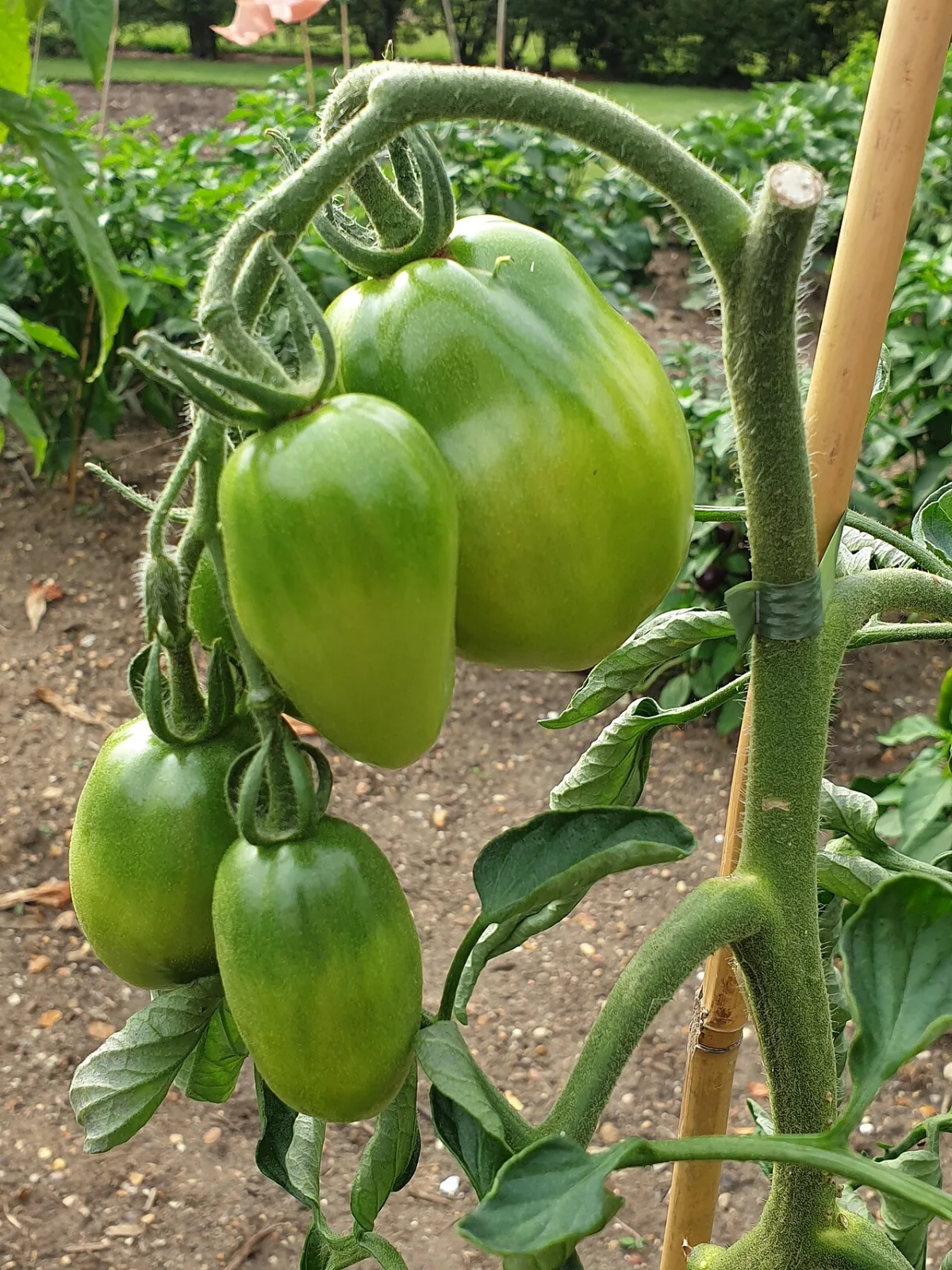
Prevention and protection of tomatoes against pith necrosis
Pith necrosis is a dangerous bacterial disease capable of destroying a large part of tomato crops at the beginning of fruiting. Some plants carry the disease in a chronic form, becoming a constant source of secondary infection. Bacterial mass is released from wounds on the stem in the form of exudate and is quickly spread throughout the greenhouse by workers' hands, water droplets, and air currents, infecting neighboring plants first and foremost.
- Incubation period of the disease — no less than 18 days
- Persistence of infection in residues — up to 5 months
- Application rate of Baktofit for seed treatment — 5 g/kg
- Interval for repeated treatment with Trichoderma — 12–15 days
The primary source of infection is infested seed and plant residues. Bacteria do not live long in the soil, as they are quickly displaced by other microorganisms. Re-infection during the growing season occurs through cracks in stems that form where stripes and spots appear. The pathogen enters the plant through wounds from pruning, as well as through the root system.
There are no tomato cultivars or hybrids completely resistant to pith necrosis. An agronomist should focus primarily on prevention and strict adherence to seed production rules.
To reduce risks in infested soil, use tolerant hybrids. Good results are shown by the hybrid Krasnaya Strela, which allows for crop cultivation with minimal losses. Also less susceptible to the disease are hybrids and cultivars with a generative growth type, for example Resento and Maeva.
If symptoms of the disease are detected in the greenhouse, a complex of protective measures must be taken:
- Carefully remove diseased plants along with the root ball or substrate.
- Disinfect circulating water in drip irrigation systems during low-volume cultivation.
- Stop overhead irrigation and the use of evaporative cooling systems (ECS), and ventilate greenhouses more frequently to reduce humidity.
- Temporarily lower the nitrogen level in the nutrient solution.
- After the end of the growing season, thoroughly remove all plant residues and replace or disinfect the soil or substrate.
Seed treatment with TMTD does not always yield a positive result, as the pathogen can be inside the embryo. During the growing season, the use of chemical fungicides is ineffective.
For seed protection, use the biological product Baktofit. This treatment reduces the number of primary foci of the disease, although it does not affect its subsequent secondary spread.
During the growing season, a special phyto-biotrophic strain of the fungus Trichoderma is used to combat wilting. Its hyphae are capable of penetrating from the soil into the tomato and moving up the vascular system to a height of up to 40 cm. The treatment has a therapeutic effect: some plants recover, and for the rest, the intensity of wilting decreases. Good results are provided by the preventive application of this strain, which is currently undergoing expert assessment.
- At the first signs of wilting, prepare a suspension of antagonist strain spores.
- Irrigate the diseased and necessarily the neighboring plants with the working solution to prevent the spread of the focus.
- Repeat the treatment after 12–15 days.
| Treatment parameter | Value |
|---|---|
| Application rate | 0.5–1.0 l |
| Titer | 100–110 spores per ml |
Bacterial speck of tomato: diagnostics and control measures
The causative agent of bacterial speck is the bacterium Pseudomonas syringae pv. tomato. The disease is categorized as minor and is rarely encountered in greenhouses. Favorable conditions for the development of the pathogen are high air humidity and low temperatures.
The bacterial cell has several flagella and forms a fluorescent pigment on nutrient media. It easily penetrates tomato tissues through mechanical damage and natural stomata. Seeds serve as a source of primary infection, and bacteria can also survive on the roots of certain weeds. In open soil, the pathogen persists only for a short time.
Typical symptoms of bacterial speck:
- Oily, translucent spots 2–3 mm in size with a yellowish halo at the edges of the leaves.
- Gradual darkening of spots to a yellow-brown color.
- Coalescence of spots, curling, and necrosis of leaves at late stages.
- Rare appearance of similar symptoms on stems and fruits.
Special control measures for bacterial speck are usually not required. If there is a threat of disease development, lower the air temperature and humidity in the greenhouse to recommended values and remove the most damaged leaves. If necessary, carry out spraying of plants with copper-containing preparations or Phitolavin-300.
Bacterial spot of tomato: symptoms and pathogen biology
Bacterial spot, caused by the bacterium Xanthomonas campestris pv. vesicatoria Doidge, is most harmful in wet years. In greenhouses with fresh or steam-treated substrate, the pathogen is less active; however, in the spring-summer period, it is still capable of infecting young leaves and fruits. The disease does not just reduce yield by half, but also sharply worsens the marketability of the surviving fruits. Infected plants lag in development and look severely suppressed.
- Yield reduction — up to 50%
- Optimal growth temperature — 25–30 °C
- Bacterial thermal death point — 56 °C
- pH range for development — from 5.1 to 8.3
- Incubation period on leaves — 3–6 days
- Incubation period on fruits — 5–6 days
Symptoms of bacteriosis appear at all stages of tomato development — from emergence to the beginning of fruiting. The nature of the damage depends on the age and type of the plant organs:
- Cotyledons and young leaves: small water-soaked spots 1–2 mm in size appear on them. Later, they turn black, acquire a round or angular shape, and are surrounded by a yellow halo. In case of severe infection, the spots merge, leaves turn yellow, and seedlings die.
- Leaves and stems of mature plants: black spots are localized mainly along the edges of the leaf blades. Elongated black spots form on the stems, the merging of which leads to the death of the entire plant. Damage to pedicels causes mass flower drop.
- Green fruits: the disease looks like scab or raised black dots with a water-soaked halo. Over time, they grow to 6–8 mm, turning into ulcers with a greenish zone around them, under which the tissue rots.
- Ripening fruits: new spots remain small and superficial, although the tissue underneath may still rot. Fully mature fruits are practically not infected due to high acidity, which is unfavorable for the pathogen's activity.
At an early stage, the spots on the fruits resemble a "bird's eye", characteristic of bacterial canker (causative agent — Clavibacter michiganensis). The main difference of black spot at this age is the raised shape of the affected spots.
The causative agent is a Gram-negative non-spore-forming aerobic rod measuring 0.6–0.7 × 1.0–1.5 µm with a single polar flagellum. The bacteria are resistant to desiccation and low temperatures. They penetrate into the tissues of young fruits up to 2.5 cm in diameter through mechanical injuries. The pathogen enters leaves through stomata or damaged epidermis hairs, after which it spreads through the intercellular spaces of the mesophyll.
Both primary and secondary infection of tomatoes occurs only under high humidity and the mandatory presence of liquid moisture on the plants themselves.
Bacterial spot and soft rot of tomato stems
- Bacterial viability on seeds — up to 1.5 years
- Concentration of Phitolavin-300 for seedlings — 0.2%
- Concentration of Oksikhom for treatments — 0.4%
- Application rate of Pseudobacterin-2 for seeds — 1–1.5 l/kg
- Application rate of Pseudobacterin-2 on plantings — 10 l/ha
Black bacterial spot persists in seeds and plant debris. In soil without plant debris, the bacteria die within a few days, but inside stems and roots, they live until their complete decomposition. If the disease is already present on the farm, seeds play a secondary role, but for new farms, they become the main route of infection entry. Solanaceous crops and weeds also serve as reservoirs for the pathogen: pepper, eggplant, potato, tobacco, rustic tobacco, nightshade, datura, physalis, and henbane. There are no tomato cultivars resistant to this disease.
To protect plantings from black spot, a complex of preventive measures is necessary. Immediately after harvesting, all plant debris must be thoroughly destroyed. In greenhouses, disinfection or complete replacement of the affected soil is carried out, and crop rotation is observed, with solanaceous crops returning to the same site no earlier than after a year. During cultivation, it is important to rogue out diseased seedlings and maintain an optimal hygrothermal regime for the plants in the greenhouse.
In greenhouse operations, seeds are treated with TMTD (thiram) or Phitolavin-300 before sowing, and seedlings are treated with a 0.2% suspension of Phitolavin-300. Copper-containing preparations are used to treat plants during the growing season. In case of annual outbreaks, treatments are carried out preventively according to the schedule.
- Spray the seedlings 1–2 times with a 1% Bordeaux mixture or a 0.4% working solution of Oksikhom.
- After planting the plants in a permanent location, carry out 2–3 more treatments at intervals of 10–14 days.
Soft rot of tomato stems and fruits, caused by the bacterium Erwinia carotovora, is relatively rare but can cause significant damage to the harvest at high temperatures. Most often, fruits are affected during long-term storage, and secondary pathogens, such as fungi of the genus Penicillium, quickly settle on damaged tissues. The disease begins with the softening of the stem and fruit tissues, which turn brown and transform into a liquid foul-smelling mass. The first necroses usually appear in the lower part of the stem. Fruits rot starting from the stalk or through wounds, during which their skin wrinkles and often ruptures.
Bacteria enter the plant through wounds, especially when diseased shoots come into contact with healthy ones under high-temperature conditions in the greenhouse. Hybrids and cultivars with a generative growth type possess relative resistance to soft rot. To reduce risks during the dangerous period, adjust nutrition: reduce doses of nitrogen fertilizers and increase potash ones. At the first signs of infection in the greenhouse, urgently remove diseased plants and take measures to reduce the temperature and air humidity.
Pythium and Rhizoctonia: how to protect the root system
Pythium (damping-off), caused by the fungus Pythium debaryanum, damages tomatoes throughout the entire growing season. Transplants grown in waterlogged substrates or soil suffer the most from it. The disease manifests as blackening of the root collar and roots, the formation of constrictions, wilting, or the development of soft rot. A white mycelial growth may appear on the affected parts of the plant.
The causative agent of Pythium is a facultative parasite and is capable of infecting only those roots that are weakened by asphyxiation. The fungus has a thin, colorless, unicellular mycelium. It begins to develop on dead cells, after which it forms a mass of zoospores that move to neighboring plants along a film of water. The zoosporangia of the fungus are 15–25 µm in diameter; they are solitary, spherical, or lemon-shaped. The pathogen also forms spherical oospores.
The primary source of infection is most often peat in the transplant mixture. Microbiological analyses of peat batches from different farms regularly confirm its contamination with the pathogen. Occasionally, seed can be a source of Pythium.
Since peat is often contaminated with the pathogen, be sure to perform a microbiological analysis of it before preparing the transplant mixture and disinfect the soil if a Pythium infection is detected.
For protection against Pythium, seeds are soaked before sowing in a solution of Pseudobacterin-2 at a rate of 1–1.5 l/kg. When planting transplants into the soil or immediately thereafter, the plants are watered with a working solution of the same preparation, diluted 100 times. The consumption of the working fluid is 100 ml per 1 plant (or 10 l of the preparation per 1 ha). The pathogen in the soil dies completely after disinfection with steam, methyl bromide, or Basamid-granulate.
The method popular in Holland of watering with Previcur during transplant planting into mats and during the growing season is not applicable in the Russian Federation, as the preparation is not registered for use on tomatoes. Of the permitted preparations, Acrobat MC and Ridomil MC show the greatest activity against Pythium.
Black leg, or root rot, is caused by the fungus Rhizoctonia solani (sexual stage — Pellicularia filamentosa). This disease causes noticeable harm to plantings only in cases of gross violations of growing technology. In conditions of poor ventilation and waterlogging, this pathogen can lead to the premature death of a large number of plants.
Corky root rot of tomato
Corky root rot (causative agent — Pyrenochaeta lycopersici Schneider et Gerl.) affects tomatoes primarily in peat substrates. The disease develops slowly and causes maximum damage to plants by the beginning of fruiting. This infection was first registered in the CIS in 1985, and due to its focal nature, it is difficult to estimate the total economic damage so far. Nevertheless, in hot weather, the disease manifests itself especially acutely, causing flower drop and a halt in tomato growth.
Symptoms of the disease develop on the underground part of the plants. Initially, brown spots appear on the roots, which can later merge, and the root surface becomes corky. In the fruiting phase, numerous convex, rough areas form on the roots, sometimes with finger-like thickenings at the ends. The root bark darkens, loses its elasticity, and begins to look like tree roots. In case of severe damage, the fine roots decompose, the root system turns brown, and the survival of the tomato depends solely on the formation of new lateral roots.
The causative agent of corky root rot survives in the soil along with plant residues of infected roots, which serve as the main source of infection.
Most studied tomato cultivars are susceptible to P. lycopersici, as resistance is determined by the recessive gene Tm-1, found so far only in the wild relative Lycopersicon peruvianum. To reduce risks in infested areas, relatively resistant hybrids should be chosen.
| Tomato hybrid | Resistance assessment (damage score) |
|---|---|
| Syuzhet F1, Dekabrist F1, Oranzh F1 | 0.6–1.2 points |
| Bumerang F1, Strizh F1, Barynya F1, Vaik, Karlson, Sagnetto, Osana F1 | 1.2–2.0 points |
| F1 Vasilyevna | Most resistant domestic hybrid |
| F1 Telsus | Most resistant foreign-bred hybrid |
To protect plantings from corky root rot, a set of preventive and therapeutic measures is applied:
- Perform steaming or fumigation of the substrate with methyl bromide as the best preventive measure.
- Apply Planriz to the soil immediately when planting tomato transplants to suppress pathogen development.
- Periodically water plants with sodium or potassium humates to stimulate the development of the root system.
Verticillium wilt of tomato
The disease is caused by soil-borne facultative parasites Verticillium albo-atrum Reinke et Berth and V. dahliae Kleb. Thanks to the use of resistant hybrids, the economic damage from this disease has become insignificant. The first signs of infection appear on aging leaves: they wilt during the day and recover turgor at night. Later, secondary phytopathogens may develop on the roots, leading to their death.
When replacing soil in Verticillium wilt foci, the new substrate in the container must not come into contact with the infested greenhouse soil.
The primary infection source is mycelium and microsclerotia in the soil and plant residues, less frequently conidia, while seed transmission of the pathogen occurs in isolated cases. The pathogens have distinct biological differences. It is important to consider these features when diagnosing pathogens:
- Vascular necrosis height in the stem during wilting — 1 m or more
- Vascular necrosis in root rots — 10–15 cm
- Soil temperature for *V. albo-atrum* development — below 25 °C
- Conidia size of *V. albo-atrum* — 6–12 x 2.5–3 µm
- Conidia size of *V. dahliae* — 3–5.5 x 1.5–2 µm
- In *V. albo-atrum*, conidiophores are verticillately branched, and small conidia may have one septum. This species does not form microsclerotia in pure culture and prefers cool soil.
- In *V. dahliae* (or *V. dahliae*), conidiophores and conidia are similar in shape but smaller in size. The pathogen actively forms microsclerotia both in plant tissues and in culture, which makes it more heat-tolerant.
To control verticillium wilt, the following scheme of agrotechnical and chemical measures is used:
- Plant resistant tomato cultivars and hybrids, which is the foundation of all protective measures.
- Perform steaming or sterilization of the substrate before the start of the crop rotation to the depth of the root-inhabiting layer.
- Carefully remove damaged plants along with the roots, replacing the soil in this zone with fresh soil in an isolated container.
- Irrigate the soil with a solution of Topsin-M at two-week intervals to suppress the infection.
- Incorporate Vidate granules into the soil under the growing plants within a radius of 34 m from the affected area.
Symptoms and biology of the tomato Fusarium wilt pathogen
In recent years, the harmfulness of Fusarium wilt of tomato has increased significantly due to the racial diversity of the pathogen. The main pathogen of the disease is the fungus Fusarium oxysporum f. sp. lycopersici; Fusarium moniliforme, Fusarium niveum, and Fusarium solani are encountered less frequently. The use of resistant hybrids allows for only a partial solution to the problem. The infection enters the plant's vascular system from the soil through the growth points of lateral roots and rapidly spreads throughout the organism.
Symptoms of the disease begin on the lower leaves and spread up the stem. Initially, slight wilting of shoot tips, petiole deformation, and leaf blade curling are noted. The main diagnostic signs of Fusarium include the following manifestations:
- pronounced unilateral leaf chlorosis;
- browning of the vascular ring on the stem cross-section;
- longitudinal yellow streaking, where affected vessels show through the covering tissues;
- pale green or yellowish coloring of leaves with vein clearing.
The pathogen forms colorless sickle-shaped macroconidia measuring 31–56 × 3 µm with 3–5 septa. The size of the third cell is 25–50 × 3.7–5 µm, and the fifth is 30–50 × 3–5 µm. The aerial mycelium of the fungus is colored in pink-carmine-lilac, light yellow, or white tones. The pathogen also forms abundant microconidia, chlamydospores, and sclerotia, which help it survive in unfavorable conditions.
Resistance to Fusarium is controlled by dominant genes I1 and I2. In a heterozygous state, these genes reduce tomato pollen fertility by 25–40%, which directly affects plant fecundity.
Infection development conditions and protection measures
The incubation period of the disease lasts from 7 to 30 days, depending on soil composition, plant age, and cultivar. The development of the pathogen is facilitated by a complex of unfavorable factors that weaken tomatoes in a greenhouse environment. These include insufficient light, as well as sharp fluctuations in air temperature and soil moisture. During its life cycle, the fungus secretes toxins that disrupt cell water permeability and cause irreversible wilting.
An increase in soil temperature to 27–28 °C, the presence of soil nematodes, and mechanical damage to roots during transplanting or loosening increase the risk of infection penetration many times over.
- Optimal soil temperature — 27–28 °C
- Incubation period of the disease — 7–30 days
- Reduction in pollen fertility — 25–40 %
- Time for mycelium appearance in a moist chamber — 24–48 hours
- Pseudobacterin-2 application rate per plant — 100 ml
The foundation of tomato protection is the use of healthy seed material and resistant hybrids. Before each new crop rotation, it is necessary to carry out mandatory steaming or sterilization of the greenhouse soil. Biological preparations show high efficiency when used preventively in the early stages of plant development. Combining agrotechnical measures and timely treatments allows for the successful suppression of infection spread.
- In the seedling period: irrigate the soil with a Trichodermin suspension to prevent root infections.
- When planting in a permanent location: apply the grain form of the Trichodermin preparation directly into the planting holes.
- After planting in the soil: irrigate each plant with a working solution of Pseudobacterin-2 with a titer of 2–3 × 10 at a rate of 100 ml per bush.
- During the growing season: regularly spray the tomato stems with a Trichodermin suspension.
Read next
Plant protection For agronomists
Combating bacterial wilt of tomatoes and potatoes in greenhouses
Plant protection For agronomists
Diagnosis and plant protection of peppers from viral and bacterial diseases
Plant protection For agronomists