
Methods for assessing the meat productivity and carcass quality of livestock animals
18 min read
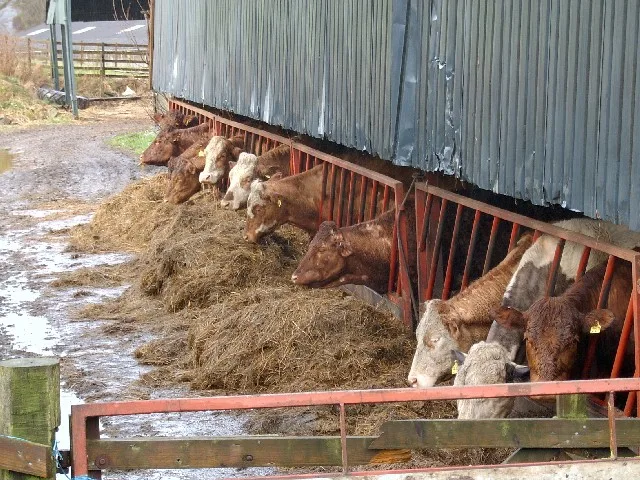
Assessment of meat productivity and growth rates
The efficiency of meat livestock production directly depends on the ability of livestock animals to convert feed nutrients into high-quality muscle tissue. To monitor this process, two assessment methods are used: live and post-slaughter. While the animal is alive, its body condition (visually), muscularity, and average daily weight gains are assessed. The final assessment is carried out after slaughter based on carcass weight and yield, the ratio of lean meat to bone, and the chemical composition of the meat.
- Cattle growth rate — 800–1200 g/day
- Pig growth rate — 400–900 g/day
- Sheep growth rate — 200–400 g/day
- Chicken growth rate — 30–40 g/day
- Feed consumption (cattle and sheep) — 8–9 feed units per 1 kg of weight gain
For accurate productivity accounting, the intake weight of the animal is determined. It is calculated by taking into account deductions for hide contamination, pregnancy of females, and the content of the gastrointestinal tract.
The deduction for the gastrointestinal tract content is determined as a result of pre-slaughter fasting of livestock animals without feed:
- cattle and sheep — 24 hours;
- pigs — 12 hours;
- poultry — 5–6 hours.
Calculation of slaughter yield and carcass quality
After stunning, bleeding, and dressing, the slaughter weight is determined — the weight of the warm carcass after complete processing. A carcass is understood as the body of an animal without the hide, head, feet, internal organs, and internal fat. The ratio of slaughter weight to pre-slaughter (intake) live weight is called slaughter yield.
Please note: a pig carcass, unlike carcasses of other livestock species, can be processed and evaluated either skinless or with the hide on.
Slaughter yield (Sy) is calculated using the following formula:
Sy = Sw / Lw × 100 %, where Sw — slaughter weight of the warm carcass (kg), Lw — pre-slaughter live weight of the animal (kg).
Carcass quality depends on the ratio of muscle, fat, bone, and connective tissues. On average, the lean meat in a carcass accounts for about 80%, and bones for 20%. The mass of blood makes up 5–6% of the live body weight. The tissue ratio changes with age, which is clearly demonstrated by the results of research:
| Carcass composition indicator | Young cattle | Adult fattened cattle / cows |
|---|---|---|
| Share of muscle tissue in carcass, % | 56–68 | up to 45.0 |
| Share of fat tissue in carcass, % | 15–30 | 35–40 |
| Skeleton mass of live animal weight, % | 23 (at birth) | up to 10 |
In the meat industry, "meat" is understood as skeletal muscle with bones, as well as adjacent fat and connective tissue (tendons, fascia, ligaments). During boning, meat is completely freed from bones, cartilage, tendons, membranes, lymph nodes, and visible fat. At the same time, thin intermuscular layers, which create a valuable "marbling" structure, always remain in lean boned meat. The energy value of 1 kg of beef is 1600 kcal.
Individual parts of the carcass differ in nutritional value, tenderness, and culinary value. The most valuable cuts contain maximum muscle tissue with thin fat layers. The taste of meat directly depends on its juiciness, tenderness, color, and aroma. Carcass cutting into grades is carried out according to established schemes.
Graded carcass parts of livestock animals and poultry:
- Cattle: hip, loin, back, shoulder blade, shoulder, brisket, neck, flank, neck thick end, fore shank, hind shank.
- Pigs: shoulder blade, back, brisket, loin with flank, ham.
- Sheep: hip, loin, shoulder-back (including breast and neck), neck thick end, forearm, shank.
- Horses: neck, shoulder-blade, back, brisket, loin, flank, hip, fore shank, hind shank.
- Broiler chickens (carcass cutting): breast, leg quarters, wings.
After slaughter and processing, ready rabbit carcasses are cooled, stored, and sold whole, figure 6.
Task 4. Familiarize yourself with the methodology of grading (bonitirovka) of beef cattle ("On the Procedure and Conditions for Beef Cattle Grading", Order of the Ministry of Agriculture of the Russian Federation No. 270, 2010).
Assessment of breeding and productive qualities of breeding animals in August-September. Grading (bonitirovka) of breeding beef cattle is carried out, excluding oxen, castrates, and fattening animals in all organizations that have the specified production as of October 1.
The milkiness of cows is assessed by the live weight of their offspring, which is determined at the age of 205 days, or recalculated for this age. When assessing the milkiness of 1st and 2nd calving cows, the minimum requirements for the live weight of young stock are reduced: for the 1st calving – by 10%, for the 2nd calving – by 5%.
The milkiness of cows of the 3rd calving and older is assessed based on the data of the calving from which the descendant with the highest live weight at the age of 205 days was obtained.
The reproductive capacity of cows is assessed based on zootechnical and veterinary records (fertility, dry period, service period, gynecological diseases, and barrenness). Assessment of reproductive capacity in cows begins from the 2nd calving.
For stud bulls, the development of the testes is assessed, and sexual activity, ejaculate volume, and semen quality are determined.
Assessment of the exterior and the expression of body type in cows is carried out based on constitution and exterior at the age of 3 and 5 years; in bulls — annually, from 2 to 5 years of age.
The exterior traits of young animals are assessed based on the overall development of the livestock animal, using a 5-point scale:
- excellent — 5;
- good — 4;
- satisfactory — 3;
- unsatisfactory — 2.
Determination of the class of stud bulls. The elite-record class includes stud bulls that have a live weight corresponding to the requirements of the elite class or higher, breed purity of at least the IV generation, a minimum comprehensive score for the expression of breed type of 11 points, and are assessed based on their own productivity as at least elite class or higher.
Comprehensive elite-record and elite class, selection index "A" of at least 110 points, offspring quality index "B" of at least 102 points; establishment of the authenticity of their origin.
Determination of the class of cows. The elite-record class — cows with a live weight, milk yield, reproductive capacity, exterior, and expression of body type not lower than the requirements of the elite class, breed purity of at least the IV generation, having a genotype of at least 11 points; the elite class — at least 9 points.
In all organizations possessing breeding cattle (stud bulls, cows, bull calves, and heifers) of the meat production direction, at least 3–5 stud bulls are assessed annually, each of which is assigned purebred cows no older than the seventh calving.
Testing of young animals is carried out at standard testing stations (a specialized organization for testing, intended for conducting tests of established types of animals), designed for 200 heads, or, in their absence, in specially converted cattle sheds with loose housing in groups of 20–30 heads.
| Indicator | Score | Bull calves | Heifers |
|---|---|---|---|
| a) average daily weight gain from 8 to 15 months of age | 5 | 1001 g and above | 751 g and above |
| 4 | 851 – 1000 g | 651 – 750 g | |
| 3 | 701 – 850 g | 561 – 650 g | |
| 2 | below 700 g | below 560 g | |
| b) live weight at 15 months of age | 5 | live weight at the Elite-record class level | |
| 4 | live weight at the Elite class level | ||
| 3 | live weight at the I class level | ||
| 2 | live weight at the II class level | ||
| c) feed consumption per 1 kg of gain | 5 | Up to 7 feed units | Up to 8 feed units |
| 4 | Up to 7.5 feed units | Up to 8.5 feed units | |
| 3 | Up to 8 feed units | Up to 9 feed units | |
| 2 | Up to 8.5 feed units | Up to 9.5 feed units | |
Based on the data from the bonitation (evaluation) of cattle of the meat production direction, a summary sheet and a report are compiled with an analysis of the following issues:
a) the number of evaluated cattle and their distribution by breed purity, classes, purpose, and genetic groups;
b) the characteristics of the herd and individually of the cows in the breeding core by live weight, exterior, expression of body type, milk yield, reproductive capacity, and development of young animals;
c) age and live weight of heifers at the first insemination;
d) results of bull calf testing based on their own productivity;
e) results of the assessment of stud bulls based on the quality of their offspring;
f) fulfillment of the selection and breeding work plan.
Table 3 – Minimum requirements for the live weight of young animals
Class Live weight (kg) at age (months)
9 10 11 13 14 16 17 19 20 21 22 23 24
1 2 3 4 5 6 7 8 9 10 11 12 13 14 15 16 17 18 19
Bull calves Elite-record 210 230 255 280 310 335 365 382 400 420 440 460 475 490 510 525 545 560
Elite 200 220 245 270 295 320 340 360 380 400 420 440 455 470 485 500 520 535
I 185 200 225 245 270 290 310 325 345 360 380 400 420 440 455 475 490 510
II 170 180 200 220 240 260 275 290 310 325 340 360 375 390 410 425 440 460
Heifers Elite-record 195 215 235 255 270 290 305 320 330 345 360 370 380 390 395 410 415 420
Elite 185 205 225 240 260 275 290 300 315 325 340 350 360 370 375 385 390 400
I 165 185 200 220 235 350 365 280 290 305 315 330 340 350 355 365 370 380
II 155 165 185 200 220 235 245 255 270 280 290 300 310 320 325 335 340 350
Bull calves Elite-record 225 245 275 305 330 355 380 405 430 455 480 505 520 540 555 570 590 605
Elite 210 235 260 285 310 335 360 385 405 430 450 475 490 505 525 540 560 575
I 195 215 235 260 280 305 325 350 370 390 415 435 455 475 490 510 525 545
II 170 180 200 225 250 270 290 310 325 345 360 380 400 420 435 455 470 490
Heifers Elite-record 205 225 245 265 285 305 320 335 345 360 370 385 395 405 415 425 435 445
Elite 195 215 235 250 270 290 300 315 325 340 350 365 375 385 395 405 415 425
I 180 195 210 230 245 265 280 295 310 325 340 355 360 370 380 390 395 405
II 155 170 185 200 215 235 245 260 275 285 300 315 320 330 335 345 350 360
Bull calves Elite-record 205 225 250 275 300 325 345 365 385 405 425 445 465 485 505 525 540 555
Elite 195 215 240 265 290 315 335 350 370 390 405 425 445 465 485 505 520 530
I 180 195 220 240 265 285 305 325 345 365 380 395 415 435 455 475 490 505
II 160 175 195 215 235 255 270 285 305 320 340 355 375 390 405 425 445 455
Heifers Elite-record 185 205 225 245 260 280 295 315 330 345 360 370 380 385 390 395 400 405
Elite 175 195 215 235 250 270 285 300 315 325 340 350 360 370 375 385 390 395
I 160 175 190 210 230 245 260 275 285 300 310 325 335 340 350 360 365 375
II 145 155 170 185 200 215 230 245 255 270 280 295 305 315 325 335 345 355
Breed: Kazakh Whiteheaded, Shorthorn meat type
Bull calves Elite-record 220 240 270 300 325 350 375 400 425 450 475 500 515 535 550 565 585 600
Elite 205 230 255 280 305 330 355 380 400 425 445 470 485 500 520 535 555 570
210 230 255 275 300 320 345 365 385 410 430 450 470 485 505 520 540
180 200 225 250 270 290 310 325 345 360 380 400 420 435 455 470 490
Heifers Elite-record 200 220 240 260 280 300 315 330 340 355 365 380 390 400 410 420 430 440
Elite 190 210 230 245 265 285 295 310 320 335 345 360 370 380 390 400 410 420
I 175 190 205 225 240 260 275 290 305 320 335 350 355 365 375 385 390 400
II 155 170 185 200 215 235 245 260 275 285 300 315 320 330 335 345 350 360
Breed: Charolais, Chianina, Blonde d'Aquitaine, Maine-Anjou
Bull calves Elite-record 250 280 310 340 370 395 420 450 480 505 535 560 580 605 625 645 660 680
Elite 240 270 300 325 355 380 405 430 455 485 510 535 555 570 595 610 630 645
I 220 240 270 295 320 345 375 395 420 445 470 495 515 535 555 580 600 620
II 195 215 240 270 290 315 335 360 380 400 420 440 460 485 500 520 540 555
Heifers Elite-record 240 260 285 305 325 345 370 385 405 425 440 460 475 485 495 505 515 525
Elite 220 245 265 285 305 325 345 360 385 405 420 440 450 460 470 485 495 505
I 200 220 240 260 280 300 315 330 345 370 385 400 410 420 430 440 450 460
II 185 200 220 235 260 275 290 305 315 335 345 360 370 385 395 400 410 420
Table 4 – Minimum requirements for live weight (kg)
5 years and 5 years and
Elite Aberdeen 560 715 780 850 440 485 530
Elite 535 680 745 810 420 460 500 Russian
I 510 650 710 770 400 440 480 Polled
II 460 585 640 700 360 390 420
610 750 860 930 475 535 570
Elite 580 710 820 890 455 505 550 skaya
I 540 670 760 820 430 480 520
II 490 600 690 740 380 410 450
560 720 785 860 440 480 520
Elite 535 685 750 820 420 460 500 kaya
I 510 655 715 780 400 420 480
II 460 590 645 710 365 405 425 Kazakh Elite-
600 740 840 900 470 530 570 Whiteheaded, Shorthorn Elite 570 700 800 860 450 500 545 meat type I 540 670 760 820 430 480 520
II 490 600 690 740 380 410 450 type Charolais, Elite-
680 840 965 1050 540 600 650 Chianina, record Blonde (light) Elite 645 800 920 1000 520 580 625 d'Aquitaine I 620 790 880 945 490 550 600 II 555 690 790 840 440 495 535
Table 5 – Scale for assessing the constitution and exterior of cows
Requirements for assessment and general development Main CoeffiOverall
Large format I. General appearance, developpe-body, wide ment and expression and rounded torso 5 3 15 of breed type with well-expressed but not coarse bone structure II. Exterior traits:
for the breed, short neckHead, neck 5 1 5
Wide, deep, without Chest depressions behind the shoulder blades 5 2 10 well-developed brisket Withers, back, Wide, fleshy withers, wide long back 5 3 15 Loin long, well-filled with musclesLoin 5 2 10
Well-developed musculature, extending downHam 5 2 10
Sufficiently developed, Udder 5 3 15
Correctly positioned, Limbs 5 2 10
Table 6 – Scale for assessing cows by conformation and body type Expressiveness of type Constitution and conformation Height
By 100-point Total score Class at withers, Score Score
Breed: Aberdeen Angus, Galloway, Russian Polled
12 85 and more 15 27 Elite-record
12 80–84 10 22 Elite-record
12 75–79 6 18 Elite
12 70–74 3 15 Class I
10 85 and more 15 25 Elite-record
10 80–84 10 20 Elite
10 75–79 6 16 Class I
10 70–74 3 13 Class I
7 85 and more 15 22 Elite-record
7 80–84 10 17 Class I
7 75–79 6 13 Class I
7 70–74 3 10 Class II
6 85 and more 15 21 Elite
6 80–84 10 16 Class I
6 75–79 6 12 Class II
6 70–74 3 9 Class II
Breeds: Hereford, Kazakh Whiteheaded, Shorthorn (beef type)
12 85 and more 15 27 Elite-record
12 80–84 10 22 Elite-record
12 75–79 6 18 Elite
12 70–74 3 15 Class I
10 85 and more 15 25 Elite-record
10 80–84 10 20 Elite
10 75–79 6 16 Class I
10 70–74 3 13 Class I
6 85 and more 15 21 Elite
6 80–84 10 16 Class I
6 75–79 6 12 Class II
6 70–74 3 9 Class II
Table 7 – Scale for assessing sires by a set of traits
Traits Score a) live weight, class: elite-record 35
Class II 20 b) conformation and body type, class: elite-record 20
Class II 5 c) assessment by own productivity, class: elite-record 20
Class II 5 d) genotype, class: elite-record 25 including: assessment by progeny quality (with selection index of 100 or more): elite-record 5 elite 4 Class I 3 breed purity: purebred 5 Gen IV 4 Gen III 3 dam, class:
Class I 3 sire’s assessment by own productivity, class:
Table 8 – Scale for assessing cows by a set of traits
Traits Score a) milk yield, class: elite-record 35
Class II 23 b) reproductive ability, class: (calving interval,
Class II 439-475 6 c) live weight, class: elite-record 15
Class II 6 d) conformation and body type, class: elite-record 27
Class II 9 e) genotype, class: elite-record 13
Class II 7 including:
Sire’s assessment by own productivity, class:
Table 9 – Scale for assessing meat forms of 15-month-old bulls and heifers
Max general development with highest score CoeffiTotal
Proportional body conforGeneral appearance, mation, typical for the breed. development Wide, rounded trunk 5 3 15 and fullness with well-developed musculature without depressions behind the shoulder blades. Chest Well-developed, wide, 5 2 10
Withers, back, Wide, long, even, loin well-filled 5 3 15 well-filled with muscuSacrum lature; correctly placed5 2 10 joint. Inner sideHam 5 2 10
Table 10 – Scale for comprehensive assessment of sires by progeny quality and young stock by own productivity
Live weight at 15 months 5 2 10
Table 11 – Determination of the comprehensive class of sires
Class by live Class by progeny quality and origin elite-record elite I II elite-record elite-record elite-record elite I elite elite-record elite I II
Table 12 – Scale for assessing young stock by a set of traits
1 2 a) live weight, class: elite-record 35
Class II 20 b) conformation and body type, class: elite-record 20
1 2 c) assessment by own productivity, class: elite-record 20
Class II 8 d) genotype, class: elite-record 25
Class II 10 including: Breed purity: purebred 10
Class I 3 Sire’s assessment by own productivity, class:
Class I 3 Total score 100
Task 5. Describe the technology of beef cattle farming on the farm
Number of cows, bulls, and young stock on the farm
Beef cattle breeds raised on the farm
Breeding method used on the farm
Intra-farm specialization
Housing methods during the stall period:
Methods of keeping livestock on pasture
Methods and seasons for estrus detection, mating, and insemination of cows and heifers
Read next
Livestock For students
Fundamentals of ontogeny and methodology for assessing the growth of livestock animals
Livestock For students
Methodology for assessing milk productivity and milk quality of cows
Livestock For students