
Organization of zootechnical recording and identification of livestock animals
9 min read
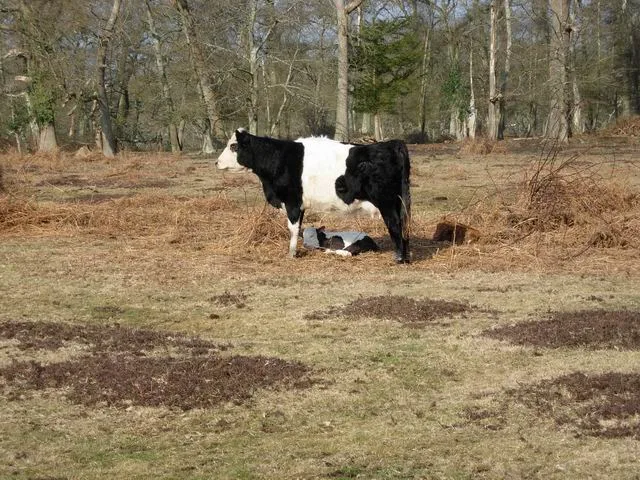
Accurate zootechnical recording is the foundation of breeding work and the monitoring of livestock animal productivity. Without individual identification, it is impossible to conduct targeted selection, form new lines, and evaluate the economic value of a herd. Modern tagging methods require specialists to maintain thorough primary documentation that records all stages of an animal's life and productivity.
Primary and breeding recording in cattle farming
A set of documents is used to systematize data in dairy and beef cattle farming. They allow for tracking livestock movement, volumes of produced output, feed consumption, and the efficiency of herd reproduction. All primary data are entered into specialized journals, certificates, and registers directly on the farm.
Recording of livestock movement and material assets includes certificates for the transfer of animals between groups, culling from the main herd, and a report on herd turnover. Along with these, certificates for the receipt of roughage and succulent feed are drawn up. Production turnover is controlled through milk analysis journals, commodity-transport waybills for the dispatch and receipt of milk and animals, as well as registers of dairy product movement.
To monitor herd reproduction, the zootechnician maintains a book for recording cow inseminations and calvings, a register of births, and rearing of young stock. A list of cows and heifers that have undergone rectal examination is also mandatory. These documents allow for the timely identification of reproduction problems and the planning of calvings.
Breeding work in dairy cattle farming is conducted using the following forms:
- Form No. 2 mol. — pedigree card for a heifer, pregnant heifer, or cow, where origin, growth, development, productivity, and results of use are recorded.
- Form No. 3 mol. — register of births and rearing of young cattle to control origin and weight.
- Form No. 4 mol. — control milking certificate specifying the name, inventory number, single and daily milk yields, as well as fat and protein content.
- Form No. 5 mol. — register for determining the rate of milk ejection during machine milking to evaluate the udder.
- Form No. 6 mol. — register for evaluating bulls of dairy and dual-purpose breeds based on the quality of their offspring.
- Form No. 7 mol. — final zootechnical report on the results of breeding work.
To automate breeding recording for dairy cattle, the "SELEX" program is used. It allows for maintaining electronic lists of animals, performing summary analyses, creating forecasts and plans, as well as calculating complex population-genetic parameters.
In beef cattle farming, the structure of breeding recording is adapted to the specific features of management technology:
- Form No. 2 meat — pedigree card for a heifer, pregnant heifer, or cow with data on origin, growth, and breeding value.
- Form No. 3 meat — register of insemination and calving for recording dates of insemination, results of rectal examinations, time of calving, and offspring data.
- Form No. 4 meat — register for rearing pedigree and replacement young stock, indicating origin and growth dynamics.
- Form No. 6 meat — appraisal register for pedigree young cattle.
- Form No. 7 meat — summary appraisal register for animals of a specific breed.
Recording in pig, sheep, horse, and rabbit farming
In pig farming, the basic document for monitoring reproduction is the journal for recording matings and inseminations. In pedigree sheep farming, recording is carried out in more detail. Individual cards for rams (Form F-1) and ewes (Form F-2), mating and lambing journals (Form F-3), registers for assigning rams for mating, as well as journals for appraisal and shearing of sheep are used here.
For horse breeding, an extensive primary recording system has been developed, controlling all stages of rearing, evaluation, and testing of pedigree horses. The basis of recording in horse studs is the studbook of pedigree mares. Depending on the type of housing (stable or pasture), foaling and mating registers are filled out according to different forms.
- Age for starting horse appraisal — 1 1/2 years and older
- Stallion card — form No. 1-l
- Mare card — form No. 2-l
- Test record card — 2 copies
Primary documents of horse studs also include the journal for recording teasing and mating of mares (Form No. 3-l), the journal for recording the development of young stock (Form No. 4-l), the journal for recording the tagging of young stock (Form No. 14-l), and the summary register of appraisal results (Form No. 13-l). For pasture management, a herd book (Form No. 16-l) is also maintained. To evaluate working qualities, data from training and tests are recorded.
- Maintaining test record cards for each horse at the hippodrome according to established forms.
- Filling out the test program with a mandatory note on the results of the animal's performance.
- Transferring the completed test card back to the horse stud upon the horse's departure from the hippodrome.
In poultry farming, zootechnical recording is conducted according to specialized industry forms. In rabbit farming, the basic form of primary recording for evaluating reproductive qualities is the male card for the main herd.
Zootechnical records in rabbit breeding: ledgers and individual cards
Maintaining zootechnical records in rabbit breeding allows for monitoring herd productivity, evaluating the quality of breeding work, and planning reproduction. All primary information is entered into a production log, where mating dates, kindling results, and the number of viable offspring are recorded. Based on these records, specialists can carry out culling in a timely manner and form replacement groups.
| Kindling date | Doe number | Mating result | Total born, head | Incl. dead, head | Left with doe, head | Weaned, head |
|---|---|---|---|---|---|---|
| 05.02.2009 | 523- | + | 10 | 2 | 8 | 8 |
| 05.02.2009 | 642- | + | 8 | – | 8 | 7 |
| 06.02.2009 | 731- | + | 9 | 1 | 8 | 6 |
| 06.02.2009 | 512- | + | 10 | – | 8 | 8 |
| 07.02.2009 | 501 | |||||
| 08.02.2009 | 633- | + | 9 | – | 8 | 8 |
| 08.02.2009 | 621 | |||||
| 08.02.2009 | 846 | + | 10 | 1 | 8 | 7 |
To systematize data, a main herd livestock ledger is filled out. It records the breed, sex, inventory numbers of the animals and their cages, origin indicators (parent numbers and classes), as well as dates and reasons for removal. A mandatory part of record-keeping is the evaluation of young stock development at three months of age and comprehensive grading in the autumn.
An individual card is created for each breeding animal. Data on live weight dynamics, body conformation, fur quality, color, and assigned class are entered into it. The card also records the results of each kindling to track the productivity of the doe over time.
| Grading indicator | Live weight, kg | Body conformation | Fur density | Color | Overall class |
|---|---|---|---|---|---|
| At 3 months | 3.2 | — | — | — | — |
| At 4 months | 4.3 | — | — | — | — |
| At autumn grading | 5.3 | el | el | el | el |
| Kindling number | Kindling class | Total born, head | Incl. dead, head | Left with doe, head | Weaned, head |
|---|---|---|---|---|---|
| 2 | I | 10 | 2 | 8 | 7 |
Animal identification methods: from classic tagging to microchips
Accurate animal identification is the foundation of effective selection and breeding work. Any errors in livestock recognition lead to confusion in pedigrees and direct economic losses. Regular contact with personnel during inspection and reading of numbers helps animals remain calm, which directly affects their productivity and growth rate.
Errors in animal identification lead to economic losses. Without proper control, the livestock becomes timid, productivity decreases, and the risk of missing the start of an epidemic increases.
In practice, several methods of animal marking are used, the choice of which depends on the livestock species and the farm's objectives. For cattle, plastic and electronic tags, as well as implanted microchips, remain the standard solution. Each method has its own technological features and rules of application.
- Cattle plastic tag installation period — from 28 days
- Microchip size — 2x12 mm
- Electronic tag reading range — 25–60 cm
- Scanner memory capacity — 300 numbers
- Microchip application period — since 2010
Plastic tags are popular due to their low cost and ease of installation without special equipment. Strict requirements are placed on them: the material must be flexible, resistant to temperature fluctuations, and the inscription must be indelible. When marking cattle, the country code and individual number are applied to the main tag, and only the number to the duplicate one.
To reduce the risk of losing an identifier, two plastic tags are attached to the animal at once. In this case, the inscription is applied with a laser or a special permanent marker.
For marking pigs, tattooing and ear notching are traditionally used. Tattooing pliers are used on white-colored animals, rubbing special black ink into the punctures on the ears. Piglets aged 2–3 days receive a litter number on the left ear, and at 2 months, an individual number on the right ear. The ear notching method allows encoding factory numbers from the first days of life, separating even and odd values by sex: gilts are given even numbers, and boars are given odd numbers.
| Notch location | Numerical value (left ear) | Numerical value (right ear) |
|---|---|---|
| At the tip (in the corner) | 200 | 100 |
| On the lower edge | 30 | 3 |
| Round hole | — | — |
Modern methods include the use of electronic tags made of durable polyurethane and microchipping. Electronic carriers store the animal's complete history, including vaccinations, treatment, and inseminations. Microchips are implanted under the skin once for life and are read by a portable scanner, which significantly simplifies the work of the veterinary service.
- Inject the microchip under the animal's skin using an individual syringe (the procedure takes 1.5–2 minutes).
- Enter the unique chip code into an electronic database or paper documents.
- Scan the information with a portable scanner to verify the accuracy of the record.
How stationary electronic records work on a farm
Automatic data collection saves the zootechnician from routine tasks and manual entry errors. The basis of such a system is a stationary scanner, which consists of a main module and external antennas. The equipment is mounted directly in animal passage areas. The scanner is connected to the enterprise's wireless network to promptly transmit information about livestock movement, feeding, and weighing from central scales to the server.
Data is read automatically the moment a livestock animal passes through the antenna frame, which eliminates errors caused by the human factor.
All information obtained through electronic identification is instantly entered into the farm's unified database. This approach allows for complete control over the technological cycle without the constant participation of an operator. Systematizing data makes it possible to solve several practical tasks at once:
- maintain accurate records of all events concerning the livestock animal;
- maintain statistics on live weight, activity, and feeding.
The microchipping technology has been implemented at domestic enterprises for several years. Electronic recording systems are used in Moscow and the Moscow region, Kalmykia, Astrakhan, the Rostov region, and the Stavropol, Zabaykalsky, and Krasnodar territories. The solutions operate on farms specializing in cattle breeding, pig farming, sheep farming, and horse breeding.
Read next
Livestock For students
Methodology for assessing milk productivity and milk quality of cows
Livestock For students
Fundamentals of ontogeny and methodology for assessing the growth of livestock animals
Poultry For agronomists