
Pollination of vegetable crops in a greenhouse without the use of bees or manual labor
7 min read
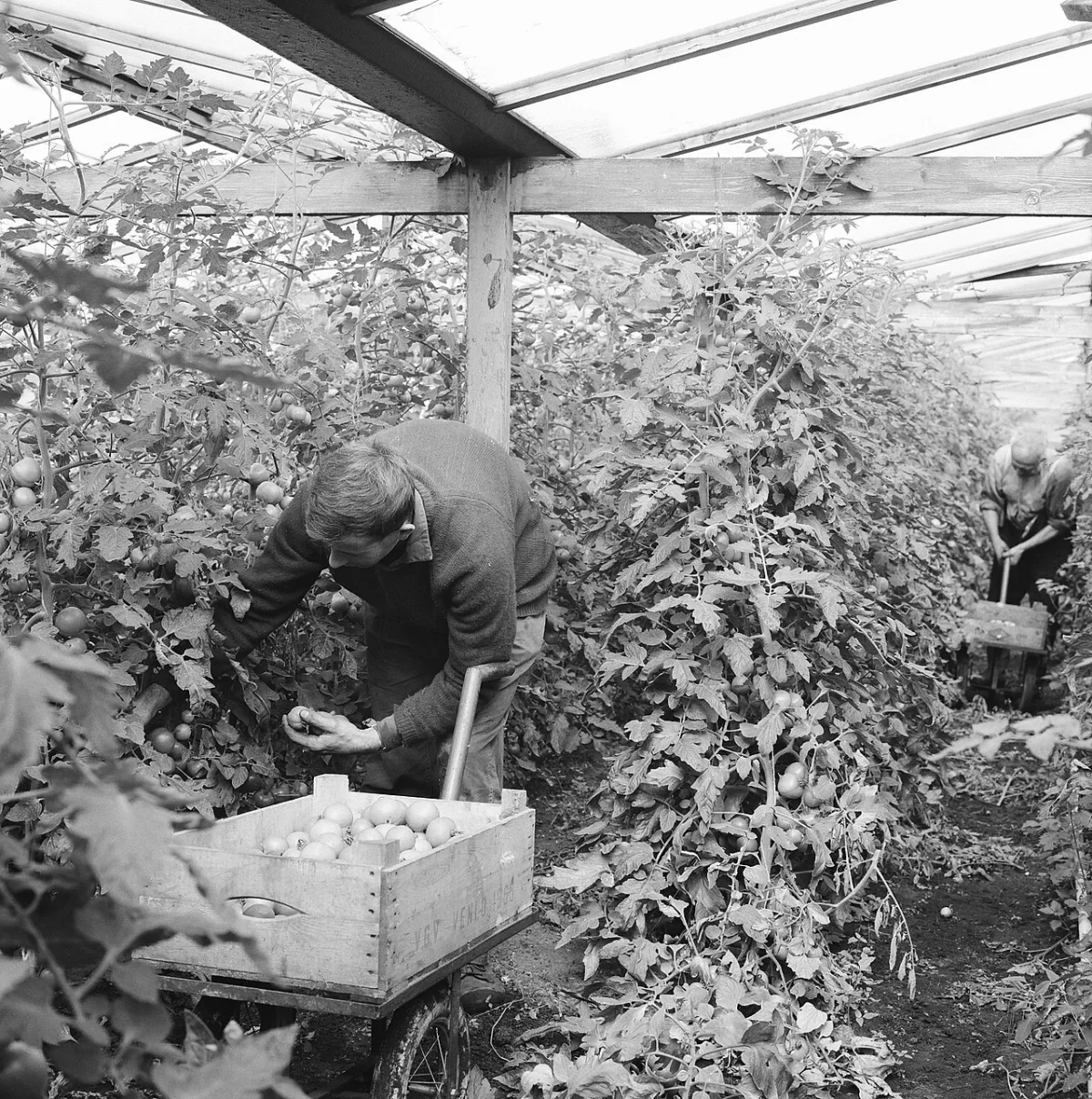
Myths about pollination in a greenhouse
Does the absence of bees really threaten the harvest in the case of an enclosed greenhouse or bad weather? And what should an ordinary gardener do in this case; should they really carry out pollination themselves using a small brush?
Suspicious people have transferred the threat of supposedly insufficient pollination of flowers by insects in a greenhouse from industrial vegetable growing to home gardening. They say it is difficult for insects to get in there, so, citizens, open your hotbeds and greenhouses wider and keep them open for longer. And even better, buy special bumblebees for greenhouse conditions... This is all nonsense!
It has been repeatedly verified by experience: even if you seal everything up without the slightest gap, you will later discover that, by some miracle, everything planted has set fruit. Some flies or other insects hatched from the soil and calmly carried out pollination, or else they would not be able to find food for themselves!
Many city dwellers hold a simplified belief that only bees and, to a small extent, bumblebees pollinate plants.
Important. Every gardener should know that besides bees, a countless number of all sorts of other flying insects pollinate flowers:
- wasps;
- flies;
- gnats;
- butterflies;
- moths;
- beetles;
- bugs.
Beyond this theory, I will clarify that experienced gardeners can confirm to you as a fact that with normal current care for a greenhouse, when you enter and exit at least once every few days, without specifically thinking about pollination, everything sets fruit there reliably: peas, strawberries, raspberry, currant, cucumber, watermelon, eggplant, tomato, etc. Everything that flowers.
And if you open the door or at least one vent every morning, the problem is eliminated all the more. Moreover, tomatoes, which are self-pollinating plants, do not even need to be specifically shaken from time to time or tapped on their stems, as is sometimes recommended for better shedding of pollen from stamens to pistils. During the process of current care, this happens by itself. You inadvertently touch them during your movements!
By pinching tomatoes, tying them up, and watering them, we inadvertently help with the pollination of tomatoes, eggplants, and peppers — these are self-pollinating crops. By the way, insects also visit their flowers, in turn helping with pollination.
I am talking about such a far-fetched problem not without evidence. For example, I have encountered a situation where a person whose tomato bushes were dropping their first fruit set (they would dry up and fall off soon after flowering) read on the internet that the cause might be poor pollination, and on the advice of "experts," shook the foliage with their hands several times a day, keeping the greenhouse constantly open to the wind even at night. That is, they were focusing their attention entirely on the wrong things, as usually happens in cases of superficial knowledge.
When, while choosing a greenhouse in a catalog, we are told in the list of advantages of a particular model about supposedly freer penetration of insects, this is not actually a trump card at all.
Causes of flower and fruit set abscission
In transplants that have taken root and begun active development, the appearing flowers, and sometimes the fruit set that has begun to grow, quite often dry up and fall off. Almost all gardeners have probably gone through this once. What is the reason, and how can one achieve a harvest in this case?
In this rather common problem, there is both complexity and simplicity. The complexity lies in the fact that there can be several reasons for flower drop in the conditions of amateur gardening practice, and the "advisors" rushing to help you will indicate only one. Consequently, the measures you take to correct the situation in most cases turn out to be the wrong ones.
Possible causes:
Factors provoking flower and fruit set abscission
The causes for the appearance of falling flowers and fruit set can be divided into several main categories:
- active foliage growth in well-fertilized soil under other favorable conditions (if we discard mysticism and fantasies, this is the most likely, most frequent reason: plants initially grow too actively and postpone the setting of fruit to a later date. This is observed especially often on peppers and watermelons, as well as on melons and eggplants; usually, normal fruit setting occurs later);
- cold weather on the verge of frost not only at night but also during the day (this is sometimes observed in May–June, during long cloudy weather, as a result of which the soil cannot warm up at all);
- chronic overheating (a rare phenomenon, as very high temperatures are required for this, because initially, during overheating, plants go through a phase of distorted flowers and fruit set, when they do not fall off);
- high humidity under the dome (again, this rarely happens, when in cold, cloudy weather greenhouses are kept closed around the clock — and this goes on for a week or more; in this case, the flowers fall off because they could not be pollinated);
- a severe deficiency of any micronutrient (a very rare reason, since the use of fertilizers with a rich composition (compost, ash, humus) fully provides garden soil — which is already nutritious — with all elements).
As we can see, the most probable cause is slightly over-fertilized soil. If there is one thing that is not spared, it is nitrogen, and the result is obvious: active leaf growth and the shedding of the first fruit set, just to get them out of the way.
Hardly anyone will tell you the most likely cause, as the majority of gardeners who actively communicate are well-meaning people, but they lack extensive experience and rely more on book knowledge than on practice. This is the only difficulty of the problem.
Natural self-regulation of processes in the greenhouse
The simplicity lies in the fact that each of these causes is self-eliminating during the current life cycles of tomato planting. Whether you did nothing or supposedly eliminated the stated cause — the result is the same.
Thus, sometimes just a week after the "fuss," with the onset of warmer summer weather, pea-sized fruit set is found on plants everywhere. The air humidity in the sun in an open greenhouse inevitably drops, so the pollen dries out and, throughout the day, finds an "excuse" to land on the pistils.
Vegetative overgrowth ends quite quickly, as the densely planted soil is far from a bottomless pit (the foliage increases its biomass so rapidly that in a 20–30 cm soil layer, even with the application of manure, the nitrogen and everything else quickly run out, the plant shifts to fruiting, and the flowers are fertilized).
Conclusion
As a result of brainstorming and "councils" with neighbors, the tomato grower supposedly finds the cause and takes decisive measures, after which the fruit set supposedly appears. The owner is happy, their advisors are happy — and the tomatoes are happy!
Finally, I would like to point out to all our practitioners who have often obtained tomato transplants with flowers on their windowsills: remember that if you keep the transplants in the apartment, these flowers always set fruit! And there will be red fruits!
And this is natural, since the above-mentioned causes are absent in apartment conditions. Also, remember that bumblebees and bees do not fly in an apartment, there is no wind there, and no one shakes the stems, yet for some reason, the fruit set always appears. This is one of the lessons of tomato truth.
Riddles of unproductive years in greenhouse vegetable farming
At the same time, the tomato truth holds unsolved mysteries. For instance, in all regions of the Central zone of our country this summer, gardeners unanimously noted very poor tomato flowering in all greenhouses. Experienced tomato growers said with one voice that in their practice, they had never seen such poor flowering, where almost all flowers fell off throughout the summer, and only a few accidentally successful tomatoes adorned some dense bushes.
They organized discussions, looked for the cause together, went through all the possible reasons mentioned above — and nothing fit. No measures taken helped (they tried everything):
- foliar top dressing;
- insulation;
- ventilation;
- and all the rest...
A specific reason for this year was never found. It was simply not a tomato year — that is all, it happens.
Abnormal behavior of cultivars during fruit set deficiency
This season, my harvest was about two to three times lower than usual. Simply fewer fruits. (And it was like that for many: at first glance, there seemed to be many red tomatoes in the greenhouse, but there clearly could have been more.)
At the same time, for example, some bushes of the 'Black Baron' cultivar from the cultivar testing were completely empty, without a single fruit. More precisely, the few fruits that did set were immediately affected by blossom-end rot and fell off. It was a strange and truly very rare sight when the bush itself was tall, dense, and completely healthy, but could not set fruit. Or refused to. They have their own logic there...
Read next
Greenhouses and covers For gardeners
Tomato pest control and pepper cultivation in a greenhouse
Greenhouses and covers For gardeners
Optimal temperature regime for protecting tomatoes from summer overheating in the greenhouse
Soil and tillage For students