
Optimal temperature regime for protecting tomatoes from summer overheating in the greenhouse
6 min read
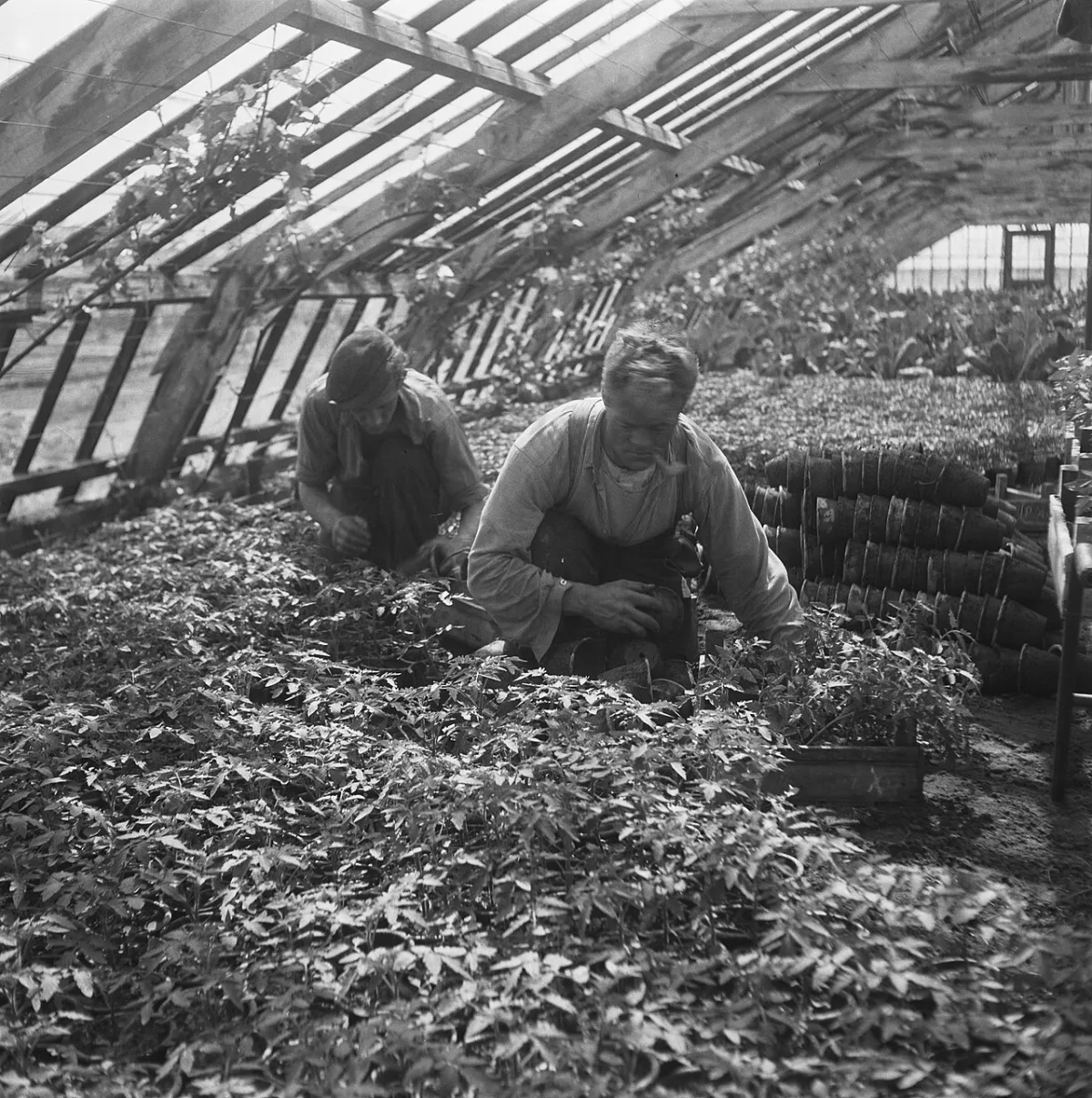
It is believed that the main enemy of heat-loving crops is cold, i.e., temperatures below the optimal average values (18–20 °C). Is it possible that temperatures rising above the optimal average values (25–28 °C) are even more harmful?
That is indeed the case, surprisingly enough, when it comes to tomatoes. Other greenhouse crops are not particularly harmed by overheating, but tomatoes stand apart due to their origin.
Let us focus on specific figures. One should try to keep the temperature no higher than 30–35 °C. In summer, during vigorous bush development with fruit set, a daytime temperature of 25–28 °C can be considered ideal. Thus, 30 °C is the maximum permissible temperature at which tomatoes still feel fine. Sometimes, of course, it is possible to raise it even higher, up to 35 °C, without much harm to the plants. And this inevitably happens even with fully opened ends in calm weather, provided it lasts for a short time.
Is it possible to strictly adhere to ideal temperature ranges?
An ordinary gardener is unable to maintain strict temperature ranges because they lack the equipment. This contradiction begins as early as the seedling stage: books clearly state, according to science, for each crop — from cabbage to watermelon — when and by how many degrees the temperature should be changed during the day and night depending on the age of the seedlings. Meticulous scientists have long since discovered the most effective regime for each crop, down to the degree.
The difficulty lies solely in how an ordinary gardener in their apartment will virtuously raise and lower the set temperature parameters. At home, we have only a ventilation pane for this, but that is merely approximate regulation... Or one would have to carry the seedlings back and forth from the loggia to the kitchen, or around the rooms — this is, to put it mildly, inconvenient. In home conditions, one has to rely on approximately correct heat ranges, avoiding rooms that are too warm, places near the radiator that are too hot, or, conversely, protecting seedlings from overcooling near a freezing windowpane or from the cold air flowing onto them from a night-time ventilation pane.
By having a thermometer, this skill can be quite well regulated, also by using a glazed loggia.
In a polycarbonate greenhouse, we face the same impossibility of strictly adhering to both the optimal lower limits (18–20 °C) and the optimal upper ones (25–28 °C). One can still somehow protect against cold nights, but what about overheating in the sun? The stumbling block here is that within a few centimeters behind the polycarbonate, it is still too hot even with fully opened doors and ventilation panes. All leaves located in this zone overheat (both in the center and in the "corners"), even if a draft passes through the tunnel dome as a whole.
And if, during the heat of the day, there is a total calm outside, then the open ends do not help at all, and the foliage is guaranteed to overheat. This can be seen from the curling of leaf blades, which also take on a dull bluish hue instead of the emerald-green typical of a tomato.
It is very difficult to avoid the curling of leaf blades under polycarbonate; it begins once the temperature exceeds 30 °C.
The literature provides an explanation for this: while in the heat, the plant spends a great deal of nutrients on evaporation (transpiration) to the detriment of its physiology, and, in addition, photosynthesis and other processes of tissue formation are disrupted.
The fruit set itself also curls slightly, although its weight, in my observation, does not drop significantly. This refers to overheating that is not excessive, but forced under daily monitoring. In this case, overheated plants, with all the external signs of overheating, still produce, one might say, a normal gross harvest.
Once in my practice, there was a case when tomato transplants planted in mid-May in a plastic tunnel spent the whole week completely closed during sunny weather. They steamed so much that the flowers became ugly, doubled, and elongated, and the fruit set that later emerged from them were just as strange monsters, but overall the harvest was high because later, when the film was removed from the bushes, they all returned to normal flowering with subsequent beautiful fruits.
Excess heat must be released from the dome, as tomato plants, even in the subtropics, do not experience such excessive heat outdoors. Not all gardeners understand this, as interaction with them shows. They often consider something else the cause of the distressing state of their plants, and do not think about overheating at all. Usually, the gardener does not understand what is happening at all, observing the curling of the foliage and its unhealthy color with bewilderment.
Different cultivars and hybrids, of course, may have different thresholds for overheating. Some cultivars tolerate overheating better than others. Variety testing is useful precisely because it allows one to select cultivars suitable for one's customary care regimen.
Now for a bit of positivity. Overheating happens almost every summer — and yet, no one has cancelled the harvest. There is no sense in being too strict about it. There are no perfect gardeners. No matter how hard you try, you often forget to open the doors in time to let out excess heat.
In the morning, you usually aren't in a hurry to open them at the very first sign of sun, allowing the soil, which cooled down overnight, and the roots to warm up. And that is often where you "get burned," forgetting due to chores, and realizing only during the day... What happens to the plants then? Nothing special, they continue fruiting with curled leaves.
Hot air always rises — this physical law also works in a closed greenhouse under direct sunlight. Even if the air temperature under the roof rises to critical levels, relative coolness remains in the layer near the ground. As long as the tomatoes are small, they are in this safe zone and feel comfortable.
In May, while the gardening rhythm has not yet been established, vegetable growers often forget to open the greenhouse in time or remove the black cover from the hotbed. Young plants survive this forgetfulness without damage only thanks to the coolness near the ground.
Two-level control and bush training
To learn how to precisely control the microclimate, install two thermometers in the greenhouse: one at the lower level, and the second at the upper level. Comparing their readings will help in making correct decisions regarding care.
Temperature stratification of the air can be used when training tomatoes. A special technique allows the plant's energy to be directed toward the harvest and protects the clusters from heat. To do this, the stems are moved to the lower tier of the greenhouse.
- Keep extra stems with fruit set without cutting them from the bush.
- Carefully bend these stems toward the ground.
- Fix the branches in a horizontal position.
After this, the shoots stop growing in length. The bush redirects all nutrients to fruit swelling. In this process, tomato clusters develop in the cool air layer near the ground.
Read next
Greenhouses and covers For gardeners
Pollination of vegetable crops in a greenhouse without the use of bees or manual labor
Soil and tillage For students
Influence of soil structure and composition on capillary moisture transfer
Soil and tillage For students