
Growing eggplant transplants in individual containers and a greenhouse
4 min read
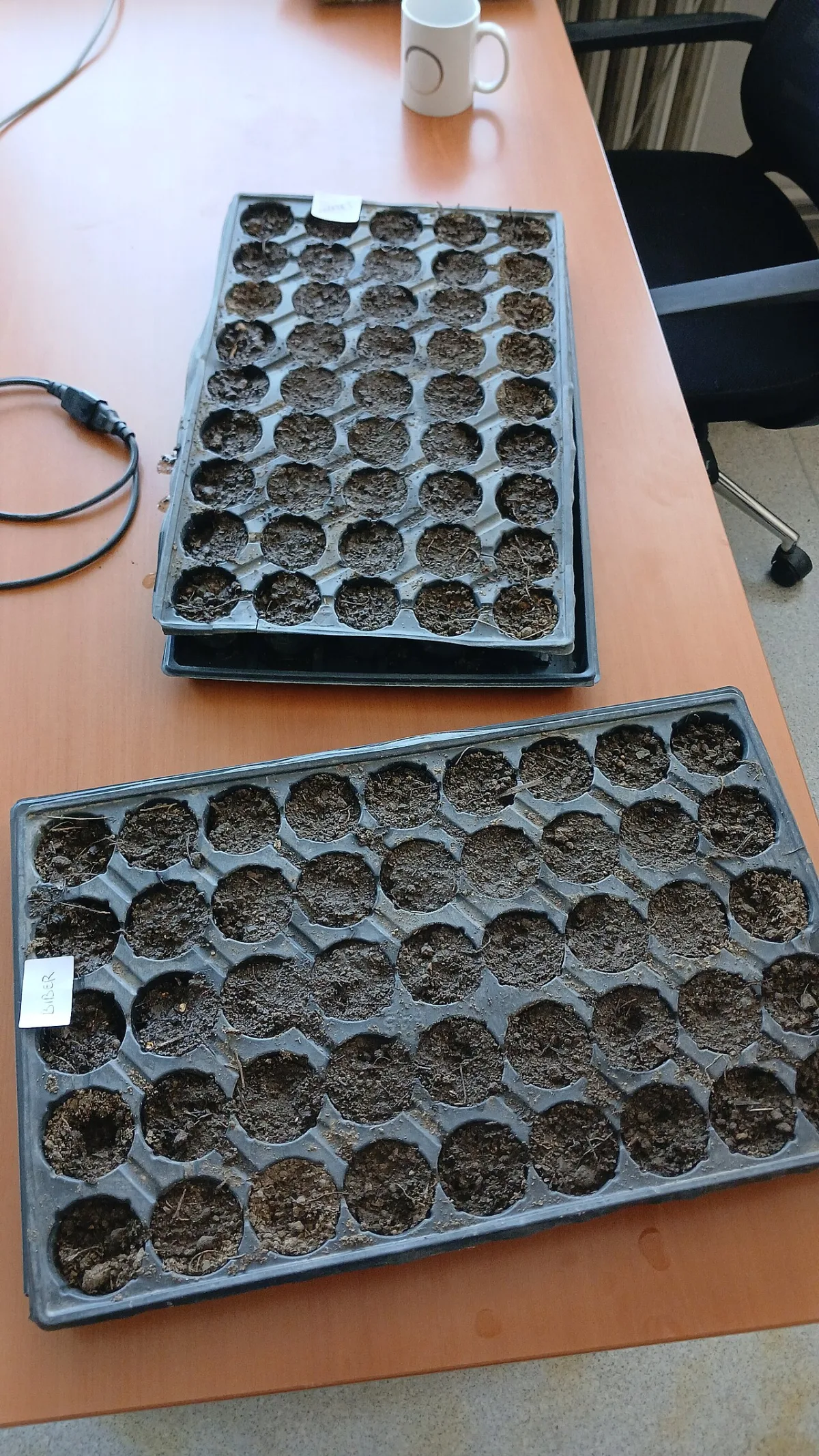
Eggplant is characterized by large leaves and a weak root system, so it is extremely sensitive to any transplanting. To avoid root damage, it is recommended to sow seeds directly into individual containers with a volume of 0.5–1 L. For this, pots are filled with moist and compacted soil mix, similar to the soil used for tomatoes and peppers.
- Sprout the seeds before sowing.
- Place one sprouted seed in each pot.
- Cover the seeds with a layer of dry soil 1.5–2 cm thick.
- Re-compact the soil.
- Cover the containers with plastic wrap or glass and place in a warm location.
The timing of seedling emergence directly depends on the temperature regime in the room. If it drops below the critical mark, the seeds may not emerge at all, and excessive heat will lead to their death. As soon as the first "loops" of seedlings appear, the transplants are moved to a cool, bright place for 5–7 days, and then returned to the warmth.
| Air temperature | Time of emergence |
|---|---|
| 28–30 °C | 10 days |
| 24–26 °C | 14 days |
| 20–22 °C | 3 weeks |
If sowing is done with dry seeds, the seedlings are pricked out at the stage of two true leaves. During transplanting, the seedling is held exclusively by its cotyledon leaves, the root is lowered into the hole without bending, and the plant is buried up to the cotyledons. A root that is too long is shortened. The soil around the stem is firmed, watered, and the plants are shaded for 2–3 days, after which 12-hour supplementary lighting with a fluorescent lamp is provided. Plastic "wrappers" are also suitable for cultivation, and thin support sticks are used to prevent the seedlings from falling over.
Eggplant is demanding of nitrogen, so top dressing begins from the moment of emergence. The best result is achieved by constant irrigation of the seedlings with a solution of "Uniflor-rost" (1 teaspoon per 5 L of water) instead of plain water. "Florist" and azophoska fertilizers are also suitable. In the classic application scheme, top dressing is carried out once a week with a solution of "Kemira-Lux" or another complex fertilizer in a similar proportion.
Do not allow waterlogging of the soil when growing seedlings. Excess moisture leads to root rot and the appearance of fruit flies, the larvae of which feed on plant rot. To combat waterlogging, irrigation is stopped, and the soil surface is sprinkled with ash. At a sustained temperature above 40 °C, seeds die, and below 20 °C, they do not emerge.
Transplanting seedlings into a greenhouse
Preparation for planting begins a few days before transporting the plants to the site. The timing of moving the seedlings to a permanent location and the need for preliminary hardening depend on the climatic conditions of the region. In southern districts, plants are transferred to the soil earlier, having previously prepared them for the open air.
- Age of seedlings for greenhouses — 70–80 days
- Period without irrigation before transport — 2–3 days
- Age of seedlings for the south — 35–40 days
- Hardening in the open air — 2–3 days for 3–4 hours
Before planting, holes are made in the soil, and 1 tablespoon of azophoska is added to each. In cold regions, the hole is filled to the brim with warm water, and the plant is set with its root ball immediately after the moisture is absorbed. In strong sun, the plantings are shaded for 2–4 days or treated with "Ecoberin," completely excluding irrigation for a week. The establishment period of the eggplant in a new place is about 20 days.
During cultivation, all lower leaves and side shoots are gradually removed from the stem up to the first fruit set. In north-western regions, flowers often have to be pollinated by hand in the first half of the day, before noon. On the most developed and strong plants, no more than two suckers can be left.
Read next
Greenhouses and covers For gardeners
Sowing and growing technology of tomato transplants for greenhouses
Greenhouses and covers For gardeners
Principles of plant compatibility and seed sowing of tomatoes in a greenhouse
Greenhouses and covers For gardeners