
Frame covers and modern agrotextile materials for plant protection
9 min read
Types of frame covers for beds
Frame structures usually cover a single bed and consist of a supporting frame and a light-transmitting cover. Depending on conditions and the farm's technology, arched (tunnel), single-slope, double-slope, or triangular shapes are chosen. The frame is assembled either as a single rigid structure or as individual sections under a common sheet.
Materials for the frame include metal hoops, wooden frames, or wire. The light-transmitting cover is most often a polymer film, non-woven materials, or glass. For example, arched covers made of transparent plastic corrugated sheets, popular abroad, are replaced in domestic climatic conditions by stretching a durable film over metal hoops. Glass structures are assembled as joined sheets on clips or mounted in wooden frames, leaving the ends open for ventilation.
Agrotextiles: types of films and their features
The term "agrotextile" includes a wide range of materials: from shading nets and biodegradable fabrics for land reclamation to mulching covers that suppress weeds without the use of herbicides. The core of the covering segment consists of polymer films and non-woven materials, such as spunbond. The choice of a specific cover directly affects the microclimate under the cover.
The most well-known and accessible material for covering greenhouses and hotbeds remains polyethylene film. It is produced in rolls and sleeves, which is convenient for cutting to any frame dimensions. The main parameters of the material are shown in the table.
| Parameter | Value |
|---|---|
| Roll (sleeve) width, m | 3, 4, 6 |
| Film thickness, mm | 0.03–0.4 |
In field conditions, film covering effectively protects crops from wind and partially retains heat. Plants under such protection can withstand spring frosts. However, standard cheap polyethylene has critical technological drawbacks.
Polyethylene film is air- and water-impermeable, so plants under it require regular ventilation and irrigation. Due to temperature fluctuations, condensation collects on the inner surface, provoking fungal diseases, and the material itself degrades under the influence of ultraviolet light within one season.
To extend the service life of the covers, manufacturers add light stabilizers to the composition, which slow down the destruction of the polymer under the sun. For long-term use (up to 6–7 years), ethylene-vinyl acetate (EVA) film is used. It is characterized by increased elasticity, durability, frost resistance, and high light transmittance.
To solve problems with condensation and night temperature drops, specialized films have been developed:
- Hydrophilic light-stabilized film ("Agrofog"): contains an "anti-fog" additive, thanks to which condensate does not collect in drops but flows down in a thin layer along the walls without damaging the plants.
- Heat-retaining hydrophilic film ("Agroterm"): works on the principle of a blanket, slowing down the heat loss by the soil during nighttime hours.
Light-stabilized and hydrophilic films are often dyed in warm or light-green tones. The coloration does not serve a functional purpose but merely acts as a marker of the film type and its durability.
- Frost protection under film — from -2 to -7 °C
- EVA film service life — up to 6–7 years
- Heat gain under "Agroterm" film — by 4–5 °C
- Standard polyethylene film thickness — 0.03–0.4 mm
And there are also: rolls of polyethylene film that are photodegradable — for grafting cuttings, which disintegrate after the graft union has healed. Danish manufacturers have mastered the production of reinforced polyethylene film.
The reinforcing component in it is a fiberglass mesh with cells approximately 10x10 mm, fused into the polyethylene base. Due to this, the film has high durability (withstanding at least three seasons of operation) and is stable during strong wind gusts. Its valuable quality is that in case of an accidental tear, the polyethylene does not spread further than one cell. A variety of such material is porous film, in each cell of which there are microscopic holes that let air and water through. In greenhouses and hotbeds covered with it, plants can "breathe" freely.
Production of reinforced film has also been mastered by domestic manufacturers. Since the film reduces light transmission by 25–30%, it is better to use it for greenhouse walls.
In our country, the use of reinforced polyethylene breathable and moisture-permeable film is just beginning. Tiny holes punched on its surface allow air to pass through.
A few years ago, a new type of light-converting polyethylene film ("Biosvet", "Urozhay") appeared on the domestic market. Special colored substances (phosphors) have been introduced into its composition, acting as filters for sunlight. From the solar spectrum, they isolate and transmit only waves of a specific range, which regulate metabolic processes during plant development and intensify photosynthesis. Plants absorb more than 50% of visible light, yields and fruit quality increase, and the growing season is significantly shortened.
One of the options for such a product is a film whose polymer possesses the property of absorbing waves in the far infrared region of the optical spectrum. This facilitates the creation of optimal temperature conditions in the space under the film, preventing both overheating and overcooling of plants.
Light-converting films come in single-layer versions — bluish or reddish in color, and three-layer (with a bubble effect) two-colored versions (red on one side, blue on the other). The advantages of such products include increased durability — the service life can be up to four seasons.
Colored light-converting films are also used for covers. Their distinctive feature is special additives that transform the solar radiation spectrum (ultraviolet radiation is converted into infrared, which is beneficial for plants). Such a covering contributes to the activation of the photosynthesis process, the acceleration of plant growth, and protection against frosts and overheating.
Different types of light-converting films are suitable for different regions. A film intended for southern regions must protect against excessive UV radiation and contain an increased content of ultraviolet converters. In turn, the "northern version" of the film contains phosphors that enhance diffuse lighting. Under such a film, even on a cloudy day, there is enough light for the full development of plants. Light-converting films are used in the same way as their traditional counterparts. They are used to cover greenhouses, stretched over hoops, and used to cover garden beds.
Air-bubble film consists of three layers of food-grade polyethylene, with a total thickness of less than 150 µm, which ensures sufficient light transmission of the film. A hermetically sealed bubble of dry air is located between the layers, which creates an air blanket effect and, consequently, high thermal insulation (20-30 times higher than that of single-layer cover materials). The air-bubble film possesses high mechanical strength and includes phosphor additives that enhance solar radiation in the range needed by plants.
Коба о 9 СЕР а. С Ру та Кик НХ Ко ая 9 а: ФО ет ОУ ух ее [4164 6 У Е КУК) ее ох, РУЛЬ Е оны ее 9.2 ПНВ 99:72 Е я рва ие: == Он Е Air-bubble film
Hydrophilic additives in the film composition ensure the rapid runoff of moisture from the inner surface of the film, eliminating the lens effect that leads to plant burns. Films with a larger bubble have a higher level of light transmission and lower mechanical properties (strength). Accordingly, a small air bubble transmits less light, but it has increased strength. When using air-bubble film without glass (as a base), it is recommended to use small-bubble film.
PVC film is used for hotbeds and greenhouses. Under PVC film, there is no overheating of plants, as the film breathes. At the same time, favorable temperature conditions are established in greenhouses, and the film protects against frosts and allows for increasing the temperature in hotbeds and greenhouses at night:
| Parameter | Value |
| Night temperature increase | 3-5 °С |
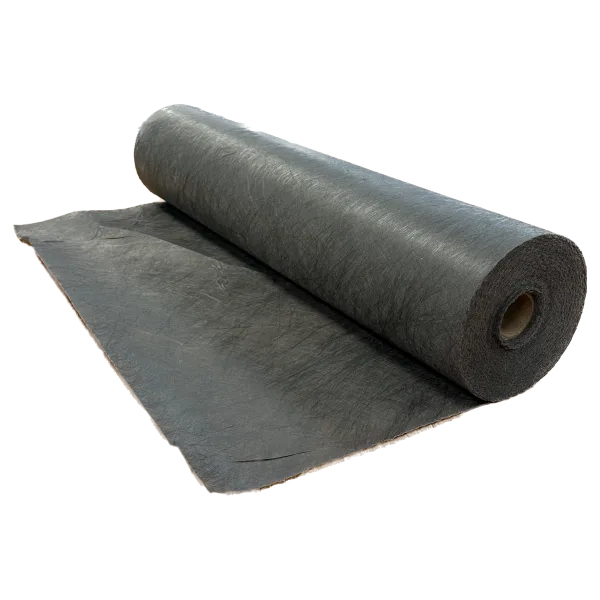
Despite the advantages of all the described materials, the most effective means of plant protection today in regions with an unstable climate are materials made of non-woven polypropylene fabric, such as "spunbond". They have been successfully used in agriculture in many countries for decades. Thanks to their unique properties and low prices, these materials are currently successfully used by gardeners, farmers, and large agricultural firms. The raw materials used for the production of agrotex must possess the following qualities:
- chemical and biological resistance, absence of toxic emissions;
- high strength and durability.
Due to the ubiquitous filling of the textile market with chemical fibers, fabrics made of synthetic and glass fibers have replaced technical linen and jute fabrics like burlap, previously used in agriculture.
Polypropylene fiber: a modern alternative to film
Materials made of stabilized polypropylene fiber are replacing the familiar polyethylene film. Today, this raw material occupies a leading position in the production of agricultural textiles. For an agronomist, this means access to more durable and functional solutions that successfully compete with old types of film coverings.
Modern technologies for processing polypropylene allow for obtaining materials with different properties for specific farm tasks. New production methods reduce the cost of finished products, making plant protection more profitable. At the same time, the assortment of available products for open and protected ground is expanding.
The following are manufactured from stabilized polypropylene fiber:
- woven and non-woven cover materials;
- textile grids;
- protective nets;
- special agro-knitwear.
The use of polypropylene raw materials and modern processing technologies significantly reduces the cost of protective materials and expands the possibilities for their implementation in the crop cultivation technology.
Read next
Greenhouses and covers For gardeners
Application of non-woven cover material Spunbond in modern crop production
Greenhouses and covers For gardeners
Application of agrotextile for protection and cultivation of garden crops
Greenhouses and covers For gardeners