
Advantages of expanding the greenhouse complex on a country plot
7 min read
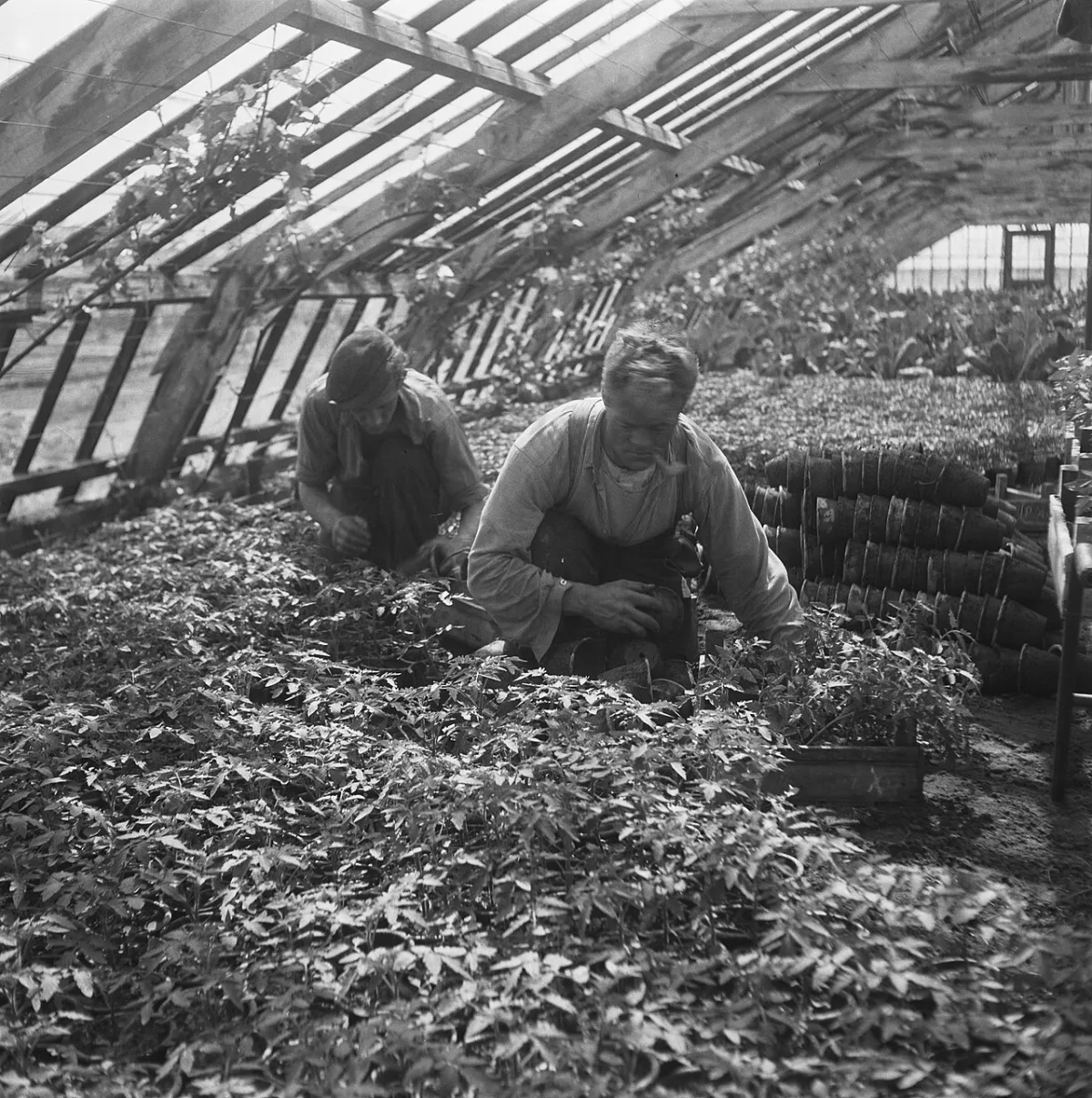
When thinking about a greenhouse complex, a whole host of its drawbacks comes to mind: the expenses involved, the effort required, and the question of where to fit so many structures… The benefits tend to slip away. So why is it better to have three greenhouses instead of one?
A counter-question: are you a passionate plant enthusiast? Or are these plantings just a necessity to fill up your purchased plot of land, besides a vast lawn and pathways?
Answer one simple question as well. How many different light film covers do you usually set up in spring, besides your greenhouse (referring to temporary or permanent tunnels on hoops covered with film or agrofibre, as well as various small hotbeds and seedbeds for vegetative propagation)?
- If you have none of these, then you are clearly a very unenthusiastic grower, and new opportunities will not excite you.
- If, however, such covers appear every spring, their number indicates your actual need for additional greenhouses.
If you are thinking: "But I already have one greenhouse, why would I need more!", then this book is exactly for you. Here is the most advantageous combination.
Today, greenhouses have become much more accessible than before, and it can be said that we have experienced a true greenhouse revolution. While in the Soviet era, building just one glass greenhouse was very expensive, time-consuming, and difficult due to the search for corrosion-resistant materials, today, gardeners are snapping up polycarbonate kits for their plots like hotcakes. And this is why I mention it.
As a soil scientist, it bothers me when I see, for instance, a plot or a landscape design project with only one greenhouse. I want to ask: are you not aware of soil fatigue and crop rotation? You cannot, under any justification, plant tomatoes in the same greenhouse year after year; otherwise, you are guaranteed its most unpleasant diseases: late blight, streak… You will then flood the entire greenhouse with pesticides. As a soil scientist for whom soil cleanliness is imperative, I certainly cannot consider this a good solution.
In the long run, pesticides accumulated in the soil inevitably begin to poison the plants and cause diseases. Disease is always a response to disrupted growing conditions.
When I am shown various diseased plants, what I see first is the gardener's incorrect action, which usually leads to these symptoms, and only then the name of the disease. In essence, the diagnosis should not be the name of the disease or the treatment product, but the identification of a mistake in care that must be either immediately corrected or avoided in the future. Plant poisoning in conditions of soil fatigue or their "treatment" is one of the most frequent causes of such issues.
Therefore, it is wiser to take advantage of the current accessibility of greenhouses to alternate tomatoes with other crops.
"Alright, that's clear, but why exactly three?" our knowledgeable gardener, a prudent owner of a pair of greenhouses, might inquire.
• First, because we are talking about the optimal, best number of years for rotation. One year is not enough for soil recovery after a crop; it is always more reliable to take a two-season break before returning any crop to the same spot. This applies to potatoes as well as tomatoes, melons, watermelons, etc.
I foresee your sarcastic remark: "Then let's make it three seasons for even greater reliability. And four would be even better!" No, a three-season break is already excessive, but you should try to organize two. A two-season break is a guarantee for a garden plot.
If all vegetable crops in your garden return to the same spot every two seasons, then your garden, both open-field and greenhouse, is reliably protected from pests and diseases. Isolated cases do not count, and against such a background, they are easily solved without the use of chemicals.
• Secondly, with three greenhouses, new possibilities open up with the sequence "tomatoes (along with all other nightshades: eggplant, sweet pepper, hot pepper) — melons and watermelons (i.e., all cucurbits; if desired, you can also plant cucumbers here) — greens." The resulting sequence is very strong, and it exceeds all expectations compared to a "lonely and diseased tomato monoculture."
In the first greenhouse, you have tomatoes in one half, and sweet peppers and eggplants in the other (in principle, peppers and eggplants, like cucumbers, grow easily under hoops with garden fleece, and if the size of the garden allows, separate tunnels can be set up for them, leaving the entire greenhouse for tomatoes by planting contrasting cultivars: ultra-early for June production, large-fruited salad types, small-fruited for canning, and finally, special cultivars for long-term fresh storage).
The second greenhouse is occupied by melons and watermelons, also of different cultivars — true beauty ripens in August and throughout the autumn.
The third greenhouse is your unexpected gem: colorful rows of all sorts of early salad exotics:
- napa cabbage, red lettuce, parsley, spinach, common lettuce, basil, celery, onion, radish, broccoli;
- if desired, you can interplant a modest amount of cauliflower, peas, carrots, and garlic here for an early harvest...
A permanent greenhouse for leafy greens is a very vibrant part of the garden. Moreover, appreciate this: a greenhouse dramatically expands the boundaries of consumption: all these greens ripen at an accelerated pace in a continuous stream from April to November; here, they are practically not threatened by spring and autumn frosts.
Conclusion
According to the rules of crop rotation, leafy crops are among the best predecessors for tomatoes. Parsley, lettuce, basil, as well as peas, radish, carrots, and garlic are particularly well-suited. Annual crop rotation in the order of "tomatoes-melons-greens" allows for creating a system of mutually reinforcing components. The first wave of harvest ends in June, after which the empty beds are fertilized and new sowing is carried out, necessarily rotating the plant locations.
An enclosure sheltered from wind and rain allows you to work in the beds unhurriedly and meticulously. In a greenhouse, it is convenient to thin out seedlings or create an artificial shortened light day using black film. This is necessary for growing spinach and daikon. In the conditions of the Central region with its long summer day, it is impossible to obtain high-quality produce of these crops in an ordinary open bed.
How to avoid overheating: rules for choosing a greenhouse
When choosing a greenhouse, its length plays a key role. Most polycarbonate models suffer from a lack of side transoms. Short structures are easy to ventilate, whereas in long hangars, air simply stagnates in calm weather. Because of this, plants suffer from critical temperatures.
In long polycarbonate greenhouses without side transoms, the air in the middle does not circulate during calm weather. Tall tomato bushes overheat intensely during the day, which leads to leaf necrosis.
| Length of a standard greenhouse | Effective replacement |
|---|---|
| One 12 m long greenhouse | Three short 4 m long greenhouses |
| One 8 m long greenhouse | Two short 4 m long greenhouses |
A greenhouse is garden equipment, a common work tool. First, you learn to use it correctly, and then you can no longer imagine your daily routine without it. It is worth starting work with protected ground gradually in order to gain experience with a small volume.
- Install only one covered structure in the first season.
- Master it as a work tool and learn how to manage the microclimate.
- Add one greenhouse each subsequent season, gradually expanding the complex to three objects.
Read next
Greenhouses and covers For gardeners
Selection of cultivars and cultivation techniques for melons and watermelons in a greenhouse
Soil and tillage For students
Influence of soil structure and composition on capillary moisture transfer
Soil and tillage For students