
Organic fertilizers and modern technologies for improving soil fertility
7 min read
Fast-Acting Organics: Ready-to-Use Fertilizers and Soil Conditioners
Bionex-1 is a dry concentrated fertilizer based on composted chicken manure, which activates soil microflora and ensures a quick start for crops. Its composition includes at least 10.0% organic matter, as well as essential nutrients: nitrogen (1.0–2.5%), phosphorus (2.5–5.0%), and potassium (0.5–1.5%). The product is enriched with a full range of natural microelements and beneficial microflora, making it a universal solution for vegetables, berries, fruit trees, lawns, and transplants.
| Application Method | Application Rate | Timing and Conditions |
|---|---|---|
| Application before tillage | 100 g per 1 m² | In spring or autumn during site preparation for all crops. |
| Local application in the planting hole | 4–6 tbsp. | Directly during plant planting. |
| Application in row spacings | 100 g per 1 m² | Incorporation to a depth of 8–12 cm for all crop types. |
| Fertilizer irrigation in open soil | 300 g per 10 l of water per 1 m² | During the active growth and flowering phase of plants. |
| Fertilizer irrigation for indoor plants | 30 g per 1 l of water | Working solution consumption — 100 ml per 1 kg of soil during the active growth and flowering period. |
Lowland peat is indispensable as a loosening agent for heavy and unstructured soils, as well as for mulching crops. It contains 2.3–3.3% nitrogen, up to 0.5% phosphorus, and 0.15% potassium. Upland peat, due to its high acidity and low degree of decomposition, is used primarily for livestock bedding. To significantly increase the agronomic value, any peat must be composted before application.
Sapropel is a valuable bottom silt rich in organic substances, lime, nitrogen, phosphorus, potassium, microelements, vitamins, and growth stimulants. It shows maximum efficiency when cultivating light sandy soils.
Silt collected during the cleaning or shallowing of water bodies must be aerated before use. This helps reduce excess humidity and neutralize acidic compounds that are harmful to the root system.
- Basic dose of Bionex-1 for tillage — 100 g/m²
- Application rate of lowland peat — 4–8 kg/m²
- Application rate of sapropel — 3–4 kg/m²
- Application rate of mixed compost — 3–4 kg/m²
- Limit for sawdust application in autumn — 5 buckets per 10 m²
Composting Technologies and Soil Preparation
Mixed compost is an effective substitute for traditional manure, exceeding it in quality when properly prepared. To prepare it, one should pile tops, healthy plant residues, dry leaves, vegetable peelings, weeds before seeding, sawdust, wood shavings, debris, and ash. To accelerate ripening and enrich the mixture, manure, slurry, fecal compost, phosphorite flour (up to 20 kg per 1 t of compost) are added, as well as biological preparations: Compostin, Fitosporin, EM-preparations, AgroBriz, or Sternya.
It is strictly forbidden to add tops and plant residues affected by clubroot or late blight to the compost pile. This will lead to the contamination of the entire volume of fertilizer.
Compost is applied to vegetable crops and potatoes. During spring tillage, it is evenly spread over the site area, and during sowing or planting, it is applied directly into furrows, beds, or planting holes.
Wood sawdust serves as an excellent loosening agent for heavy soils, hotbeds, and greenhouses, and is also suitable for mulching. Fresh sawdust cannot be applied: it actively binds soil nitrogen. They should be pre-moistened with a nutrient solution and incorporated in autumn into pre-limed soil.
To prepare sawdust, one of the following compositions is used at a rate of 10 l of working solution per 3 buckets of raw material:
- 10 l of water, 500 g of garden fertilizer mixture, and 150 g of urea;
- 10 l of water and 220 g of urea;
- 10 l of water and 0.5 kg of Gumi-Omi Nitrogen preparation;
- solution of fresh cow manure (5 l of cow manure per 10 l of water).
Additionally, biologically active preparations are effective for treating sawdust: Compostin, Fitosporin, EM-preparations, AgroBriz, and Sternya.
Gumi-Omi Compostin is a specialized mild accelerator for organic ripening. It contains 13% total nitrogen, 1% total phosphorus, 0.4% total potassium, 50% fermented organic matter, and 20% sodium humate. The preparation increases the population of beneficial organic decomposers more than 10-fold; Fitosporin-M in its composition suppresses soil pathogens, and humic substances reduce the concentration of heavy metal salts and stimulate the accumulation of sugars and vitamins in plants.
| Application Option | Preparation Dosage | Solution Consumption and Technology |
|---|---|---|
| Accelerating compost ripening | 50 ml per 10 l of water | 10 l of working solution per 50 kg of raw material. |
| Moistening the finished compost pile | 20 ml per 10 l of water | Even watering of the pile to maintain humidity. |
| Liquid top dressing based on plants | 120 ml per 100 l of water | Fill 1/3 of the container with green mass, fill with water (2/3 of the volume), and add the preparation. |
| Liquid top dressing based on organic fertilizers | 60 ml per 100 l of water | Fill 1/3 of the container with organic fertilizer, fill with water (2/3 of the volume), and add the preparation. |
Sod soil is harvested in the spring for use in hotbeds, greenhouses, and for making peat-humus pots.
- Cut sod 8–12 cm thick as soon as the soil dries out.
- Place the bottom row of the stack with the grass facing up.
- Apply a layer of manure. In case of high acidity, add lime (3–4 kg per 1 m³).
- Lay the next row of sod with the grass facing down.
- Moisten dry soil with liquid manure and add bioactive preparations (Compostin, Fitosporin, EM-preparations, AgroBriz, or Sternya).
- Raise the edges of the stack when finishing its formation to create a depression for collecting rainwater.
Cereal straw (rye, wheat, oat) and legume crops contain 15% moisture and about 85% valuable organic matter. It is rich in macro- and micro-nutrients, including nitrogen, phosphorus, potassium, calcium, magnesium, sulfur, boron, copper, manganese, molybdenum, zinc, and cobalt. It is used as biofuel in greenhouses, processed in composts with the addition of bioactive preparations, or incorporated directly into the soil in the form of chopped straw.
To avoid nitrogen deficiency, when ploughing in straw, ensure you apply 4.5 kg of ammonium nitrate, or 7.5 kg of ammonium sulfate, or 5 kg of the Gumi-Omi Nitrogen preparation for every 100 kg of chopped straw.
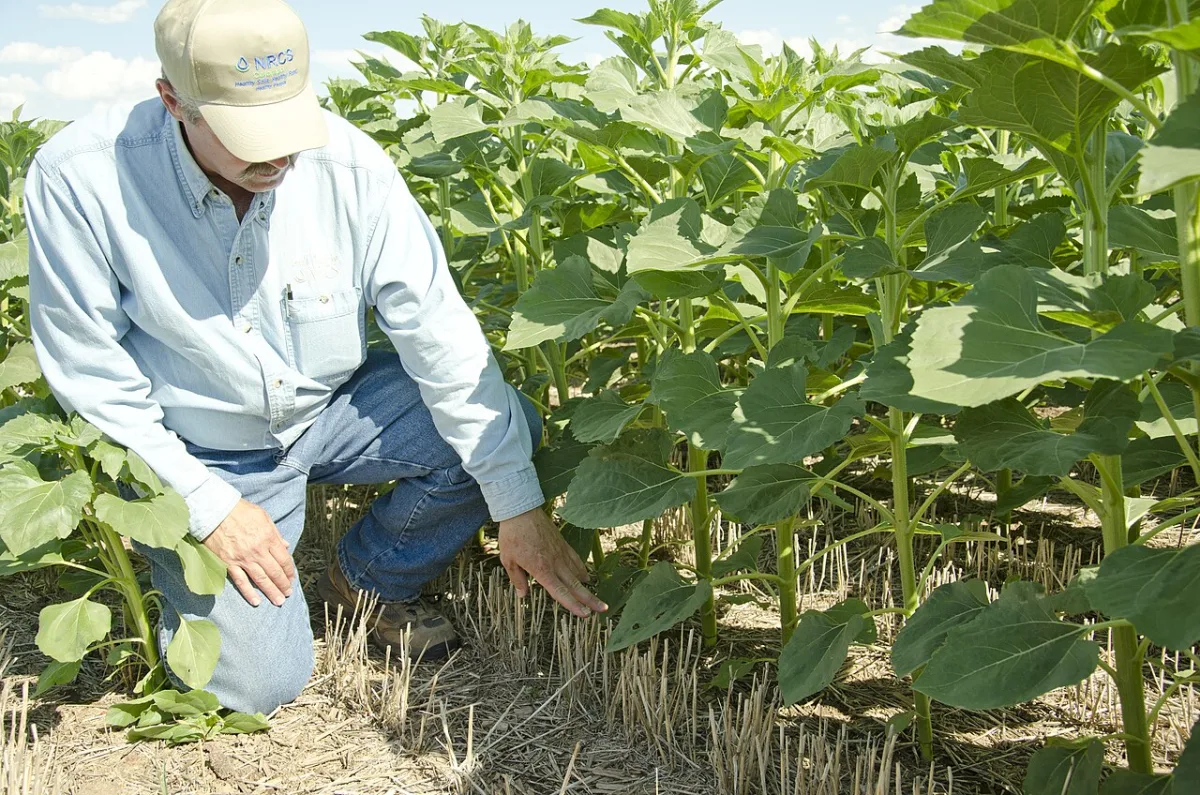
Green manure (sideration) is an effective way to improve structure and increase soil fertility. Mown plants and chopped material can be incorporated directly into the soil, used to prepare liquid top dressing, for mulching, added to compost, or used to protect crops from pests and diseases. Green manure crops work on all soil types, but they provide the maximum effect on low-fertility soils with a light particle-size distribution.
For green manure to work effectively, it is important to observe the timing and depth of tillage. The green mass is incorporated before the start of mass flowering, while the stems have not yet coarsened. Incorporation depth is selected strictly according to the soil type in a specific field.
- Optimal incorporation phase — budding (before the start of flowering)
- Depth in heavy soils — 6–8 cm
- Depth in light soils — 12–15 cm
The Danger of Unbalanced Nutrition: Why One Should Not Abandon "Chemicals"
Natural organic fertilizers improve the physical properties of the soil: they increase organic matter content, optimize density, increase water-holding capacity, regulate the thermal regime, and activate soil microflora. However, relying exclusively on organics leads to a serious imbalance of elements. In terms of their chemical composition, manure, compost, and green manure are predominantly nitrogen-potassium fertilizers.
With the systematic application of only organics, nitrogen and potassium accumulate in the soil, while the phosphorus content remains low. This imbalance limits yield growth, changes plant chemistry, and degrades the quality of produce. For example, phosphorus deficiency with an excess of nitrogen leads to the active accumulation of nitrates in fruits and vegetables.
Organic fertilizers (manure, compost) contain a lot of pathogenic microflora — putrefactive bacteria and fungi that increase the incidence of diseases in cultivated plants. To avoid this and balance crop nutrition, do not exceed the organic application rates and be sure to combine them with mineral fertilizers, primarily phosphorus ones.
Read next
Fruit growing For agronomists
Influence of mulching on the water regime and yield of apple trees
Nutrition and fertilizers For gardeners
Nutritional characteristics and fertilizer system for open-field vegetable crops
Nutrition and fertilizers For gardeners