
Biology of honey bees and technology of honeycomb construction in the hive
9 min read
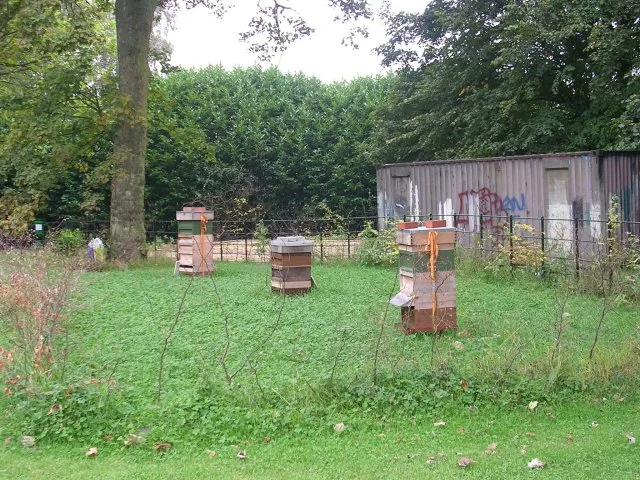
Beeswax is a key building material of the hive, the quality of which determines the health of the nest and the overall productivity of the apiary. Wax is produced by the glands of worker bees, secreted externally, and solidified into thin flakes. Efficient management of the wax potential allows the beekeeper to timely renew nests and collect more market honey.
- Comb service life before culling — 2–3 years
- Comb thickness — 22–25 mm
- Standard bee space width — 12 mm
- Bee space width for honey cells — 18–19 mm
- Honey consumption to produce 1 kg of wax — about 3.5 kg
- Temperature of the water-alcohol solution for the test — 20 °C
Biology of wax secretion and rules of comb construction
The wax-secreting system of a worker bee consists of 4 pairs of wax mirrors on the last abdominal sternites. The glands begin to develop from the first day of the insect's life, but wax secretion starts only on the 4th–5th day. The peak of wax productivity occurs at the age of 12–17 days, and after 2–3 weeks, this process stops completely. At one time, only about 1.5–2 mg of wax flakes are secreted on the bee's mirrors.
Comb construction occurs only when a queen is present in the colony. Upon the loss of the queen or during the period of preparation for swarming, the bees completely stop construction work.
To build a single hexagonal bee cell, insects use about 13 mg of wax, which is equivalent to 50 flakes. A larger drone cell or queen cell requires 30 mg of raw material, or 120 flakes. The hexagonal shape was chosen by nature for a reason: it provides maximum strength of the comb with minimal consumption of construction material. To build a standard comb measuring 435×300 mm, 140–150 g of wax is required, while the finished comb contains 9,100 cells and holds up to 4 kg of honey.
Bees fill cells with nectar only to 1/3 of their volume. This technology is necessary to accelerate the evaporation of excess moisture from the nectar.
The speed of frame construction depends on the strength of the bee colony and weather conditions. During a good honey flow, a strong colony is capable of fully building out a frame with foundation in 2–3 hours. A medium colony requires 12–24 hours for this work, and during a weak maintenance flow, the process takes up to 2–3 days. Depending on the purpose, bees build several types of cells:
- Worker cells — for rearing worker bees, 5.3–5.7 mm in diameter, 12–13 mm deep, with a volume of 0.25–0.28 cm³.
- Drone cells — for rearing drones, 7 mm in diameter. There are 4 worker cells and 3 drone cells per 1 cm² of comb. In this zone, the comb thickness is 22–25 mm, and the bee space width is 12 mm.
- Queen cells — large cells with a volume of 0.8–0.9 cm³, intended for rearing queens. Bees build swarm queen cells when preparing to swarm, and emergency queen cells in case of the queen's death, expanding them by 3 times at the expense of neighboring cells.
- Honey cells — deep cells with an upward-curved edge to prevent honey from spilling out. Their capacity is 1.5–2 times greater than ordinary ones. They are built in honey super frames with a bee space width of 18–19 mm and in the upper part of the brood frames. The queen does not lay eggs there, as her abdomen cannot reach the bottom.
- Transition cells — intermediate cells at the junction of worker and drone zones.
- Attachment cells — serve for secure fastening of the comb to the wooden bars of the frame.
Culling of combs and calculation of seasonal productivity
Freshly built combs consist almost entirely of pure wax and are white with a slight creamy tint. As brood is reared, cocoon residues accumulate in the cells, causing the combs to gradually darken — first to brown, and then to black. As a result, the inner diameter of the cells decreases, and the bees emerging from them are smaller and less productive. To avoid this, combs must be systematically culled and melted down every 2–3 years.
| Comb color | Wax content, % | Characteristic of raw material |
|---|---|---|
| White with creamy tint | Almost 100 | Fresh combs |
| Yellow | About 75 | Older combs that have been in use |
| Brown and dark | Up to 60 | Old combs with accumulated cocoons after brood rearing |
The color of the wax is influenced by the presence of propolis resin with the pigment chrysin, which also gives the product its characteristic aroma. Additionally, the color changes under the influence of flower pollen and the raw material processing technology. By chemical composition, wax contains 75% esters, up to 15% free fatty acids, and up to 10% hydrocarbons. The specific gravity of pure wax at a temperature of 15 °C is 0.965–0.970.
Seasonal wax collection from one bee colony ranges from 500–600 g to 2.0–2.5 kg depending on its strength. At the same time, the insects spend about 3.5 kg of honey to produce 1 kg of wax. To assess the total productivity of the apiary for the season, the formula for calculating wax yield is used:
(P - p) × 0.140 + C - I
Where:
- V — the amount of wax obtained per season per bee colony;
- P — the total number of combs after autumn culling in the apiary;
- p — the total number of combs after spring culling in the apiary;
- 0.140 — the amount of wax (kg) required to build one comb;
- C — the amount of wax and wax raw materials obtained per season;
- I — the amount of foundation used per season;
- N — the number of bee colonies in the apiary.
Monitoring wax purity and assessing comb condition
When purchasing wax, be sure to monitor its purity, as fakes are frequently encountered on the market. Inexpensive additives are used to adulterate raw materials: paraffin, ceresin, rosin, stearin, or technical wax containing only 30% natural wax. Stearin is a mixture of stearic and palmitic acids that feels greasy to the touch, while rosin is obtained by processing pine resin or resinous wood.
Bees will not build combs on foundation made from mineral waxes. Mixing in paraffin, ceresin, or stearin reduces the density of the material and impairs its mechanical properties.
The authenticity of the raw material can be quickly checked using an aqueous-alcoholic mixture. For the test, prepare a solution of alcohol and water with a specific gravity of 0.95 at a temperature of 20 °C. Natural beeswax sinks in such a liquid, while adulterated material floats to the surface. Impurities can be accurately identified by the physical characteristics of the substances.
| Substance | Color | Structure | Density, g/cm³ |
|---|---|---|---|
| Wax | From white and light yellow to dark | Microcrystalline | 0.956–0.970 |
| Paraffin | White and yellowish | Waxy | 0.88 |
| Ceresin | White and yellow | Crystalline | 0.85 |
| Stearin | White | Waxy | 0.92 |
The condition of the brood nest and the suitability of the combs for further use are determined visually by inspecting the bottoms of the cells against the light. Based on the color of the comb and the nature of the debris, one can accurately determine how many generations of bees have emerged from it:
- White or light yellow comb: the bottoms are clean, no fecal pellets — no bees have emerged.
- Light brown: the bottoms are transparent, slightly yellowish, dark pellets are noticeable in 1–2 corners of the cells — 1–2 generations have emerged.
- Brown: the bottoms are yellow or light brown, dark fecal pellets are present in all six corners, three dark stripes are visible when backlit — 2–3 generations have emerged.
- Dark brown or orange: the edges of the bottoms are translucent only in the middle — 4–5 generations have emerged.
- Dark brown: only 1–2 translucent edges of the bottoms are visible — 6–8 generations have emerged.
- Dark (half opaque): half of the bottoms are completely opaque, while 1–2 dark brown spots are visible on the others — 8–10 generations have emerged.
- Almost dark: only individual, faintly translucent dark brown spots appear in the light — 12–14 generations have emerged.
- Dark: the cells are completely opaque — 15–20 or more generations have emerged.
Assessing the quality and parameters of wax foundation
The quality of the foundation directly affects the speed at which the nest is built by bees. Durable and flexible foundation with the correct cell size prevents comb deformation under the weight of brood and honey. When choosing sheets, one must evaluate their mechanical strength, cell geometry, transparency, and thickness. The strength of the foundation is determined by its breaking length — the length of a 5 cm wide strip that breaks at the upper edge under its own weight.
| Breaking length, m | Foundation quality |
|---|---|
| Over 50 | Excellent |
| 40–50 | Good |
| 30–40 | Low (suitable only for shallow or section frames) |
| Below 30 | Defective |
In the field, the strength of the foundation can be quickly checked without special equipment. This express method allows for an immediate assessment of a batch's quality upon receipt:
- Ensure the room temperature is approximately 20 °C.
- Place a sheet of foundation on your palm across your hand.
- Hold the sheet in this position for 1–2 minutes.
- Evaluate the bending: high-quality foundation will only bend slightly while maintaining its shape, while weak foundation will sag significantly on the palm.
Cell size is measured with a standard ruler. For accuracy, measure the length of a chain of 10 cells in three directions at the center of the sheet and divide the resulting number by 10. Standard high-quality foundation has a cell size of 5.3 to 5.45 mm. Sheets with cells larger than 5.6 mm should be culled. An exception is made for foundation with enlarged cells (5.65–5.83 mm) manufactured on special request.
Be sure to check the foundation against the light. A cloudy, poorly translucent sheet indicates an excess of emulsified water in the wax. Such foundation will be brittle and break quickly in the hive.
Foundation thickness is controlled by the number of standard 410×260 mm sheets per kilogram of weight. To quickly determine thickness without weighing the entire stack, weigh one sheet on a precise scale and convert the resulting weight to 1 kg of mass:
- Thick foundation — 8–10 sheets/kg
- Medium foundation — 10–11 sheets/kg
- Thin foundation — 12–13 sheets/kg
Medium-weight foundation is the most economical and convenient to work with. Use thin sheets only in shallow and section frames; in brood frames, they often deform and break under the weight of the brood.
Read next
Beekeeping For students
Composition of a bee colony and biological characteristics of individual development
Beekeeping For students
Stocking an apiary for one hundred bee colonies: necessary inventory and equipment
Beekeeping For students