
Stocking an apiary for one hundred bee colonies: necessary inventory and equipment
7 min read
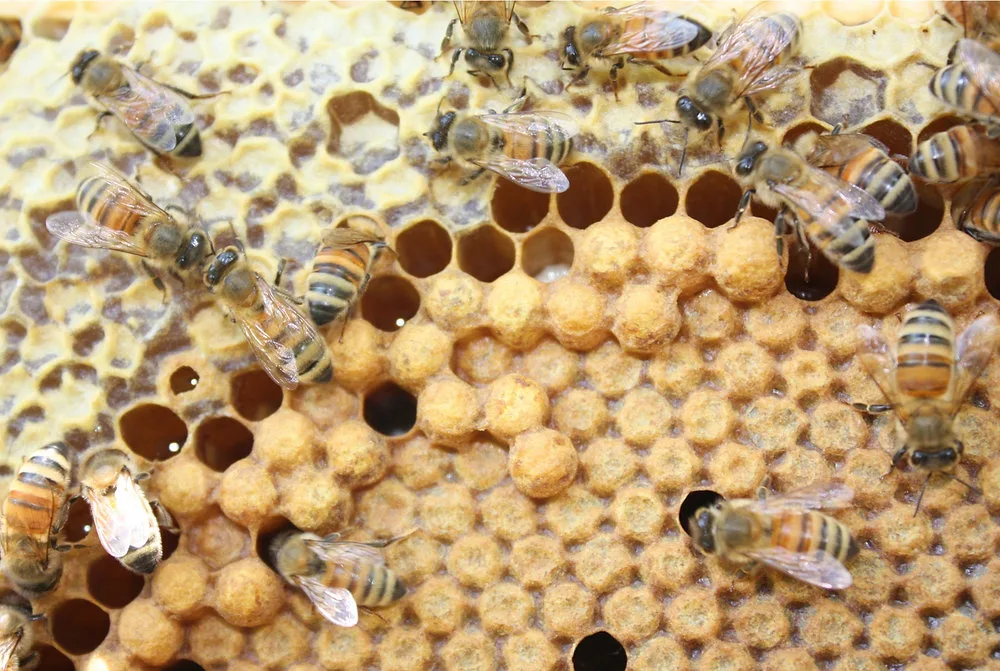
The efficiency of apiary operations directly depends on the timely preparation of inventory and equipment. To service 100 bee colonies, a full set of tools is required, allowing for routine inspections, queen rearing, and honey extraction without delay. Having high-quality equipment minimizes stress for the bees and reduces labor intensity throughout the entire season.
For performing basic manipulations with bees, forming nuclei, and breeding work, specialized hand tools are necessary. We offer a ready-made list of inventory calculated for servicing an apiary of 100 bee colonies. This is the optimal volume to ensure a continuous cycle of work.
| Inventory name | Quantity per 100 bee colonies |
|---|---|
| Hive tool | 2–4 |
| Smoker | 2–4 |
| Veil | 2–4 |
| Beekeeping knife | 2–4 |
| Scraper-spatula | 2–4 |
| Queen introducing cage (push-in) | 25–30 |
| Queen cage | 50–60 |
| Queen excluder | At least 20 |
| Bee brush | 2–4 |
| Work box-stool | 1 per apiary site |
| Carrying box | 1 per apiary site |
| Entrance reducer | 100 |
| Feeders | 100 |
| Swarm catcher | At least 5 |
| Drone trap | 25–30 |
| Cell cup mold | 1–2 |
| Grafting tool | 1–2 |
| Isolator for obtaining larvae of the same age | 2–4 |
| Grafting frame | 3–6 |
| Nursery frame | 3–6 |
| Queen introduction isolator | 10–15 |
A hive tool, a smoker, and a veil are used for inspecting and dismantling hives. A steel hive tool 200 mm long and weighing 0.15 kg is used to pry apart frames, clean off propolis, wax, and traces of dysentery. A smoker with a tin body, inner canister, and bellows pacifies bees with a directed jet of smoke. A veil with a hat, black tulle, and wire rings reliably protects the head and neck from stings.
Preparation of inventory for breeding work and honey harvest
A beekeeping knife weighing 0.1 kg and measuring 393 × 30 × 45 mm is used for uncapping combs and cutting drone cappings. For quick cleaning of the bottom board from dead bees and wax debris, a scraper-spatula measuring 230 × 80 × 45 mm is applied. When introducing queens, push-in cages with a diameter of 140 mm or mesh queen cages measuring 36 × 28 × 58 mm are used. Queen excluders with pass-through openings of 4.4 × 28 mm help limit the queen's egg-laying area in a hive with honey supers.
For carrying small inventory, the beekeeper uses a box-stool, and frames are transported in a closed box for 6–8 pieces. Feeders are necessary for replenishing honey shortages, autumn feeding with sugar syrup, providing medicinal top dressing, and aromatic training of bees. Swarms that have emerged are collected in swarm catchers, and the uncontrolled flight of drones is contained using drone traps. During artificial queen rearing, larvae are transferred with an aluminum grafting tool into wax cell cups, which are molded using a wooden template 9 mm in diameter and 100 mm long.
- Dimensions of the queen excluder — 448 × 250 × 0.3 mm
- Size of excluder mesh — 4.4 × 28 mm
- Diameter of the queen push-in cage — 140 mm
- Dimensions of the queen cage — 36 × 28 × 58 mm
- Capacity of the carrying box — 6–8 frames
- Length of the entrance reducer — 250 mm
Installation of an entrance reducer on the entrance slot is mandatory to protect the hive from rodent intrusion while maintaining a free passage for bees. The length of the reducer is 250 mm, and the width is 31 mm.
All inventory must be disinfected and prepared for work before the start of the massive honey flow. The productivity of the apiary during the main honey flow directly depends on the throughput of the extraction line and the availability of mechanization means.
To ensure the apiary works without interruptions during the active honey flow season, it is important to prepare a complete set of inventory in advance. The calculation of needs is based on the size of the operation — for example, a standard commercial apiary of 100 bee colonies requires a strictly defined number of hives, tools, and securing devices. A shortage of basic equipment during peak periods leads to missed honey collection and the loss of swarms.
| Name of equipment and general inventory | Quantity per 100 bee colonies |
|---|---|
| Embedding board | 2–4 |
| Wire | 4–6 spools |
| Spool holder | 2 |
| Eyelet punch | 1 |
| Combined spur embedder | 2 |
| Step-down transformer | 1 |
| Uncapping table | 1 |
| Beekeeping knife (for extraction) | 2–4 |
| Steam or electric vibrating knife | 1 |
| Honey extractor | 1–2 |
| Filter | 2–4 |
| Honey storage container | As needed |
| Steam wax melter | 1 |
| Solar wax melter | 1–2 |
| Wax press | 1 |
| Thermometer and psychrometer | 1 |
| Bee waterer | 1 per apiary site |
| Scale for control hive | 1 |
| Apiary cart | 1 |
| Migratory apiary cabin | 1–2 |
| Blowtorch | 1 |
| Frame cleaner | 1 |
| Spare hives | At least 20 |
| Hive fasteners for bee transport | 100 |
| White lab coats | 2–4 |
| Black lab coats | 2–4 |
Special attention should be paid to the stock of housing for new colonies. In the active period, the beekeeper must be able to react instantly to the emergence of a swarm or form nuclei. The lack of available hive bodies at this moment directly reduces the profitability of the apiary.
Keep a reserve of at least 20 empty hives for every 100 bee colonies. This will allow for the timely housing of swarms and the formation of new nuclei without delay.
When preparing frames for colonizing, observe the technical parameters of the equipment. Inaccuracies in the dimensions of elements or deviations in tool operating modes can lead to defective foundation. This will slow down the bees' work on building the nest.
When embedding wire into frames, use a step-down transformer with an output voltage of strictly 12 V.
- Width of grafting frame bars — 25 mm
- Thickness of grafting frame bars — 5 mm
- Brood generations reared in the isolator comb — 2–3
- Transformer voltage for embedding — 12 V
Honey extraction and beeswax processing
The collection of marketable honey begins with preparing the combs for extraction. They are uncapped on a special table, where the wax cappings (zabrus) — the airtight wax seals that protect ripe honey from fermentation and spoilage — are cut from the frames. The work is performed manually using a classic beekeeping knife or accelerated by using a high-performance steam-heated counterpart.
| Beekeeping knife parameter | Size, mm |
|---|---|
| Length | 393 |
| Width | 30 |
| Height | 45 |
Finally, honey is extracted in honey extractors under the action of centrifugal force, which throws it from the cells onto the walls of the tank. The extracted honey is necessarily passed through mesh filters to clean it of wax residue before being poured into containers. In this process, the combs themselves retain their structure, which allows the drawn comb (sush) to be reused throughout the season.
The design of the honey extractor is selected based on the volume of work at the apiary. Depending on the arrangement of the cassettes in the drum, manufacturers offer several options. In practice, the following types of equipment are used:
- chordial;
- radial;
- universal (chordial-radial);
- tangential.
Culled old combs and wax cappings should not be left unprocessed, as they are a valuable raw material. Steam or solar wax melters are installed at apiaries for rendering. To obtain the maximum yield of pure wax from wax tailings (merva), special wax presses are used.
Read next
Beekeeping For students
Methods for rearing highly productive queen bees in the apiary
Beekeeping For students
Standards for the use of honeybee colonies for effective pollination of crops
Beekeeping For students