
Standards for the use of honeybee colonies for effective pollination of crops
6 min read
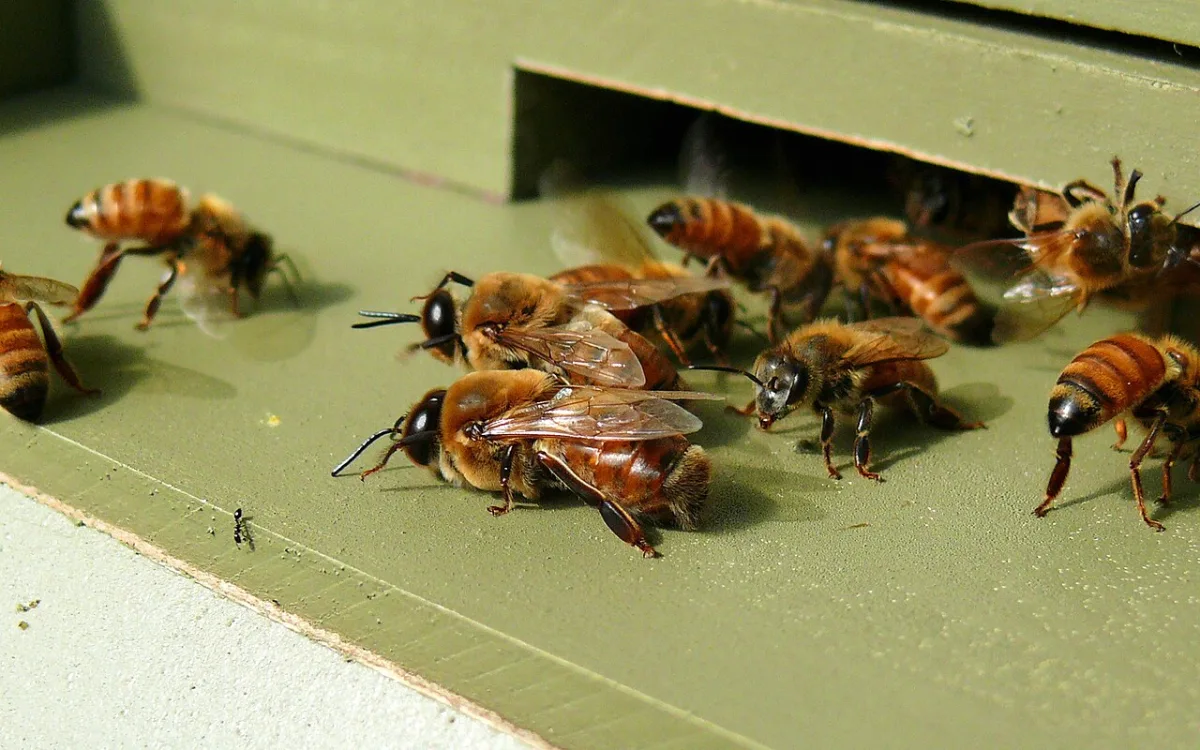
Crop yield directly depends on the quality of pollination. The work of bees increases fruit size, and improves seedling emergence and the storability of seeds and fruits. However, the interests of the beekeeper and the agronomist often diverge: for commercial honey production, far fewer bee colonies are needed than for optimal field pollination.
Stocking standards for crops and rules for hive placement
For maximum nectar collection from buckwheat, it is sufficient to bring 0.5 to 1.0 colonies per hectare. However, to increase grain yield, this is not enough — the density must be increased to 2.0–3.0 colonies per hectare. Increasing the number of colonies by 1.5 times relative to standard rates in intensive sunflower and buckwheat crops provides a yield increase of more than 50%. Since excessive saturation of the field with bees reduces the honey productivity of colonies due to high competition, agronomists must enter into contracts with beekeepers with payment for each provided colony.
When pollinating fruit plantings, take into account the age of the orchard and the intensity of flowering. If mature trees bloom abundantly, the work of bees can be limited to the first three days of flowering, after which the apiary can be moved to another plot. This allows for twice the area to be pollinated without loss of yield.
Hives are brought to the crops strictly 1–2 days before the start of flowering. In young orchards, where there are few flowers on the trees, it is necessary to create a constant dense background at a rate of 4 bee colonies per hectare for the entire flowering period.
- Calculate the required number of bee colonies for a specific crop according to the standards.
- Transport the hives to the field or orchard 1–2 days before the start of flowering.
- Place the apiary in groups: 20–30 colonies in orchards (at a distance of no more than 0.5 km from each other) and 50–60 colonies for field crops (with groups spaced no more than 1.0–1.5 km apart).
- If necessary, activate the foraging activity of bees using training for the target crop (red clover, alfalfa, or greenhouse cucumber).
| Crop | Rate of bee colonies per 1 hectare of crop | Yield increase, % |
|---|---|---|
| Buckwheat | 2.0–2.5 | 40–60 |
| Sunflower | 0.5–1 | 40–50 |
| Mustard, rapeseed | 0.5–1 | 25–56 |
| Red clover | 4.0–6 | 30–75 |
| Alfalfa | 8.0–10 | 50–65 |
| Coriander | 2.5–3 | 60–80 |
| Cotton | 0.5–1 | 15–30 |
| Melons, field cucumbers | 0.3–0.5 | 30–160 |
| Greenhouse cucumbers | 10–12 | 200–300 |
| Sainfoin | 3.0–4 | 40–130 |
| Sweet clover | 1.0–2 | 50–65 |
| Garden raspberry, gooseberry | 0.5–2 | 40–50 |
| Pome fruits | 2 | 25–50 |
| Stone fruits | 2.5–3 | 40–60 |
Managing colony strength and honeycomb quality
The intensity of bee flight depends on the strength of the colony, air temperature, and nectar availability. The work of pollinators in crops can be estimated by the number of insects returning to the hive over a certain period or by readings from a control hive. To make the most of the biological potential of bees, intensive management methods must be applied at the apiary.
The quality and age of honeycombs directly determine the productivity of the apiary. In nests composed primarily of old combs, bees collect 40–47% less honey than in light-colored combs. To obtain the same volume of honey, twice as many worker bees would be needed if they were reared in combs after the tenth generation, and five times as many if they developed in old black combs.
To prevent swarming, bees must be constantly occupied with nectar collection and comb building by regularly inserting frames with artificial foundation. This does not affect flight activity, but it does allow for increasing the number of honeycombs before the main nectar flow. It is also recommended to use frames without foundation for building drone combs — this technique provides additional beeswax and helps in controlling Varroa mites.
Keeping bee colonies in mobile pavilions creates an optimal microclimate for overwintering and early spring development. Under such conditions, the flight day of worker bees is extended, which directly improves the physiological indicators of the insects and increases the effectiveness of crop pollination.
- Optimal colony strength — 50–60 thousand worker bees
- Decrease in honey collection on old combs — by 40–47%
- Wax secretion per 1 kg of bees — 0.5 kg
- Density in a young orchard — 4 colonies per 1 ha
- Extension of bee lifespan in mobile pavilions — by 3.3–10.2%
- Honey stomach load in mobile pavilions — 7.3% higher
The use of mobile pavilions significantly simplifies pollination but requires adherence to insect management rules. In the summer period, high-quality ventilation must be provided inside the pavilion. Maintenance of cassette pavilions differs from working with standard hives: to inspect the nest, the frames are simply pulled out into the aisle. These labor costs are fully compensated by the reduction in winter feed consumption and the rapid spring development of bee colonies.
With hives located close together on a platform, bees may drift and confuse entrances. To prevent this, the front walls of the hives are painted blue, yellow, and white. It is also important after every relocation to set up the pavilions and platforms in the same orientation relative to the cardinal directions as they were before transport.
Aggressive colonies on platforms create serious inconveniences during inspections, so they must be culled in a timely manner.
Transporting honey bee colonies with open entrances
Transporting bees to flowering massifs on mobile platforms with open entrances significantly simplifies the work and reduces stress in the insects. This method of transportation completely solves the problem of stuffiness in the hives during movement and reduces bee aggressiveness. Upon arrival at the field, they behave calmly and begin collecting nectar and pollen sooner.
- Start transportation immediately after the evening bee flight ceases, which eliminates the time spent on closing the entrances.
- Leave the top and bottom entrances open while the platform cover is closed to ensure sufficient ventilation.
- Calculate the route so as to arrive at the destination strictly before dawn.
- After stopping, allow the bees to gradually emerge onto the landing board — even if some of the insects remain outside temporarily, they will all soon return to the hive.
Read next
Beekeeping For students
Methodology for assessing the honey base and calculating the apiary's feed balance
Beekeeping For students
Biology of honey bees and technology of honeycomb construction in the hive
Beekeeping For students