
Methods for rearing highly productive queen bees in the apiary
7 min read
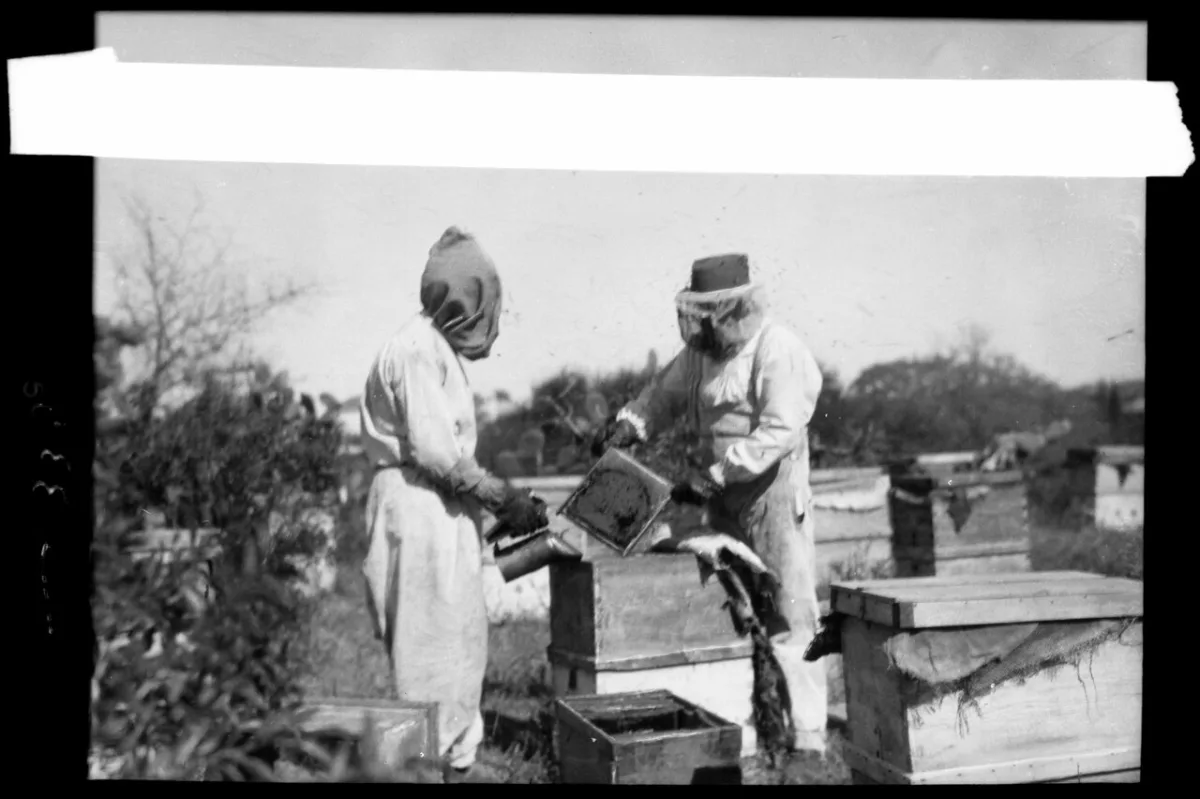
Queen rearing — the process of obtaining young queens in a honey bee colony. Natural queen rearing (without beekeeper intervention) occurs during the reproduction of bee colonies by swarming — during the swarming period, bees build swarm queen cells (appendices, fig. 23), the queen lays eggs in them, from which young queens develop; during supersedure, bees build several queen cells and rear a queen to replace an old or sick one; in the event of a sudden loss of the queen, bees build emergency queen cells (appendices, fig. 23) on cells with young larvae (1–3 days old) and rear young queens, one of which remains in the colony.
The ability of bees to rear a new queen from a worker bee egg or larva in a critical moment is the basis of artificial queen rearing. Artificial queen rearing is organized during a period of steady nectar flow.
Beekeepers begin preparing starter colonies from autumn, promoting autumn bee population growth. In spring, these colonies are given top dressing. The following conditions must be met in a starter colony:
| Number of bees of different ages | at least 4 kg |
| Number of combs with brood | at least 7 pcs. |
| Amount of honey | 10–12 kg |
| Number of frames with bee pollen | 2–3 pcs. |
Also, the presence of drone brood indicates the colony's readiness for rearing queens. A grafting frame with larvae in artificial queen cups (appendices, fig. 22a, 22b) is placed into the starter colony. One can also use larvae in their own cells. To do this, strips with open brood are cut from the comb, each is cut into pieces (with a larva) and attached to the bars of the grafting frame.
Larvae are taken from highly productive breeder colonies tested for offspring quality, whose queens have limited egg-laying capacity and therefore lay larger eggs. Such eggs yield larvae with higher mass and, subsequently, high-quality queens. In small amateur apiaries, larvae can be prepared for queen rearing without cutting their cells from the comb. To do this, a strip 5–6 cm wide and about 20 cm long is cut into the center of a part of the comb containing newly emerged larvae. The upper edge must have undamaged larvae, one of which is left, and two are removed. Bees build queen cells on the remaining larvae.
Several methods of queen rearing are applied. Rearing in queenless colonies is the most reliable, as bees accept larvae for rearing well in them.
- 9–10 days before placing the larvae into the starter colony, its queen is separated with several combs using a queen excluder so that she does not lay eggs throughout the entire nest.
- 5–6 hours before providing the larvae, the queen with open brood (or without it) is removed from the hive and used to form a nucleus colony.
- The nest is composed of honey combs against the walls of the hive, combs with bee pollen, and brood in the middle; a grafting frame with 24–36 larvae is placed in the center.
A colony is used as a starter one or more times during the season. If bees build their own queen cells, they are periodically removed. Colonies where open brood is left rear better queens. In colonies with a queen, bees accept larvae for rearing less readily. However, they can be used for queen rearing for a long time. A starter colony from which the queen is not removed is kept in a two-story or multi-story hive or a long hive. The nest is periodically replenished with combs containing open brood to attract nurse bees so as not to interrupt the rearing of larvae, and during the nectar flow gap – with combs of honey and bee pollen.
The method of queen rearing — first in a starter colony, and then in a finisher colony — allows obtaining a large number of high-quality queens. 6 grafting frames with larvae are placed at once into a strong queenless starter colony. A day later, the frames are moved one by one into finisher colonies with queens, which accept them well and continue the rearing. The starter colony is given a new batch of larvae. After 4–5 batches, the starter colony is dismantled. A sample calendar plan is presented in table 10 and appendices, fig. 25.
Sample calendar plan of queen rearing work
Record of completed work
Planned Name of work Date Colony Number Quantity deadline number
Obtaining drone brood (15 days
18/V 18/V 5 – before grafting larvae)
Isolation (separation) of the queen in a finisher colony to obtain sealed 24/V 25/V 10 – brood (9 days before grafting)
Placing an isolator in a breeder colony to obtain larvae of the same age (4 days 29/V 29/V 49 – before grafting)
Separation of the queen from the cell-building colony and its final preparation for the grafting of larvae (1 day before grafting)
Grafting of larvae and placement for rearing
Checking larvae for acceptance (24 hours
after grafting)
Culling and placement of queen cells for maturation in a nursery frame
Stocking nuclei with bees and providing mature
queen cells (12 days after grafting)
Checking queens for acceptance (14 days
after grafting)
Secondary introduction of queens into nuclei
in place of those killed (on the same day)
Obtaining mated queens (20–25 days after grafting)
In cell-building colonies, bees actively accept larvae for rearing, feed them abundantly, and build queen cells. The development of a future queen from egg to adult insect takes 16 days, after which she chews through the cap of the queen cell and emerges onto the comb. In specialized queen-rearing apiaries, grafting frames with queen cells are removed from the cell-building colony immediately after being capped and transferred to incubator colonies or thermostats, where they remain until the queens emerge.
The quality of a future queen directly depends on the type of nutrition. From the first seconds of life and throughout the entire larval stage, bees feed queen larvae exclusively with royal jelly. At the same time, worker bee larvae receive worker jelly, which differs significantly in its chemical composition.
- Queen development period — 16 days
- Time for removing queen cells — 9th–10th day
- Advance drone rearing — 3 weeks
Capped queen cells must be removed on the 9th–10th day and transferred in cages to nuclei, splits, or queenless colonies. If this operation is delayed, the first queen to emerge will destroy all other queen cells in the hive.
Queen weight is one of the key indicators of her quality. The minimum permissible weight parameters for virgin and mated queens of various breeds are presented in the table.
| Bee breed | Minimum mass of virgin queen, mg | Minimum mass of mated queen, mg |
|---|---|---|
| Italian | 190 | 210 |
| Central Russian | 190 | 210 |
| Yellow Caucasian | 185 | 205 |
| Carniolan | 185 | 205 |
| Carpathian | 185 | 205 |
| Ukrainian Steppe | 185 | 205 |
| Grey Mountain Caucasian | 180 | 200 |
After mating and the start of egg-laying, the queen is marked with special paint. A five-year color cycle is used for accurate age recording: white, yellow, red, green, and blue. After five years, this cycle repeats in strict order. For example, if queens were marked with yellow in 2007, it will be used again in 2012.
Drone rearing for queen insemination
For high-quality insemination of young queens, there must be a sufficient number of mature drones in the apiary. They are purposefully reared in drone-producing colonies or cell-building colonies. Preparation for this process begins long before the mating season.
- Autumn preparation. In autumn, drone-producing colonies are moved to areas with abundant flowering of pollen plants to build up young bees before wintering and store protein feed.
- Spring stimulation. In spring, colonies are given honey-pollen supplement feeding to activate the queen's work.
- Adherence to timelines. Drone rearing begins exactly 3 weeks before the start of queen rearing.
In early spring, when natural conditions are not yet conducive to the laying of unfertilized eggs, beekeepers stimulate the queens artificially. Two main methods are used for this:
- confining queens in isolators on drone combs;
- using drone-laying queens.
In May and June, during the preparation for swarming, bees readily rear drones themselves. For this, it is sufficient to place frames with drone combs in the hives. However, the capacity of a single drone-producing colony is limited, as bees stop rearing drone brood after the nectar flow ends. To obtain more drones, seeded combs are taken from the drone-producing colony and transferred to other colonies for rearing.
Read next
Beekeeping For students
Biology of honey bees and technology of honeycomb construction in the hive
Beekeeping For students
Preparation of bee colonies and the wintering facility for the winter period
Beekeeping For students