
Methodology for organizing lysimetric studies and monitoring nutrient leaching
11 min read
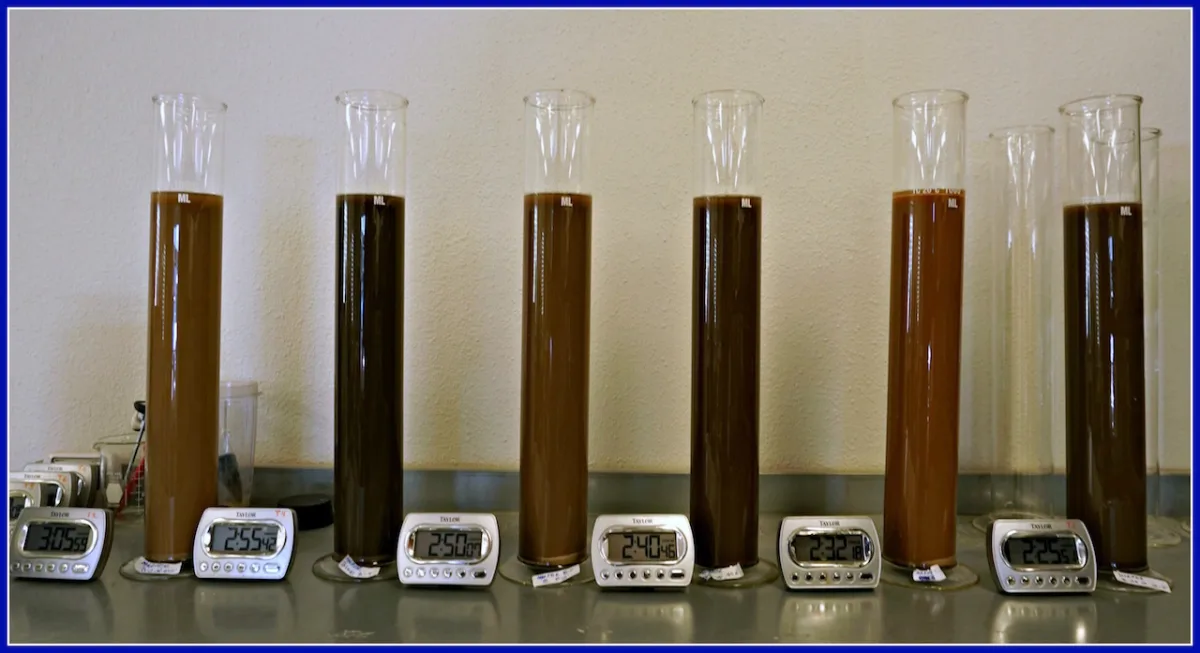
Controlling the leaching of nutrients from the root zone is a complex but essential task for the accurate calculation of fertilizer systems. The lysimetric method allows one to observe, under natural conditions, what volumes of moisture seep through the soil and how many organic and mineral compounds are lost in the process. Based on this data, an agronomist develops a real nutrient balance, comparing their application with removal by the harvest.
Special structures called lysimeters are used for research. They are made of concrete, brick, galvanized iron, or plastic. The devices are manufactured in the form of cylinders, cubes, parallelepipeds, or funnels.
Installation and construction requirements for lysimeters
For research data to be reliable, the devices are installed in groups. They are buried in the soil so that the soil level inside the container matches the surface of the field. This allows for observations to be conducted under conditions as close as possible to the natural environment.
- Area of a concrete lysimeter — from 1 to 4 m²
- Depth of the structure — 1 m
- Number of lysimeters in a group — from 10 units
- Layout scheme of the devices — 2 or more rows
When installing the equipment, it is important to strictly adhere to the leachate collection technology. The walls and bottoms of the containers are made moisture-proof, and water collection is organized according to the following scheme:
- Create a slope on the bottom of the container in a specific direction for directed water flow.
- Lay a drainage layer of gravel, sand, or crushed stone on the bottom to improve filtration.
- At the lowest point of the bottom, prepare an opening and connect it with outlet pipes to a receiver for collecting soil solution.
The receivers for drainage water lead into an underground corridor with 24-hour lighting, located between the pairs of lysimeter rows. This allows for prompt recording of the volume and composition of the draining water.
The underground facility with the receivers must be carefully insulated. The ingress of atmospheric precipitation or sharp temperature changes during the autumn-winter-spring period will distort the observation results.
Concrete and brick lysimeters are used for multi-year experiments. The standard specifications for such structures are shown in the table:
| Structure specification | Parameters |
|---|---|
| Surface area | from 1 to 4 m² |
| Depth | 1 m |
Metal and plastic lysimeters of various capacities are also suitable for comparative studies. In particular, small metal lysimeters are used, consisting of a cylinder with soil, a drainage device, a pipe for water collection, and a separatory funnel for measuring the volume of collected moisture.
Methods of soil filling and organization of observations
Based on the filling method, lysimeters are divided into two types: those with undisturbed soil (monoliths) and those with disturbed (packed) soil. In the first case, the soil is taken from the field while preserving its structure and genetic horizons.
When working with packed soil, strict rules are observed:
- the soil is pre-sieved;
- filling is performed in layers, maintaining the natural sequence of genetic horizons;
- during laying, each layer is compacted to its natural bulk density;
- in low-volume lysimeters, it is permitted to use only topsoil.
Depending on the objectives, lysimeters are left fallow or sown with crops. In the latter case, the placement of the devices must ensure normal plant growth. Protective fencing must be installed to protect the plantings from birds and livestock animals.
To accurately compare the volume of seepage moisture with the precipitation received, rain gauges must be installed next to the lysimeters.
Sites with lysimeters are always located in the immediate vicinity of agrochemical laboratories. This eliminates the need to transport lysimeter water over long distances and allows for prompt analysis.
Structural variants of lysimeters and their installation rules
To monitor the soil water regime and assess nutrient leaching, metal lysimeters of various modifications are used. A small lysimeter is a steel cylinder with a sealed funnel-shaped bottom, filled with drainage material and a monolith of undisturbed soil. To collect leachate, a receiver — a separatory funnel — is connected to it from below through a system of tubes. Such designs allow for rapid assessment of solution migration in the topsoil layer.
- Diameter of the small cylinder — 11 cm
- Depth of the small cylinder — 20 cm
- Height of the outer cylinder — 50 cm
- Diameter of the lysimeter funnel — 25–50 cm
To install small lysimeters in field conditions without disturbing the structure of the surrounding soil, follow this sequence of actions:
- Bury outer protective metal cylinders, open at both ends, into the soil up to the rim.
- Select the diameter of the outer cylinders so that the inner working containers fit into them with minimal clearance.
- Lower the lysimeters containing soil and drainage funnels into the protective cylinders and secure them on support hooks.
- Cover the top gaps between the outer and inner cylinders with special zinc shields to protect them from side moisture ingress.
For working with large volumes of bulk or undisturbed soil, rectangular or cylindrical containers made of galvanized steel are used. To protect the metal from corrosion and eliminate its influence on the chemical composition of the soil solution, the inner walls are coated with asphalt varnish. Such structures can be buried directly into the soil flush with the surface or placed in stationary outer boxes (removable method), which allows for periodic extraction of lysimeters for weighing.
For installation without disturbing the soil structure, lysimeters with a sharpened bottom edge and a removable base are used. The working cylinder is driven entirely into the soil by vertical pressure, carefully excavated, and extracted along with the monolith. Then, a funnel-shaped base with drainage consisting of gravel and sand is hermetically attached to the bottom, after which the finished structure is transported to the observation point and connected to a collector.
An alternative option is lysimetric funnels. These are flat zinc bowls 5 cm deep with curved and sharpened edges 0.5 cm high. The outlet of the bowl is covered with a perforated zinc disc with 2 mm diameter holes and filled with drainage. To install the funnels, a trench is dug, the depth of which must be 50 cm greater than the planned depth of the equipment placement. Niches are cut into the side wall of the trench, into which the funnels are inserted, cutting their sharp edges into the ceiling of the excavation. After this, the voids in the niches are filled with soil, and an inspection hatch with a lid is equipped in the trench for access to the collectors.
Since lysimetric funnels do not have side walls, water can seep into them from the sides. To avoid data distortion in areas with different levels of soil fertility, install funnels at a distance of at least 200 cm from each other. With the same nutritional background, a distance of 30–100 cm is sufficient.
Filtration factors and moisture leaching assessment
The main task of lysimetric observations is to accurately record the volume of leached precipitation and the amount of leached nutrients under conditions close to natural. The filtration dynamics are unstable and depend on a complex of external factors, which must be considered when analyzing data. The physical properties of the soil and the method of monolith preparation directly determine the speed of moisture movement.
The volume and rate of water infiltration in lysimeters depend on the following conditions:
- Method of filling the container: in monoliths with undisturbed structure, filtration is faster, as in bulk-filled lysimeters the soil gradually compacts.
- Texture: heavy clay and clay-loam soils allow water to pass through more slowly than medium and light loams.
- Seasonal factor: the most intense moisture outflow is observed in spring and autumn, while in summer and winter it is minimal.
- Air and soil temperature: high temperature activates evaporation, which reduces the total share of percolating moisture.
- Vegetation cover: in areas with plants, filtration is always lower than in fallow fields due to active transpiration.
When calculating the water balance and nutrient migration, it is important to compare the volume of precipitation with the time of its percolation. On heavy soils, the depth of moisture penetration with different rainfall intensities is distributed unevenly. These parameters help to more accurately predict the leaching of mobile compounds beyond the root-inhabiting layer.
| Precipitation amount | Time period | Percolation depth on heavy soils |
|---|---|---|
| 40 mm | 24 hours | up to 1 m |
| 20 mm | 24 hours | 60 cm |
| 40 mm | week | less than 1 m |
The water regime in lysimeters differs from natural field conditions, so research results will not be completely identical to processes in an open field. However, lysimeters provide reliable comparable data that allow for the assessment of the general direction of nutrient migration. Based on this information, an agronomist can more accurately select fertilizer types, calculate application rates, and determine optimal timing for their application.
The intensity of nutrient leaching depends on the solubility of the fertilizers themselves, the volume of percolating water, and the nature of ion interaction with the soil absorption complex. The form of soil moisture is of great importance. At hygroscopic humidity, cations and anions practically do not move. Under conditions of film moisture, movement occurs under the influence of molecular forces, whereby nutrients can migrate both in the direction of water flow and in the opposite direction.
The bulk of nutrients is leached with gravitational water. This process occurs in two directions: with an excess of moisture, solutions move down the profile, and with intense evaporation, they rise to the surface. Capillary rise of moisture during dry periods allows for the partial return of leached elements to the root zone.
Ion mobility and nutrient losses due to leaching
The mobility of cations and anions in soil varies due to the unequal absorption capacity of the soil complex. The physical and chemical properties of ions determine how firmly they are held in the arable layer. The distribution of the main elements according to the nature of their migration with soil moisture is shown below.
- Nitrates (NO3–) and chlorides (Cl–). Characterized by negative physical absorption by the soil. They do not bind chemically and do not form insoluble compounds with calcium, magnesium, potassium, aluminum, iron, and ammonium cations (Ca2+, Mg2+, K+, Al3+, Fe3+, NH4+), which is why their leaching occurs most rapidly.
- Carbonates (CO32–) and sulfates (SO42–). They form soluble salts with monovalent cations, and insoluble compounds (CaCO3, MgCO3, CaSO4, MgSO4) with divalent calcium and magnesium cations (Ca2+, Mg2+).
- Phosphates (H2PO4–, HPO42–). Bound by the soil both cationically and anionically, which strictly limits their migration. With monovalent cations, they yield highly soluble salts (KH2PO4, NaH2PO4, NH4H2PO4, K2HPO4, Na2HPO4, (NH4)2HPO4). With divalent cations, soluble Ca(H2PO4)2 and Mg(H2PO4)2, sparingly soluble CaHPO4, and water-insoluble Ca3(PO4)2 and Mg3(PO4)2 salts are formed.
- Potassium (K+). Fixed in the soil physico-chemically in an exchange-adsorbed state. It can be displaced into the soil solution by other cations from soil or fertilizer, but its movement with moisture is significantly slower than that of nitrates and chlorides.
For a practical assessment of the scale of losses, indices of element leaching from unfertilized soils are used. In experiments, the volumes of natural substance migration from a one-meter layer were recorded. These baseline values serve as a reference point when calculating the balance of plant nutrition.
| Nutrient | Leaching losses from a 1 m layer on unfertilized soils, kg/ha |
|---|---|
| Nitrogen | 12.8 |
| Phosphorus | 1.2 |
| Potassium | 27.4 |
| Sulfur | 51.4 |
| Calcium | 46.8 |
| Magnesium | 32.0 |
| Silicon oxide | 46.8 |
The high mobility of nitrates and chlorides requires precise selection of nitrogen fertilizer forms and their application methods. Untimely application of readily soluble forms leads to rapid nitrogen loss via gravitational water flow.
Lysimetric studies provide an insight into potential nutrient losses during their migration into sub-arable layers. These data are essential for adjusting the application rates, timing, and application methods of mineral fertilizers.
Read next
Greenhouses and covers For gardeners
Calculation and installation of an automated drip irrigation system from a barrel
Soil and tillage For students
Influence of soil structure and composition on capillary moisture transfer
Soil and tillage For students