
Biogeochemistry and behavioral characteristics of manganese in soil
9 min read
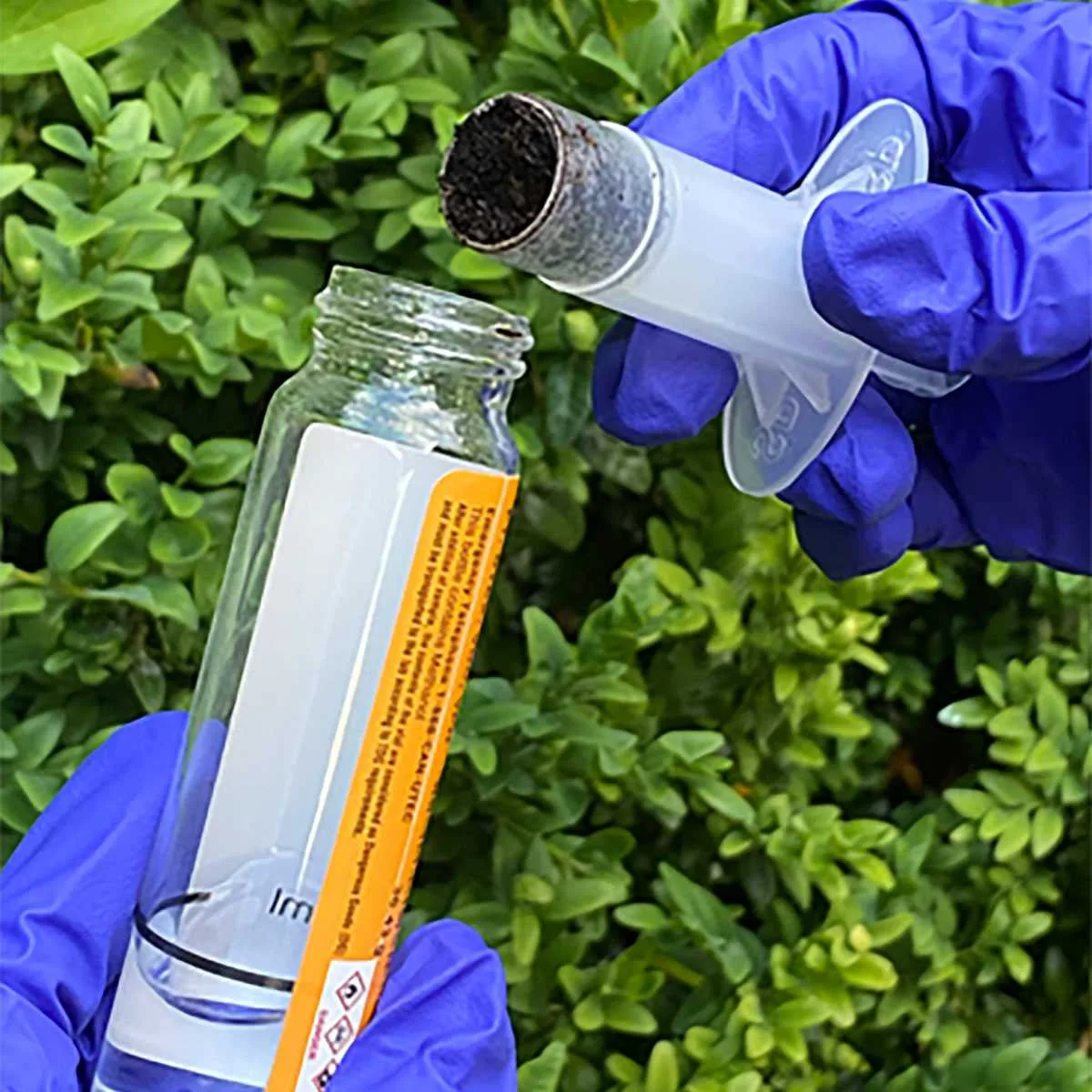
Manganese is one of the most common trace elements in the lithosphere, yet its availability to crops is highly variable. For an agronomist, it is important to understand that the total content of the element in the soil does not guarantee good plant nutrition. Manganese behaves like a "chemical chameleon": it easily changes its valence and transitions from available compounds to insoluble ones under the influence of acidity, moisture, and microbial activity.
The distribution of manganese in the biosphere is uneven. Under natural conditions, its concentration consistently decreases as one moves from the lithosphere to living organisms. These ratios clearly reflect the clarkes of the element in various environments.
| Accumulation object | Manganese content (clarke), % |
|---|---|
| Earth's crust | 0.09 |
| Soil | 0.085 |
| Plants | 1·10⁻³ |
| Livestock animals | 1·10⁻⁵ |
| Seawater | 4·10⁻⁷ |
How acidity and oxidation change manganese availability
Manganese has a variable chemical nature: its compounds with valences of 2, 3, 4, 6, and 7 occur, with 1, 5, and 0 being rarer. Soil processes involve primarily divalent, trivalent, and tetravalent forms. All manganese compounds in the soil can be divided into several main groups:
- Water-soluble salts: chlorides, nitrates, sulfates, and dihydrogen phosphates — MnCl₂, Mn(NO₃)₂, MnSO₄, Mn(H₂PO₄)₂.
- Absorbed exchangeable manganese — Mn²⁺.
- Water-insoluble oxides and hydroxides (manganese(II,IV) oxide Mn₃O₄, manganese(III) oxide Mn₂O₃, manganese dioxide MnO₂), as well as salts — MnCO₃.
- Organic manganese compounds.
- Manganese in the crystal lattice of primary minerals (olivines, pyroxenes, epidote).
Manganese mobility depends directly on the redox potential and soil acidity. In a highly reduced moist environment, divalent manganese Mn²⁺ dominates, which is mobile and easily absorbed by roots. At a high oxidation potential, tetravalent Mn⁴⁺ is formed, which produces poorly soluble oxides. In extremely rare cases, at ultra-high oxidation, the highly soluble anion MnO₄⁻ (Mn⁷⁺) can occur, but in real soil conditions, such values are practically non-existent.
- Mn²⁺ mobility and solubility — up to pH 6
- Formation of insoluble hydrate — pH 8
- Main valence forms in soil — 2, 3, 4
In the soil solution, manganese is present in the form of simple and complex ions, as well as part of various oxides. Most oxides are amorphous, but crystalline varieties have been identified in soils: lithiophorite, birnessite, pyrolusite, manganite, hausmannite, hollandite, and todorokite. Divalent manganese in the form of bicarbonate, sulfate, chloride, or nitrate is soluble in water and mobile only in an acidic environment.
When the pH rises to 8 in the soil solution, the formation of manganese(II) hydroxide begins: Mn(HCO₃)₂ + 2H₂O = Mn(OH)₂ + 2H₂CO₃. In an alkaline environment, this hydroxide is rapidly oxidized by atmospheric oxygen to the tetravalent state via the reaction: 2Mn(OH)₂ + O₂ + 2H₂O = 2Mn(OH)₄. The resulting hydrate is expressed by the formula MnO₂·nH₂O and, upon subsequent crystallization, turns into manganese dioxide (MnO₂), which is completely insoluble in water and soil solutions.
In alkaline soils (at pH above 8) and under conditions of excessive aeration, manganese rapidly turns into insoluble manganese dioxide MnO₂. Under such conditions, the risk of acute element deficiency in plants in fields and greenhouses is high, even if its total content in the soil is within the normal range.
Microbiological processes and mobilization of the element
The conversion of manganese from inaccessible mineral forms to mobile ones is actively controlled by soil microflora. Bacteria and fungi are capable of breaking down the crystal lattice of stable primary minerals of soil-forming rocks. The release of the element occurs through several key microbiological mechanisms:
- Production of strong mineral acids during nitrification or sulfur oxidation by thiobacilli.
- Release of organic acids formed during fermentation and incomplete breakdown of carbohydrates by fungi.
- Secretion of extracellular amino acids that bind manganese into mobile complexes.
- Interaction with plant residue decomposition products (polyphenols, tannides, polyuronides, flavonoids) and microbial biosynthesis products (in particular, polysaccharides).
Microorganisms can also perform the reverse role: during biological oxidation, soluble divalent manganese turns into an insoluble tetravalent form. This process is carried out by many non-specific bacteria and fungi.
Manganese oxidation by microflora is often a defensive reaction of living organisms. For example, associations of imperfect fungi with fungal symbionts precipitate manganese as a by-product when neutralizing toxic hydrogen peroxide. This process is necessary to protect fungi lacking the enzyme catalase from dying in an aggressive environment.
Among heterotrophic manganese-oxidizing microorganisms, the same species that participate in iron oxidation are known. These include soil arthrobacteria, oligotrophic and stalked bacteria of the genus, and mycoplasmas. Many soil fungi, bacteria, and actinomycetes are capable not only of oxidizing inorganic manganese salts but also of releasing and oxidizing manganese from organometallic compounds. Bacteria carry out manganese oxidation in a neutral environment; fungi oxidize manganese in the slightly acidic pH range. Manganese oxidation actively occurs in the rice rhizosphere. As a result of rhizospheric microorganism activity, rhizoconcretions containing manganese and a significant amount of iron form on rice roots. In the soils of rice paddies, obligate and facultatively anaerobic bacteria of the genera participate in manganese mobilization by reducing it and immobilizing it as a result of absorbing its soluble forms. Manganese reduction is a non-specific reaction that can be carried out by many poly-reductant bacteria (Babjeva I.P., Zenova G.M., 1989).
The influence of soil microorganisms on manganese transformations is sufficiently well-established, which allowed J. Pochon and G. de Barjac (1960) to propose a cycle for this element based on biological oxidation and reduction processes.
Fig. 72. Manganese cycle
Among the many forms of manganese, only two – water-soluble and exchangeable – are easily available to plants. Manganese phosphate and carbonate, as well as oxides and hydrates of this element, are relatively available as they represent the immediate reserve for replenishing water-soluble and exchangeable fractions.
Manganese bound to organic matter is potentially available to plants: during the decomposition of organic compounds, it can transform into an assimilable form. Manganese contained within the crystal lattice of minerals cannot be extracted by plants.
Manganese undergoes several migration cycles in the soil:
- annual soil cycle;
- multi-year soil cycle;
- general geochemical cycle.
The dynamics of manganese in the annual soil cycle are usually characterized in relation to its mobile, i.e., easily soluble and exchangeable forms. It is necessary, however, to more fully account for the replenishment and depletion of the stocks of these forms resulting from their transition into poorly soluble and stable compounds and back.
The highest amount of mobile manganese in soils is contained in the spring under conditions of soil water saturation and the development of reduction processes. As the soil dries, the content of mobile manganese decreases as a result of oxidation and a reduction in the solubility of its compounds.
The development of plant and microbial activity during the summer period leads to a new increase in the content of mobile manganese due to its release from mineralized organic residues and the reducing action of certain organic compounds. In the autumn period, it can be expected that despite the intensification of reduction processes due to higher soil moisture, the processes of consumption of mobile manganese by vegetation will prevail, especially during the formation of a high harvest.
It is during this period that intensive reduction of manganese oxide hydrates of higher oxidation states is possible, as well as an intensification of the transition of exchangeable manganese into solution. The quantitative and qualitative characteristics of the annual soil cycle, on the one hand, determine the level of supply of available manganese to plants, and on the other hand, are one of the stages of the geochemical evolution of soils.
The manganese regime in rice field soils has its own characteristics. Specific conditions present in a rice field significantly influence the mobility of manganese and its availability to plants. A decrease in the redox potential of the soil is accompanied by the mobilization of mobile forms of this element:
| Initial potential | Final potential |
| 600-650 mV | 200-250 mV |
Nevertheless, a sharp increase in the content of mobile manganese in the soil under rice does not occur, and in some cases, its amount even decreases to some extent. The latter is explained by significant leaching of divalent manganese from the soil, as well as its absorption by rice.
The multi-year soil cycle of manganese migration is more differentiated for various soil zones, as well as intrazonal conditions. With poor drainage and a high groundwater level, manganese is reduced to divalent and actively migrates within the soil and beyond its limits. Oxidative processes lead to the formation of poorly soluble compounds and even to irreversible precipitation of manganese.
An acidic reaction of the medium (pH <4.0) causes the leaching of almost all manganese from the soil, whereas an alkaline one (pH 7–8) leads to a high content of manganese compounds that are insoluble and unavailable to the plant. At high humidity, the highest content of exchangeable manganese is observed; low humidity indirectly leads to a decrease in the content of mobile manganese.
A direct correlation has been established between the following indicators:
- humus content;
- amount of silt fraction;
- content of exchangeable bases;
- buffering capacity in relation to acidic solutions;
- manganese mobility.
The indicated correlations govern the elementary processes occurring in the multi-year soil cycle and determine the type of manganese distribution in soil profiles. The third migration cycle, in which soil manganese also participates, is geochemical.
For planning plant nutrition, it is important to assess not the total content of manganese, but its available forms. Plants assimilate water-soluble, exchangeable, and partially organic-matter-bound manganese. The share of the most available water-soluble fraction varies greatly and can account for one-twentieth to one-half of the total stock of the element in the soil.
- Share of water-soluble fraction — 5–50% of the total content
- Range of mobile forms in soils — 1–1000 mg/kg
- Content of mobile forms in southern regions — 10–250 mg/kg
The supply of available manganese to arable land is extremely uneven and depends directly on the soil type. An acute deficiency of the element often occurs in carbonate and humus-carbonate soils with an alkaline reaction, as well as in chernozems and their saline varieties. In swamp soils, the situation is the opposite: practically all manganese converts into a mobile state, which can lead to its excess.
In the soils of southern regions, the amount of mobile manganese varies between 10–250 mg/kg. These changes are closely related to the acidity of the environment and the redox regime of a specific field.
Mobile manganese content by soil type
| Soil type | Mobile manganese content, mg/kg |
|---|---|
| Sod-podzolic | 50–150 |
| Chernozems | 1–75 |
| Serozems | 1.5–125 |
| Chestnut and brown soils | 1.5–75 |
Read next
Agrochemistry For students
Mechanisms of anion uptake by the soil adsorption complex and their characteristics
Agrochemistry For students
Physicochemical properties of carbohydrates and their role in agricultural chemistry
Agrochemistry For students