
Mechanisms of anion uptake by the soil adsorption complex and their characteristics
5 min read
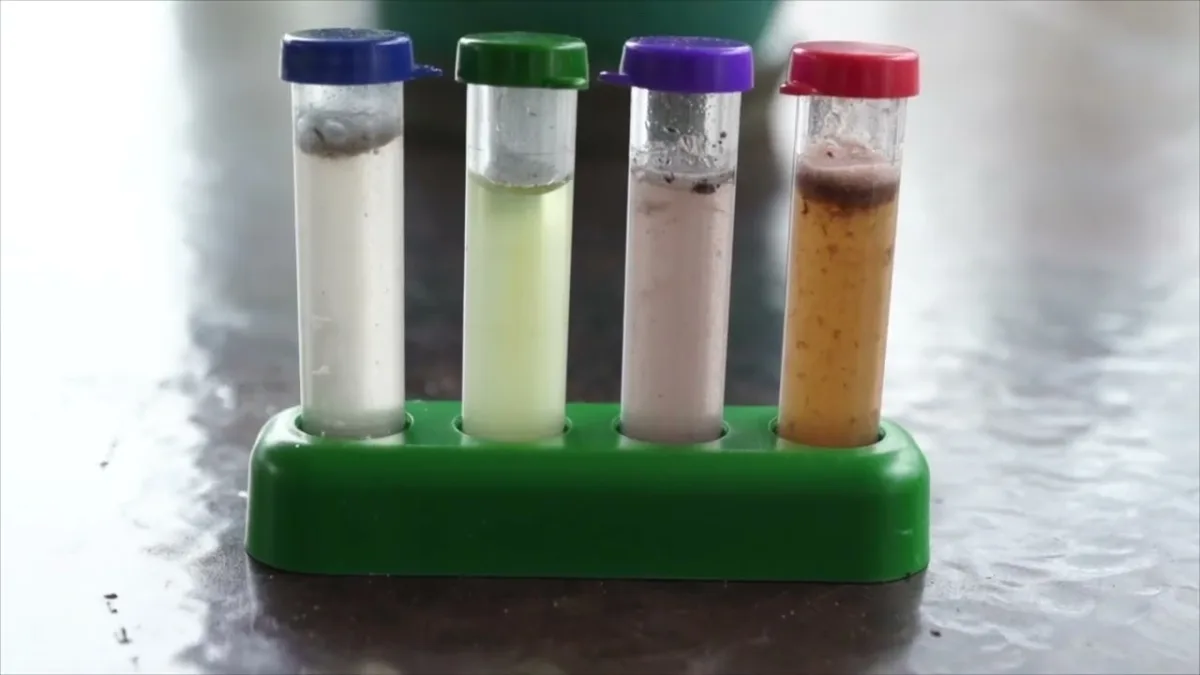
The absorption of cations in soil occurs through biological, chemical, and exchange absorption. These processes were described in the outline of the types of soil absorptive capacity. Below, we consider the absorption of anions by soil.
The absorption of anions by soil depends on the charge of the colloid, the structure and chemical properties of the soil absorption complex, the reaction of the medium, and the nature of the anion. In strongly acidic sod-podzolic soils and krasnozems (red soils), anion absorption is possible due to the manifestation of basic properties of soil colloids. Anion absorption can be observed both on positively charged colloidal particles (hydrated sesquioxide colloids) and on positively charged sites of negatively charged colloids (kaolinite group minerals, protein-type colloids). In both cases, anion absorption occurs in exchange for OH– ions, which, under acidic conditions, are split off from molecules located on the surface of the colloidal particle. Based on their ability to be absorbed, anions are arranged in the following series:
Сl NO3 SO 24 CO32 PO 34 SiO 44 OH .
The higher the valence of an anion, the greater its ability to adsorb onto the surface of colloids. The only exception is the OH– anion, which possesses the highest activity despite its low valence. This can be explained by the fact that with an increase in the valence of an anion, the dissociation of the compound forming the double layer decreases, and the reaction shifts toward the formation of the least dissociated compounds. Compounds formed by the OH– anion with Al3+ and Fe3+ cations, located in the inner layer of the double layer of positively charged colloids, also dissociate very weakly.
NO3– and Cl– anions do not form insoluble compounds with any of the cations found in soil; they are characterized by negative physical sorption. The negative sorption of these anions is caused by a decrease in their concentration in the inner part of the sorption film, due to which the concentration of anions in the more loosely bound, and consequently, more mobile layers of the water film increases. Negative adsorption of nitrates enhances the processes of their leaching from the soil, which leads to soil nitrogen depletion. The removal of chlorine from the soil is a positive point, as it is harmful to most cultivated plants, but the accompanying cation (ammonium, potassium, calcium) is leached along with it, the loss of which is undesirable. The fixation of these anions is due to the biological absorptive capacity of the soil.
In agricultural practice, the lack of absorption of NO3– and Cl– anions must be taken into account. For instance, nitrate forms of nitrogen fertilizers are applied immediately before sowing or as top dressing during the growing season of plants to prevent their leaching from the root zone of the soil. Chlorine-containing potash fertilizers, on the contrary, are applied to the soil well in advance so that the Cl– ion has time to be leached out by precipitation before sowing.
Salt formation processes play a major role in the absorption of anions. SO42+ and CO32– anions form readily soluble salts with all cations found in the soil, except for calcium. During their interaction, chemical absorption of these anions and calcium occurs, accompanied by the formation of poorly soluble salts CaSO4 and CaCO3, which pass into the solid phase of the soil.
The mechanism of phosphate ion absorption is diverse. The following types of phosphate ion absorption by soil are distinguished:
1) formation of poorly soluble phosphates as a result of the interaction of soluble phosphates applied to the soil with soil solution salts (chemical absorption). This type of phosphate anion absorption is possible in the presence of aluminum, iron, and calcium ions in the soil under a neutral or alkaline medium reaction;
2) formation of poorly soluble phosphates with the cations of the soil absorption complex (calcium, magnesium) after they are displaced by cations from the soil solution;
3) absorption of phosphate ions during their interaction with mineral salts: gypsum, dolomite, calcite. Part of the phosphate ion binds directly to the calcium that has entered the solution. It is also possible that phosphate ion absorption occurs on the surface of minerals without displacing calcium, through partial occlusion of phosphate in the mineral;
4) mechanical trapping of phosphate ions by amorphous silica – an occlusion process;
5) exchange sorption of phosphate ions on positively charged sites of the colloidal micelle:
SAC 3OH K 3 PO 4 SAC PO 4 3KOH
2KOH CO2 K 2 CO3 H 2 O;
6) chemisorption of phosphate ions by aluminum and iron hydroxides. The bond is formed with the solid phase on the outer surface of the colloid. One of the reaction schemes is:
(NH 4) 2 HPO 4 Al(OH)3 / Al PO 4 / NH 4
OH \ NH 4
In this case, the absorption of phosphate ions depends to a large extent on dispersion. Freshly precipitated oxides absorb a larger quantity of phosphates. Upon crystallization of sesquioxides, phosphate absorption decreases by a factor of 10;
7) non-exchangeable absorption of phosphate ions by clay and non-clay alumino- and ferrosilicate minerals on their external and, less frequently, internal surfaces. In this process, the phosphate ion is adsorbed in the potential-determining layer of negative colloids, being attracted to the aluminum of the crystal lattice.
Organic substances saturated with bases also absorb phosphate ions, but to a significantly lesser extent than sesquioxides and clay minerals.
Phosphorus in the soil behaves unstably: even with its high content, plants may experience a nutrient deficit. The fact is that phosphates exist in the soil in compounds with varying degrees of availability. If conditions in the field are unfavorable, the applied phosphorus quickly converts into firmly bound forms that are inaccessible to the crop.
The availability of phosphorus compounds decreases sharply under the following conditions:
- acidic medium reaction;
- low content of organic matter;
- high content of sesquioxides in the soil.
How to return locked phosphorus to circulation
The binding of phosphates does not mean their irretrievable loss for the harvest. Unavailable phosphorus accumulates in the soil in an absorbed state, forming a reserve pool. Over time, this accumulated supply begins to transition back into a form available to plants.
The main driver of this process is soil microorganisms. Under their influence, firmly bound compounds are gradually broken down, releasing phosphorus into the soil solution. For this mechanism to work effectively, it is necessary to maintain the activity of soil biota in the fields and control the factors that block the element.
Read next
Agrochemistry For students
The effect of cation composition and exchange capacity on soil fertility
Agrochemistry For students
The role of soil colloids in plant nutrition and soil structure
Agrochemistry For students