
The role of soil colloids in plant nutrition and soil structure
9 min read
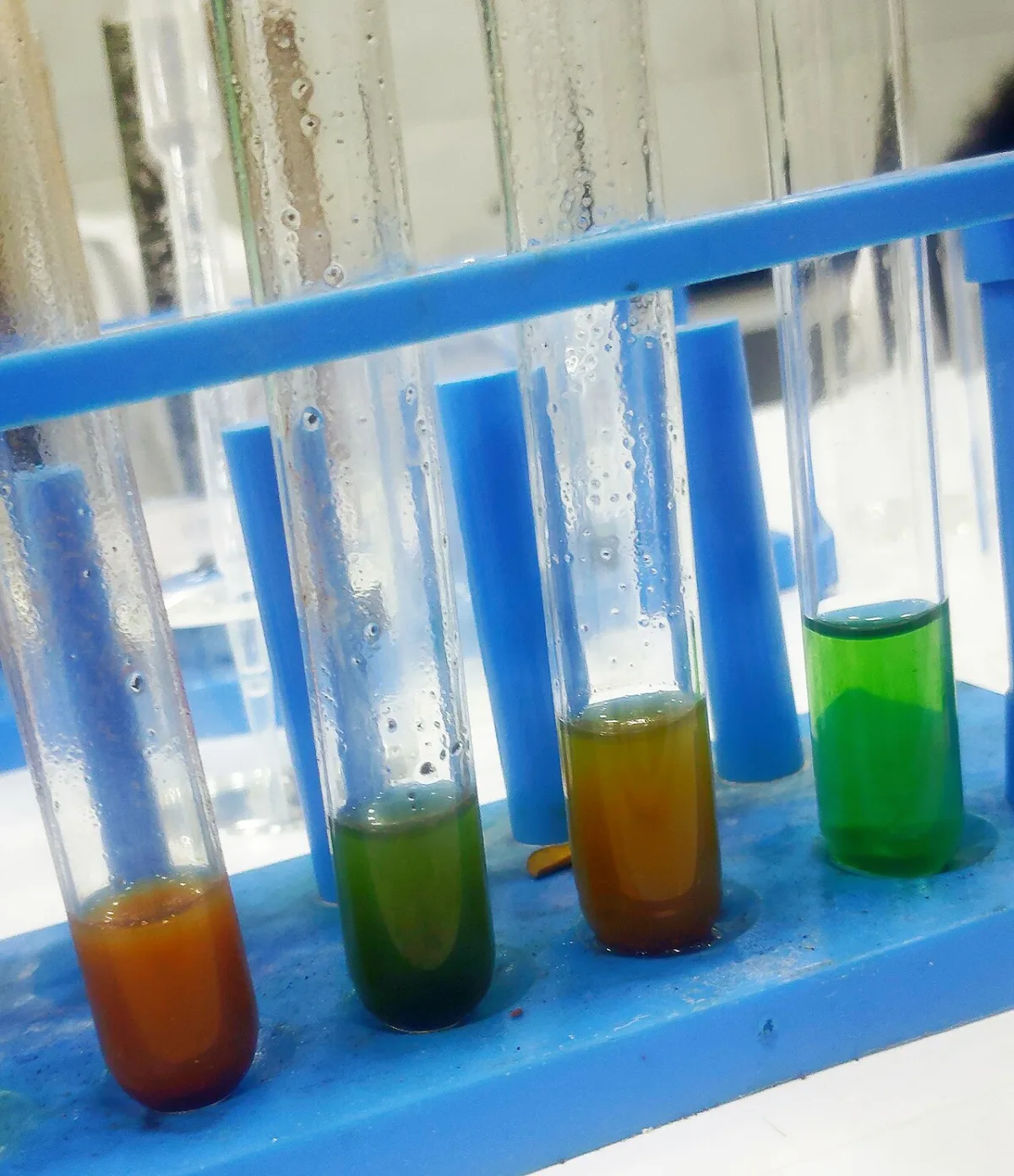
Soil colloids are the smallest particles that determine physical properties of the soil and retain most of the nutrients. It is they that distinguish fertile soil from barren rock. Colloids work like tiny electromagnets, attracting and holding fertilizer ions to prevent leaching.
- Particle size — less than 0.0001–0.0002 mm
- Lower limit of zeta potential — 0 mV
- Upper limit of zeta potential — 40–60 mV
Anatomy of a soil micelle: how charge is retained
At the core of every colloid lies a nucleus of non-dissociated molecules, which can have an amorphous or crystalline structure. A double electric layer forms around it: first, firmly bound potential-determining ions follow, forming a granule. Then, compensating ions of the opposite sign are attracted from the soil solution.
Compensating ions are divided into two layers. Part of them fits tightly to the granule, creating a stationary colloidal particle. The other part forms a free diffuse layer, which easily exchanges elements with the soil solution. The difference in charge between these layers creates an electrokinetic zeta potential.
| Zeta potential indicator | Value, mV |
|---|---|
| Lower limit | 0 |
| Upper limit | 40–60 |
When the zeta potential drops to zero, the colloid reaches the isoelectric point. In this state, the micelle becomes electroneutral, the colloidal particles stick together and precipitate, which leads to the destruction of the soil structure.
Acidoids, basoids, and ampholitoids: the influence of acidity on plant nutrition
The behavior of soil colloids depends on the sign of their charge. Based on this, they are divided into three main groups:
- Acidoids — negatively charged and dissociate with the release of H+ ions (humic acids, clay minerals, silicon and manganese hydroxides, organo-mineral colloids). They retain metal cations.
- Basoids — positively charged and release OH– ions into the solution.
- Ampholitoids — capable of changing the sign of their charge depending on the reaction of the medium (iron and aluminum hydroxides, proteins, bacterial bodies).
In an acidic environment, where the concentration of H+ cations significantly exceeds the concentration of OH– anions, ampholitoids behave like bases. They dissociate according to the scheme Al(OH)3 ⇌ Al(OH)3+ + OH– and acquire a positive charge. Under an alkaline reaction, they act as acids, dissociate according to the scheme Al(OH)3 ⇌ AlO(OH)2– + H+, and become negatively charged.
In acidic soils, the absorption capacity decreases sharply. For example, the clay mineral kaolinite can be recharged in an acidic environment and acquire a positive charge, losing the ability to retain calcium, magnesium, and potassium cations.
The negative charge of clay minerals arises due to isomorphic substitutions in their crystal lattice. Silicon in silicon-oxygen tetrahedra is replaced by aluminum, and aluminum in octahedra by magnesium. This charge is compensated by K+, Na+, and Ca2+ cations, which are held both on the surface and in the interlayer spaces. Montmorillonite has a significantly higher cation exchange capacity than kaolinite.
Coagulation and peptization: how to preserve structure and nutrients in the field
Soil colloids can exist in two states: a liquid solution (sol) or a precipitate (gel). For an agronomist, the transition between them determines whether the soil will be structured or will begin to crust. When colloids precipitate (coagulate), they bind particles into water-stable aggregates, retaining nutrients in the root zone. During the transition into solution (peptization), the colloidal fraction is easily leached down the profile, worsening the physical and chemical properties of the soil.
Coagulation occurs during drying, freezing of the soil, or under the action of electrolytes. The ability of ions to cause colloid precipitation depends on their valence, mass, and degree of hydration. The larger the water film around an ion, the harder it is for it to approach a colloidal particle to neutralize its charge. The hydrogen ion (H⁺), due to its low hydration, has a strong coagulating effect, but its exact place in the series depends on the composition of the solid phase of the soil. A special case of coagulation is thixotropy, in which gel turns into sol under mechanical stress, which is characteristic of permafrost soils.
Saturation of the soil with monovalent cations, especially sodium (Na⁺), leads to peptization of colloids. A change in the electrokinetic potential causes particles to repel each other, move into solution, and leach from the tilled horizon.
| Ions | Coagulating power series (in increasing order of strength) |
|---|---|
| Cations | Li⁺ < Na⁺ < NH₄⁺ < K⁺ < Mg²⁺ < H⁺ < Ca²⁺ < Ba²⁺ < Al³⁺ < Fe³⁺ |
| Anions | Cl⁻ < NO₃⁻ < SO₄²⁻ < PO₄³⁻ |
Composition of colloids and their influence on soil processes
The amount of colloids in the plough layer fluctuates significantly and directly determines the absorptive capacity of the soil. Heavy clay and organic-rich areas contain a maximum of colloidal particles, whereas light sandy soils are poor in them. The sod process promotes the formation and accumulation of colloids in the upper horizon, while podzolization destroys them and leaches them deep into the soil profile.
- Colloids to soil mass — from 3–4 to 30–40%
- Degree of hydration of Li⁺ — 552
- Degree of hydration of N — 452
- Degree of hydration of K⁺ — 178
- Degree of hydration of Mg²⁺ — 101
- Degree of hydration of Ca²⁺ (base) — 100
In relation to water, all soil colloids are divided into hydrophilic and hydrophobic. The former are capable of actively attracting water molecules, forming a multi-layered hydration film on their surface. The latter have no chemical affinity for water and can retain only a minimal volume of it.
- Hydrophilic: soil organic matter, minerals of the montmorillonite group.
- Hydrophobic: iron hydroxide, minerals of the kaolinite group.
By composition, colloidal particles are divided into mineral, organic (humus, proteins, polysaccharides) and organo-mineral. Mineral colloids are formed by weathering (dispersion) of primary rocks or assembly from molecules (condensation). They are represented by quartz, mica, secondary minerals (beidellite, vermiculite, halloysite, illite, kaolinite, montmorillonite, nontronite) and hydroxides of iron [Fe(OH)₃·nH₂O], aluminum [Al(OH)₂·nH₂O], silicon [SiO₂·nH₂O] and manganese [Mn₂O₃·nH₂O].
All soil colloids pass through paper filters but are retained by organic ones. They are not capable of diffusion and dialysis, are visible only in an ultramicroscope and are constantly moving under the impacts of water molecules. This chaotic Brownian motion prevents the particles from settling or floating.
Colloids are the main carriers of the sorption properties of the soil. The reason for this is that soil colloids, even at low content, represent the main share of the total surface of the soil solid phase (Table 35; Fokin A.D., 1989).
Table 35 – The role of particles of different sizes in the formation of the total surface of medium-loam soil
| Particle size, mm | Content, % by soil mass | Surface, m2/g | Share of total surface, % |
| 0.25–0.05 | 17 | 0.5 | 0.2 |
| 0.05–0.01 | 50 | 4.1 | 1.7 |
| 0.01–0.005 | 20 | 9.9 | 4.1 |
| 0.005–0.001 | 6 | 12.7 | 5.2 |
| 0.001–0.0001 | 3 | 18.8 | 7.8 |
| < 0.0001 | 4 | 194.0 | 81.0 |
| Total | 100 | 240.0 | 100 |
Thus, for example, if one were to collect colloidal particles into a vessel with a volume of only 1 cm3, their total surface would fluctuate from 6000 to 10000 m2, i.e., equal to almost 1 ha. With an increase in the total surface, the total surface energy grows and the chemical activity of the colloids increases. The specific surface is greater in loamy soils than in sands and sandy loams, and higher in the humus horizon than in the underlying ones. The specific surface of colloids in the humus horizons of loamy sod-podzolic soils is 29 m2/g, gray forest soils – 33, and chernozems – 48 m2/g. In addition, the physicochemical nature of the surfaces of soil colloids favors the occurrence of sorption processes on them. The ability to dissociate and the associated chemical activity ensure the participation of colloids in all physicochemical processes, determining the constant presence of elements of mineral nutrition in soil solutions and one of the most important properties of soils – the absorptive capacity.
Read next
Agrochemistry For students
Mechanisms of anion uptake by the soil adsorption complex and their characteristics
Agrochemistry For students
The effect of cation composition and exchange capacity on soil fertility
Soil and tillage For students