
The effect of soil solution reaction on crop yield
5 min read
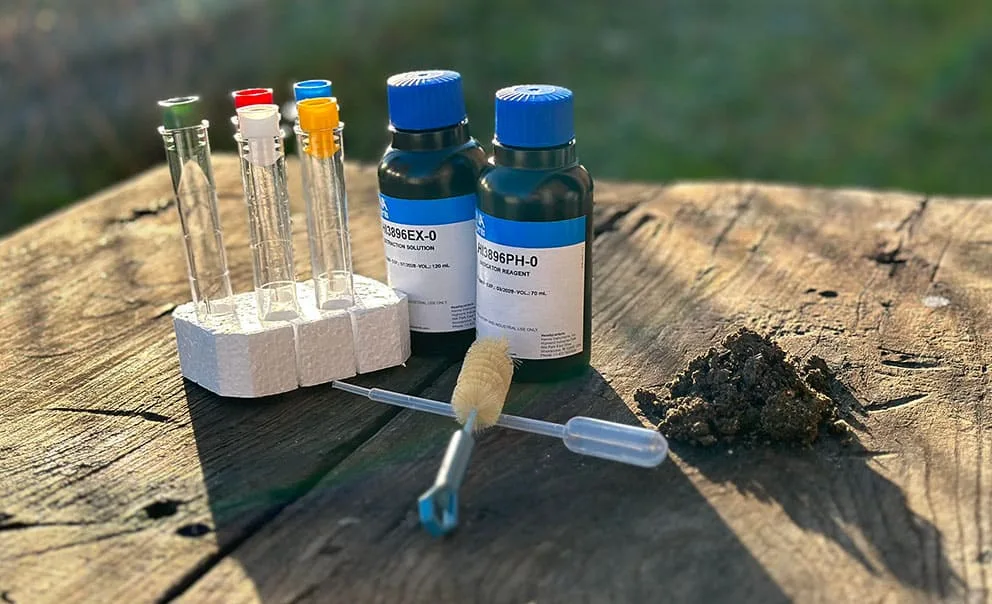
Chemical and physical processes in the soil, and consequently the conditions of plant nutrition, largely depend on the reaction of the soil solution, which is determined by the ratio of H+ and OH– ions in it. If their concentration is equal, the reaction of the soil solution is neutral; if H+ cations predominate, the reaction is acidic, and if OH– anions predominate, it is alkaline.
A reaction is considered neutral when the concentration of H+ and OH- ions in distilled water is 1·10-7. The product of the concentrations of these ions for water is a constant value of 1·10-14. For convenience, the medium reaction is expressed as the negative logarithm of the concentration (or more precisely, activity) of hydrogen ions and is denoted by the symbol pH. Thus, pH 7 corresponds to a neutral reaction, pH below 7 to an acidic one, and pH above 7 to an alkaline one.
Plants have different requirements for the reaction of the soil solution. For most of them, the optimum pH of the medium is around 7.0, although their normal development is possible in a fairly wide range: from 4.5-5.0 to 6.5-7.5 pH (Table 28; Avdonin N.S., 1982).
Table 28. Optimal values of the soil solution reaction for agricultural crops Crop Optimal pH interval Crop Optimal pH interval
Rye 5.5-7.5 Bean 6.4-7.1 Oats 5.0-7.7 Fava bean 5.0-7.0 Wheat 6.0-7.5 Vetch 6.0-6.8 Barley 6.8-7.5 Lupin 4.0-6.0 Maize 6.0-7.0 Lentil 5.5-7.2 Sorghum 7.0-7.5 Potato 5.0-5.7 Millet 5.5-7.5 Turnip 6.0-6.5 Rice 4.0-7.5 Beet (forage) 6.2-7.5 Buckwheat 4.7-7.5 Beet (sugar) 7.0-7.5 Soybean 6.5-7.1 Carrot 5.5-7.0 Pea 6.0-7.0 Rutabaga 4.8-5.5 Serradella 5.4-6.5 Sunflower 6.0-6.8 Radish 5.5-7.3 Flax 6.0-6.5 Hemp 7.0-7.5 Kenaf 6.0-7.3 Cotton 5.5-7.3 Poppy 6.8-7.2 Chicory 6.8-6.5 Cabbage 6.0-7.4 Tomato 6.3-6.7 Cucumber 6.4-7.0 Lettuce 6.0-6.5 Onion 6.4-7.9 Alfalfa 7.0-8.0 Tea 4.5-6.0 Clover 6.0-7.0 Timothy grass 5.0-6.5 Brome grass 7.0-7.5 Foxtail 5.3-6.0
The reaction of the soil solution has a direct and indirect effect on the plant. The direct effect consists of the disruption of the colloidal-chemical properties of the protoplasm of plant cells, an unfavorable change in the concentration of organic acids in the cell sap, a disruption of protein metabolism and inhibition of protein synthesis, and a change in the adsorption and absorption of ions by plants.
The indirect effect of the soil solution reaction is expressed by the influence not on the plant itself, but on the conditions upon which its normal state depends. Among these conditions, first and foremost, is the effect of pH on the vital activity of soil microflora and soil properties, as well as the nature of the intake of anions and cations into plants (Fig. 51; Polevoy V.V., 1989).
Soil acidification sharply reduces the fixation of atmospheric nitrogen by free-living soil microorganisms and nodule bacteria of legumes. At low pH values, the process of nitrogen fixation is inhibited
Fig. 51. Effect of pH on the availability of mineral elements for plants by free-living soil microorganisms and nodule bacteria, which reduces the nitrogen supply of plants. The reaction of the soil solution is also of great importance for the absorption of phosphorus by plants, because as the medium is gradually alkalinized, monovalent phosphates (H2PO4–) begin to prevail in the soil, rather than poorly soluble divalent (HPO42–) and, finally, almost insoluble trivalent (PO43–) phosphates. One of the reasons for the depressing effect of acidity on plants is the difficulty in calcium nutrition. Hydrogen ions not only delay the intake of calcium into the plant, but also displace the calcium already absorbed. The displacement of calcium ions by hydrogen ions occurs due to the higher absorption energy of the latter by the adsorbing surface of the root system. Acidification of the soil solution reduces the availability of molybdenum to plants and increases the availability of boron. In acidic soils, there is more than enough of soluble forms of iron, while in carbonate soils it is often lacking, resulting in chlorosis of the leaves in plants. A similar phenomenon is observed with manganese. In soils with a neutral and alkaline reaction, it is in an oxidized form and is poorly available to plants. In acidic soils, on the contrary, mobile forms of manganese are in excess and harmful to plants. Under acidic conditions, the nutrition of plants with potassium, magnesium, sulfur, cobalt, copper, and zinc deteriorates.
The nitrogen nutrition of plants deteriorates equally with both acidification and alkalinization of the soil. The supply of mobile forms of aluminum in the soil is especially closely related to the reaction of the soil solution. The more acidic the soil, the more mobile forms of aluminum it contains, which can act toxically on the plant, poisoning it because they are intensively absorbed by the plant at acidic pH. In addition, due to hydrolytic decomposition, aluminum can serve as a source of free acids in the soil:
AlCl3 + 3H2O -> Al(OH)3 + 3HCl
Plants are not passive consumers of nutrients. They are capable of independently regulating the reaction of the soil solution in the root zone, adjusting the environment to their needs. Although the initial soil pH affects the rate of nutrient uptake (an acidic environment accelerates the intake of anions, and an alkaline one accelerates the intake of cations), this effect is weak. Much more important is how the crops themselves and the applied fertilizers change the acidity of the rhizosphere during the growing season.
Physiological acidity of fertilizers and root activity
Most mineral salts in their packaging are chemically neutral, but they behave differently in the soil. Plants absorb cations and anions unevenly, which leads to a rapid shift in the pH of the soil solution. Knowing this property, an agronomist can precisely manage plant nutrition in the field or in a greenhouse, avoiding undesirable acidification or alkalization.
Always consider the physiological reaction of fertilizers when developing nutrition systems. For example, ammonium sulfate is physiologically acidic: roots quickly take up nitrogen in the form of the NH4 cation, leaving the SO4 anion in the soil. Conversely, nitrates—potassium and sodium nitrates (KNO3 and NaNO3)—alkalize the medium, as the NO3− anion is absorbed more actively than potassium or sodium. As a result of exchange adsorption, an excess of hydroxyl ions accumulates, and the solution becomes alkaline.
In addition to the assimilation of mineral salts, root system directly affects the root zone through its own exudates. Plants use this mechanism to convert hard-to-reach nutrients into an assimilable form. Not only the roots themselves but also microorganisms living in the rhizosphere actively participate in this process.
The change in soil acidity by roots occurs in three ways:
- Release of HCO3− anions. They are formed during root respiration, balance the absorbed anions (in particular, nitrates NO3−), and increase the mobility of soil phosphorus.
- Active transport of hydrogen ions H+. Roots release them into the surrounding environment during their vital activity.
- Release of organic compounds. These can be organic acids themselves or substances that are processed by the rhizosphere microflora, producing butyric, lactic, and other acids that acidify the environment.
Read next
Agrochemistry For students
Soil acidity, types, indicators and influence on plants
Agrochemistry For students
Mechanisms of anion uptake by the soil adsorption complex and their characteristics
Agrochemistry For students