
Managing ontogenesis and developmental phases of vegetable crops
13 min read
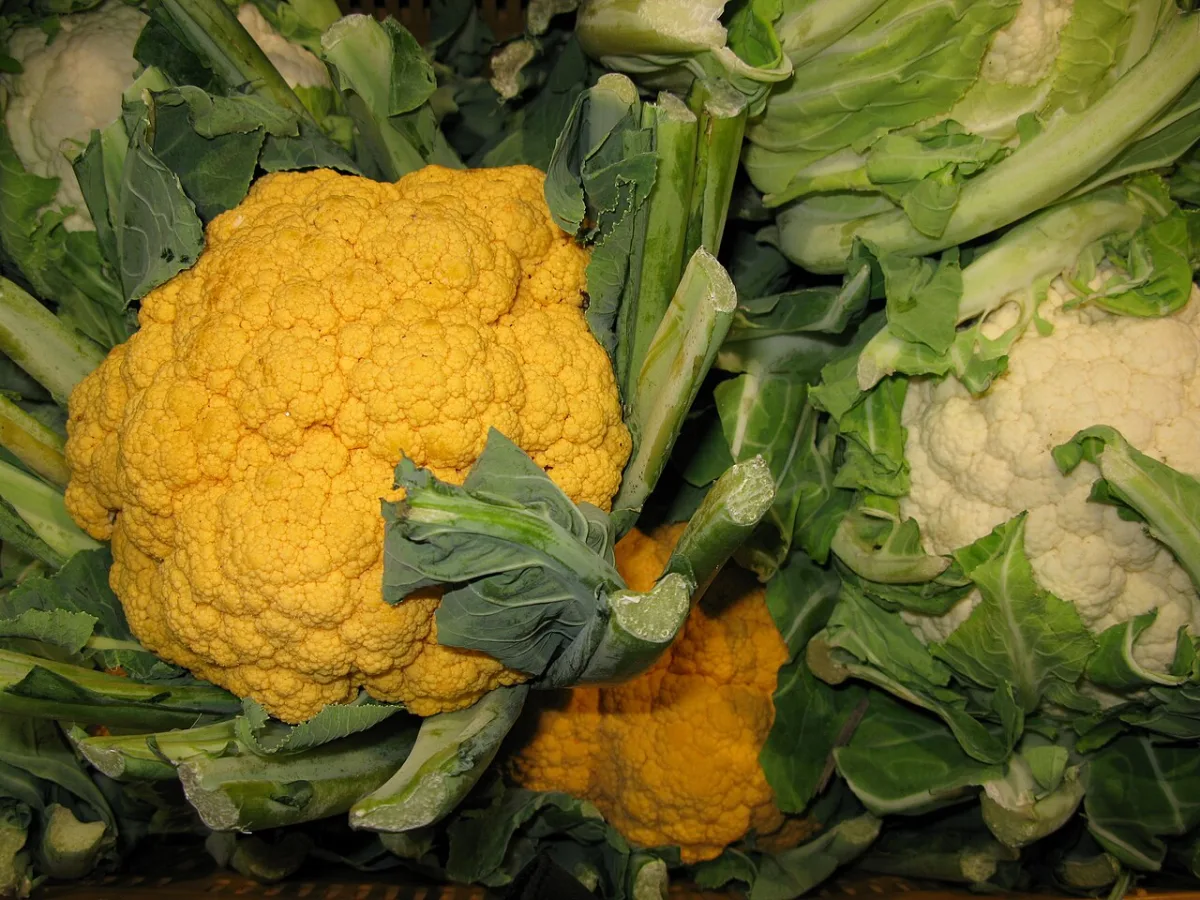
Ontogeny management: how to regulate the life cycle of vegetable crops
The life cycle (ontogeny) of vegetable crops lasts from seed germination to the complete death of the plant. Traditionally, crops are divided into annuals, biennials, and perennials. Annuals and biennials produce a harvest once in their lifetime (monocarpic species), while perennials fruit repeatedly, starting from the second year of the growing season (polycarpic). However, for an agronomist, these boundaries are relative, as external conditions can shift plant development timelines.
For example, heat-loving tomato and pepper crops grow for several years in their native tropical habitats, but in temperate climates, they are grown strictly as annuals. Conversely, sharp temperature fluctuations can force biennial crops, such as onion or cabbage, to flower in their first year of life. Timely regulation of growing conditions allows both for accelerating the passage of development phases and for suppressing unwanted transitions to flowering.
Disruption of temperature regimes and photoperiods can provoke premature flowering (bolting) in biennial crops during the first year of the growing season, leading to the loss of marketable harvest.
Regardless of lifespan, all higher plants go through four main developmental stages. The first stage is the embryonic stage, occurring on the mother plant from fertilization to the maturation of the seed or vegetative propagation organ. The second is the juvenile stage (youth), covering the period from germination to the readiness for initiating generative organs. The third stage is the reproductive stage (maturity), during which flowering and seed formation occur. The fourth stage is senescence, ending with the cessation of fruiting and death.
Development periods and phases: growth control in the field and during storage
For practical work, it is more convenient to use a detailed division of ontogeny into periods and developmental phases. Each period is characterized by specific changes in plant metabolism and appearance. The seed period begins with the formation of the zygote and lasts until seedling emergence. It includes the embryonic phase, the seed dormancy phase, and the germination phase, when the primary root and stem are formed using the seed's stored nutrients.
The period of vegetative growth continues from seedling emergence to the formation of buds and flower stalks. During this period, plants pass through three key phases. The first is the expansion of assimilatory and root surfaces, which for fruit and leafy vegetables (radish, head lettuce, cauliflower, broccoli) is the only phase before the start of flowering. The second is the accumulation of storage substances in productive organs, characteristic of root crops, cabbage heads, and broccoli curds. The third phase is the dormancy of vegetative organs, expressed in biennials and perennials.
During the dormancy phase in biennial crops, leaves die off and root activity ceases. When storing mother plants, it is important to maintain a stable microclimate to prevent them from waking up prematurely.
The reproductive period concludes the life cycle of commercial crops or seed crops. It consists of the budding, flowering, and fruiting phases. During the flowering phase, vegetative plant growth slows down, as primary resources are directed toward fruit set. To assess the condition of seed crops, agronomists look at the percentage of flower opening.
| Flowering stage | Flower opening index |
|---|---|
| Isolated | 10-15 % |
| Mass | 70-75 % |
Calculating the growing season: what harvest timelines depend on
In practical vegetable farming, planning the harvest campaign is built around two key indicators: the total duration of the growing season (number of days from emergence to harvesting) and the duration of fruiting for multi-harvest crops. These timelines are not constant for a specific crop—they depend on the cultivar and growing conditions. In practice, a cultivar is selected based on its maturity group (early, mid-season, late-season, and winter-hardy). However, stated maturity characteristics must always be evaluated in relation to the specific region and cultivation technology.
The entire growing season is divided into three consecutive stages:
- From seedling emergence to the start of product organ formation.
- Product organ formation.
- Harvest ripening.
Insufficient heat, nutrient deficiency, or moving a southern cultivar to the north extends the growing season by a period ranging from a few weeks to 2–3 months.
The specific features of a plant's life cycle determine the care strategy during the final stages of cultivation:
- Annual and biennial crops die after fruit and seed ripening. Vegetative mass accumulation at the final stages is minimal for them, as all resources are redirected toward fruit growth.
- Remontant flowering crops (tomato, cucumber, pepper, eggplant, tomatillo, pumpkin, watermelon, melon) continue to grow vegetatively after the first flowers appear. They fruit for a long time and die only with the onset of frost or other adverse conditions.
- Perennials pass through the seed period once in their lifetime, while the phases of vegetative growth and reproduction repeat many times. In the autumn, their above-ground part dies, but the rhizomes and part of the roots remain alive.
Above-ground mass and root system: the influence of habit on technology
The structure of the above-ground part of vegetable crops determines their ability to compete with weeds, and also dictates the choice of planting pattern and support structures. The leaf photosynthetic surface reaches its maximum area by the time of technical maturity. The bush shape and stem length vary greatly depending on the cultivar genetics and environmental conditions.
By the nature of their above-ground mass formation, vegetable crops are divided into groups:
- Bush-type with a short branched stem: tomato, pepper, eggplant, beans, bush bean. Among cucurbits, the bush form is formed by summer squash, pattypan squash, and some cucumber cultivars.
- Long-stemmed vine-like: most cucurbits, climbing bean cultivars, peas. They require trellis supports or a large feeding area.
- Rosette-forming: leafy annuals and biennials in the first year of life. Most form a small rosette, but cabbage (head cabbage, etc.) produces a large leaf rosette and a massive edible organ.
- Stem-type without branching: cauliflower and broccoli form a distinct stem but do not produce side vegetative branches.
- Perennials form a small rosette during the first growing season, and develop powerful vegetative mass only in subsequent years.
The root system of vegetable crops has an absorbing surface that always exceeds the leaf area. This lead is particularly pronounced in perennials and late-maturing cultivars. For most crops, the root system is fibrous — this is associated with the early death of the taproot and active development of lateral branches, which is additionally facilitated by the transplant method of cultivation. Adventitious roots play a crucial role in the nutrition and water supply of solanaceous and cucurbit crops. During vegetative propagation (potato, sweet potato, bulb onion, perennial onion, garlic, Jerusalem artichoke), plants form exclusively adventitious roots. The bulk of the roots is concentrated in the plough layer, although their penetration depth varies greatly by crop.
- Shift in the growing season due to heat deficit — up to 2–3 months
- Root penetration depth of garlic and onion — 40–70 cm
- Root penetration depth of carrot and beet — 70–120 cm
- Root penetration depth of tomato and pumpkin — more than 120 cm
| Root penetration depth | Crops |
|---|---|
| 40–70 cm | Cabbage (kohlrabi, cauliflower, napa cabbage, head cabbage), Welsh onion, leek, bulb onion, radish, lettuce, garlic, cucumber, celery, parsley, spinach |
| 70–120 cm | Eggplant, swede, pea, mustard, summer squash, carrot, pepper, turnip, beet, dill, chicory |
| More than 120 cm | Watermelon, artichoke, melon, potato, parsnip, rhubarb, asparagus, tomato, pumpkin, horseradish |
The indicated depth ranges are valid for average conditions. Depending on the mechanical composition of the soil and the plant species, the root penetration depth can vary significantly.
The influence of temperature and light on the transition to the reproductive phase
The transition of vegetable crops to flowering depends on genetics but is regulated by temperature and day length. If these requirements are not taken into account, one may obtain premature bolting or, conversely, fail to wait for seed stalks. Cold-hardy species require exposure to low positive temperatures to trigger the reproductive phase, whereas heat-loving crops of tropical origin do not need cooling.
In plants of temperate latitudes, growth and development processes are separated by temperature regimes. Their green mass grows fastest in warmth, while preparation for flowering takes place exclusively in cool conditions. Heat-loving crops (tomato, cucumber, pepper, bean, and others) bloom and grow at the same temperature.
- Active growth temperature of cold-hardy crops — +18...+20 °С
- Temperature for the transition to flowering — +1...+5 °С
- Cooling period for late cabbage, carrot, and celery — 100–120 days
- Cooling period for radish, lettuce, spinach, and watercress — 12–14 days
The reaction to day length also depends on the origin of the crop. Those from the tropics develop faster under short-day conditions. Plants of the temperate and subtropical zones require a long light day or even round-the-clock illumination at sufficient light intensity.
Moisture deficit or excessive sowing density provoke stress, which accelerates the differentiation of the growing point. As a result, plants prematurely transition to flowering to the detriment of the marketable harvest. This is critical when growing radish and annual leafy crops such as watercress and coriander.
Root activity, dormancy period, and selection of mother plants
The absorbing surface of roots reaches its maximum by the beginning of fruiting in fruit vegetables and by the time of technical maturity in other crops. After this, natural death of part of the roots begins. However, when growing conditions improve, this decline may be replaced by a new wave of root formation.
A rainy autumn can trigger secondary root formation in late-maturing cultivars and perennials. This is highly undesirable for bulb onions, root crops, and cabbage grown for winter storage: by the end of the growing season, their productive organs should be in a state of dormancy.
Biennial vegetable crops are characterized by a clear division of their life cycle. In the first year, all resources go into the growth of vegetative organs, and the development of the apical meristem practically stops. During winter storage at low positive temperatures, preparation for flowering is actively underway, and after planting the mother plants in the soil, the plant rapidly develops flower-bearing shoots. In annual fruit vegetables, however, growth and development proceed equally actively throughout the entire growing season.
In seed production, it is necessary to take into account the phenomenon of biological heterogeneity of plant parts. Experiments show that the buds in the upper part of a cabbage stump are significantly better developed than those at its base. This pattern is used in the selection and formation of flower stalks on mother plants of many vegetable crops.
Periods of active growth in vegetable crops alternate with phases of dormancy, which help them withstand unfavorable conditions. In annuals, only the seeds are in a state of relative dormancy. In biennial and perennial species, organs adapted to withstand winter also enter this state, with the dormancy phase recurring multiple times in perennials.
Deep dormancy in most vegetables is short-lived and is quickly replaced by forced dormancy, which lasts until favorable conditions arrive. Exceptions include artichoke and sea kale, whose seeds require artificial breaking of the seed coat for germination. In tomato, pepper, and cucurbit crops, deep seed dormancy is practically absent, which is why they can germinate directly inside ripe fruits.
Managing the Development of Perennial Crops and Seed Dormancy
Perennial vegetable crops direct all their resources toward the accumulation of vegetative mass in their first year of life. Processes of generative development are practically absent during this period. The transition to active development is triggered only after the overwintering of organs adapted for this purpose and with the onset of spring growing season.
Please note: the seeds of any vegetable crops in a state of dormancy are completely devoid of growth and development processes.
The unequal ratio between plant growth and development rates is a natural biological process. This ratio does not remain constant and changes as the crop ages. Furthermore, this balance depends directly on environmental factors in the field. By knowing these characteristics, an agronomist can select targeted intervention methods to manage plant growth and development under natural conditions.
Read next
Vegetable growing For students
Characteristics of sowing and cultivar qualities of vegetable crop seed
Vegetable growing For students
Classification of vegetable crops according to their temperature requirements
Viticulture For agronomists