
The Carolina horsenettle is a dangerous quarantine weed and its characteristics
1 min read
Carolina horsenettle is included in the "List of pests, plant diseases, and weeds of quarantine significance for the Russian Federation." This object is currently absent in the territory of Russia; however, due to its pronounced poisonous properties and high harmfulness, the introduction of its seed poses a direct threat to agricultural enterprises.
Carolina horsenettle is a dangerous quarantine weed that infests crops of cultivated plants, orchards, pastures, and uncultivated lands. Once it enters an area, it suppresses cultivated plants and significantly reduces the quality of harvested feed and yield. Its main areas of distribution are the USA, Canada, Mexico, Australia, and Georgia.
Most often, this weed infests crops of the following:
- corn and other grain crops;
- potatoes;
- soybeans;
- tomatoes;
- alfalfa and other perennial grasses.
Morphological characteristics of berries and seeds
The weed belongs to the nightshade family (Solanaceae Juss.). The plant produces round, smooth berries of yellow or orange color, 1.5–2 cm in diameter. Inside the fruit, flat, round-oval seeds are formed, with a rounded apex and a slightly narrowed base. The color of the seeds varies from yellow and orange to brown.
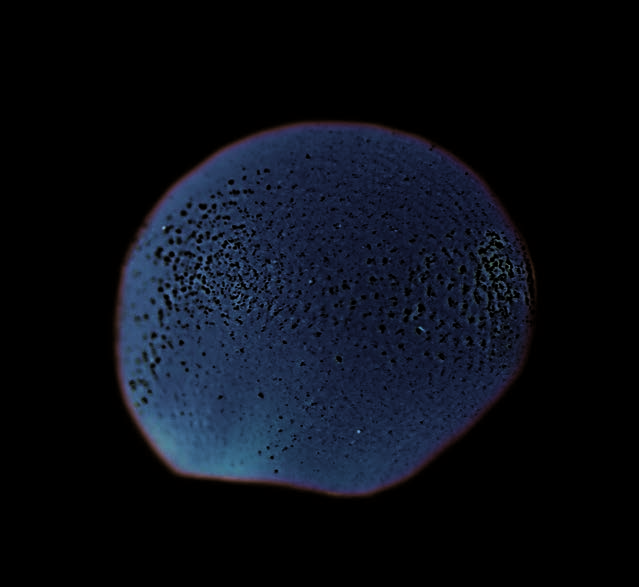
For laboratory and field identification of seed material, it is important to pay attention to characteristic structural details. The hilum of the Carolina horsenettle seed is linearly oval, light-colored, and depressed. The surface of the seed itself is finely pitted and has a distinct oily luster.
| Indicator | Value |
|---|---|
| Seed length and width | 2–3 mm |
| Thickness | 0.3–0.5 mm |
Read next
Seeds and varieties For agronomists
Botanical description and quarantine status of Solanum triflorum
Seeds and varieties For agronomists
Morphological features of the seeds and fruits of the buffalo bur (Solanum rostratum)
Seeds and varieties For agronomists