
Seed morphology and toxic properties of common tansy
1 min read
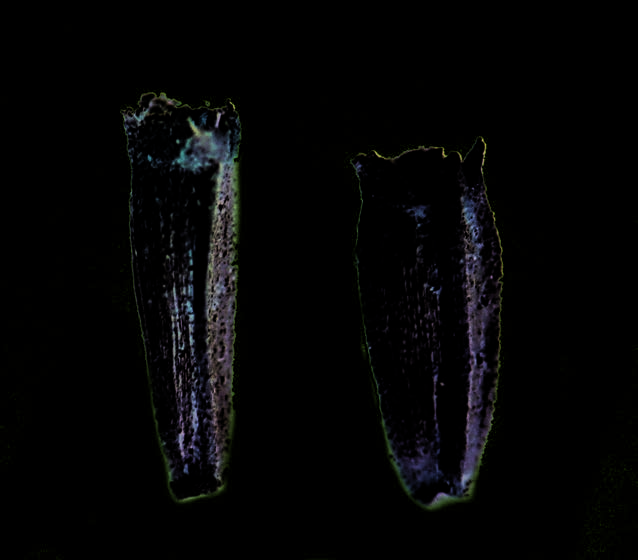
Achenes are wedge-shaped, slightly curved, 4-5-sided with noticeably protruding ribs. The apex is slightly widened, forming an indistinctly serrated membranous crown with a remnant of the style. The fruit scar is central, surrounded by a clearly defined rounded rim. The surface between the ribs is indistinctly wrinkled, matte. Color is greenish-gray; ribs, crown, and base are lighter. Length 1.5–1.75 mm, width 0.4–0.5 mm, thickness 0.25 mm. It infests grain crops and meadows. Distribution: European part (everywhere), Caucasus, Siberia, Far East, Central Asia. Poisonous properties: The aerial part is poisonous, especially the inflorescences. Toxicity is due to essential oil, the main components of which are bicyclic terpene ketones and thujones. The essential oil has a strong local irritant effect and stimulates the central nervous system. The main symptoms of poisoning are nausea, vomiting, and diarrhea. Livestock animals may eat tansy when on a monotonous diet as a spicy-flavor additive. Milk of cows becomes bitter-tasting and develops a peculiar odor. Intoxication of animals can end in death. Pregnant females may suffer miscarriages. Other species. In total, there are more than 30 species in the genus, all of which contain significant amounts of essential oils. In addition, similar essential oils based on thujone and pinene are contained in representatives of Asteraceae from the genera Artemisia and Pyrethrum, the main active ingredients of which are other compounds.
Read next
Seeds and varieties For agronomists
Morphology of achenes and toxic properties of common groundsel
Seeds and varieties For agronomists
Botanical characteristics and harmfulness of the weed viper's bugloss
Seeds and varieties For agronomists