
Morphology of achenes and toxic properties of common groundsel
2 min read
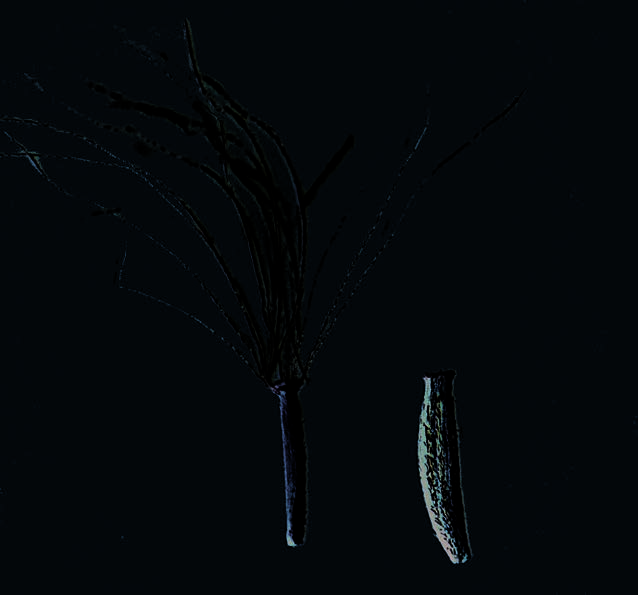
Common groundsel infests crops of grain crops, reducing the quality and safety of plant produce. The weed enters the harvested crop as achenes, achenes within an involucre, infructescences, or entire capitula. The main danger of such contamination is the high toxicity of the plant for livestock animals and humans.
Caution, poisonous! Groundsels contain pyrrolizidine alkaloids: platyphylline, seneciphylline, sarrecin, and others. Platyphylline has an antimuscarinic effect but is less active than atropine. It exerts a spasmolytic (papaverine-like) effect, inhibits the cholinergic systems of vegetative ganglia, and stimulates the central nervous system in toxic doses. Main symptoms of poisoning include dry mouth, palpitations, pupil dilation, CNS excitation, decreased blood pressure, urinary retention, dyspnea, and seizures.
Morphological characteristics and identification of achenes
To detect the contaminant in grain bulk in time, it is necessary to know the external characteristics of its fruits. Common groundsel achenes are cylindrical in shape, round in cross-section, and have a longitudinally wrinkled surface. The apex of the fruit is truncate and expanding, forming a crown with the remains of the style. The base of the achene is narrowed, and the hilum is deeply recessed.
The surface between the wrinkles is covered with appressed hairs. The fruit color is dark gray or greenish-brown, while the base, apex, and wrinkles appear lighter. The pappus consists of golden-yellow hairs fused at the base, which easily fall off.
- Achene length — 22.5 mm
- Width and thickness — 0.40.5 mm
- Pappus length — up to 5 mm
The weed is distributed universally throughout the European part (with the exception of the Far North), in the Caucasus, Siberia, the Far East, and Central Asia. Similar alkaloids of the senecionine and platyphylline type are also contained in members of the Asteraceae family from the genera Solidago and Nardosmia, whose effects are similar. Other species of groundsel also possess similar poisonous properties:
- S. pratensis (Hoppe) DC.
- Senecio platyphyllus (Bieb.) DC.
- S. sylvaticus L.
- S. fluviatilis Wall.
- S. erucifolius L.
- S. racemosus (Bieb.) DC.
- S. integrifolius (L.) Clairv
- S. erraticus Bertol
- S. fuchsii C.C.Gmel.
- S. macrophyllus Bieb.
- S. platyphylloides Somm. et Levier
- S. othonnae Bieb.
- S. nemorensis L.
- S. jacobaea L.
- S. orientalis W.
- S. vernalis Waldst. et Kit.
Read next
Seeds and varieties For agronomists
Morphological characteristics and quarantine significance of perennial ragweed
Seeds and varieties For agronomists
Globe thistle as a dangerous toxic weed of crops
Seeds and varieties For agronomists