
Seed characteristics and distribution range of shepherd's purse
1 min read
Shepherd's purse of the Brassicaceae family is one of the most common weeds in plant production, posing a constant threat to clean crops. This weed actively infests grain and row crops, and also spreads rapidly in gardens and vegetable patches. The range of its harmfulness covers almost all agro-climatic zones, except for the Arctic. When planning plant protection measures, it is important to take into account the poisonous properties of this plant.
Shepherd's purse is the most frequently encountered weed in plant production, possessing poisonous properties.
- Family — Brassicaceae
- Silicle length — 35 mm
- Distribution — Everywhere, except for the Arctic
Morphological features of silicles and seeds
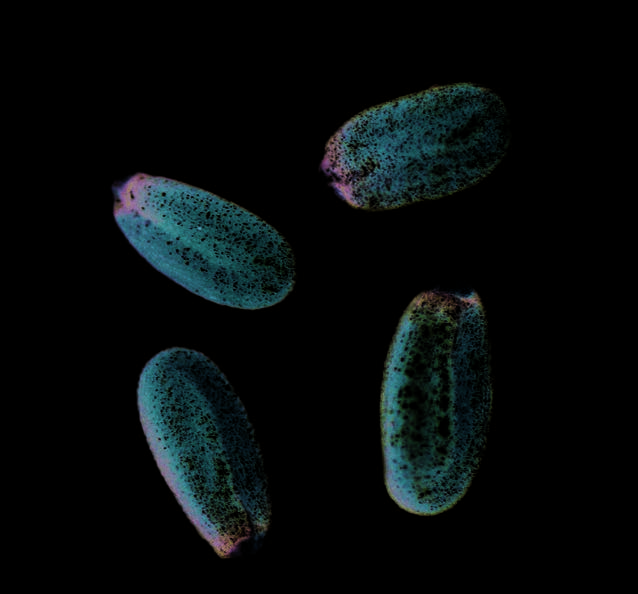
The fruit of shepherd's purse is a dehiscent, triangular-cuneate, compressed silicle 35 mm in length. The oval-plicate seeds have a rounded apex and a characteristic notch at the base. This notch is formed due to furrows that run along the wide sides from the base to the apex and are formed by the radicle and cotyledons of equal length. The seed hilum is tightly covered by a white membrane.
The surface of the seed is punctate, almost smooth and slightly lustrous. The color varies from yellowish-brown to light or dark yellow, with the color of the seed becoming darker at the base itself.
| Seed parameter | Size |
|---|---|
| Length | 0,751 mm |
| Width | 0,5 mm |
| Thickness | 0,25 mm |
Read next
Seeds and varieties For agronomists
Botanical description and morphological characteristics of Descurainia sophia seeds
Seeds and varieties For agronomists
Seed morphology and distribution range of Erysimum cheiranthoides
Seeds and varieties For agronomists