
Quarantine status and morphological characteristics of ivyleaf morning glory seed
1 min read
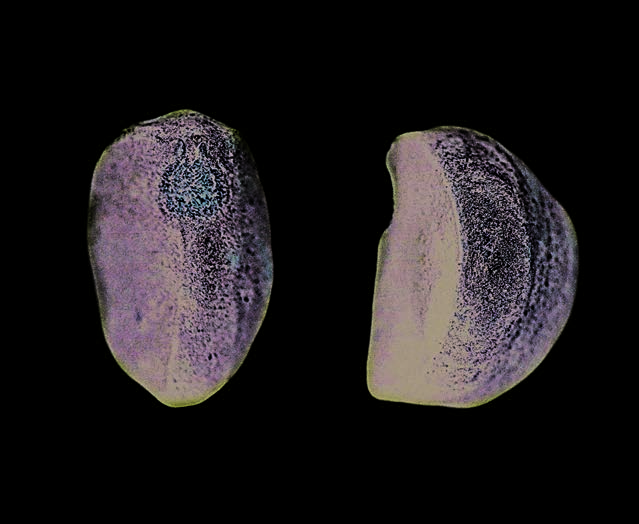
Ivy-leaved morning glory is a dangerous weed that infests fields, orchards, kitchen gardens, and any land with a disturbed phytocenosis. Currently, this species is absent from the territory of Russia. However, its introduction poses a serious threat to domestic farms, as the weed rapidly suppresses crops.
Ivy-leaved morning glory is included in the "List of pests, plant diseases, and weeds of quarantine significance for the Russian Federation".
The main sources of potential introduction are imported seed lots and grain shipments. At present, this contaminant is widely distributed in the following regions:
- USA;
- Latin American countries;
- England and Israel (isolated outbreaks identified).
Morphological characteristics and seed size
The fruits of the morning glory are spherical 24-valved capsules, inside which 4 to 6 seeds are formed. The seeds themselves have a characteristic slightly trihedral shape. On their dorsal side, there is a broad convex face, the convexity of which decreases slightly towards the center. On the ventral side, two faces can be seen, beveled towards the edges from the central ridge.
The seed color varies from dark brown to black, and the surface can be matte or slightly shiny. The main distinctive feature for identification is the horseshoe-shaped seed scar, densely covered with light brown hairs. The geometric parameters of the seeds are determined during laboratory examination.
| Seed parameter | Value |
|---|---|
| Seed length | 56 mm |
| Seed width | 33,5 mm |
Read next
Seeds and varieties For agronomists
Morphological characteristics of seeds and distribution area of field dodder
Seeds and varieties For agronomists
Characteristics of Solanum elaeagnifolium seed and risks of its spread
Seeds and varieties For agronomists