
Morphological features and geographical distribution of Cuscuta lupuliformis seed
1 min read
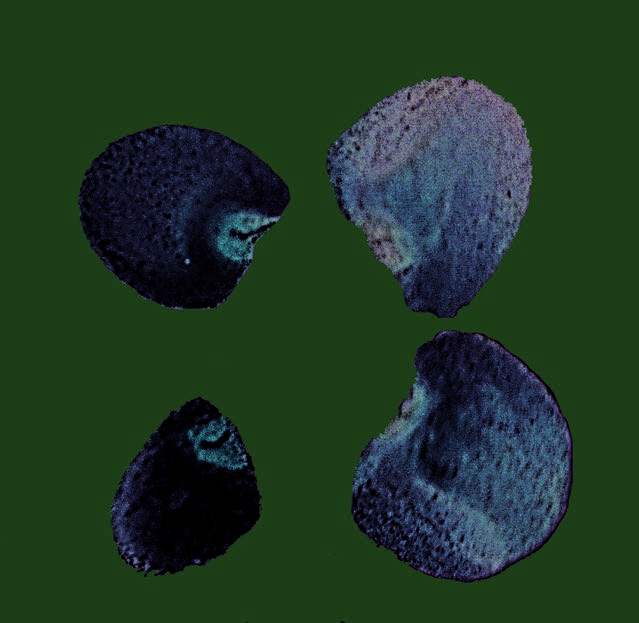
-- The seed capsules are ovoid-conical, dehiscing transversely. The seeds are obovoid, oval-angular, slightly compressed on the back and the abdomen. The apex is broad and obtuse, with a protrusion on the side at the base. The facet on the back is broad, sometimes almost straight; on the abdominal side, the facets merge into a single surface, often significantly depressed, without forming a ridge. The seed hilum is narrow, long, and obliquely positioned, located under the ledge in the center of a rather large rounded spot. The surface is pitted-punctate; near the seed hilum, it is almost smooth and matte. The color is yellow, yellowish-brown, less often brown, sometimes with a violet tint; the seed hilum is lighter, surrounded by a more intensely colored spot. Length 2.75–3.5 mm, width 2.25–3 mm, thickness 1.75–2.5 mm. It infests and affects mainly woody and shrubby species; it grows along the banks of streams and irrigation canals. Distribution: European part (central and southern regions), Caucasus, Western and Eastern Siberia, Central Asia. Toxic properties: indicated above.
Read next
Seeds and varieties For agronomists
Morphological characteristics of seeds and distribution area of field dodder
Seeds and varieties For agronomists
Characteristics of clover dodder seed and the distribution range of the parasite
Seeds and varieties For agronomists