
Morphological characteristics of seeds and distribution area of the field dodder
1 min read
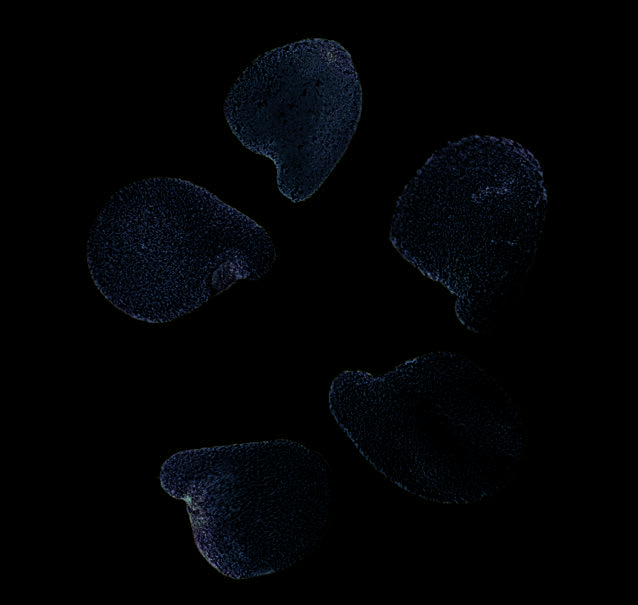
Cuscuta monogyna Vahl of the Cuscutaceae Dumort. family poses a serious threat to nurseries and orchards. This parasitic weed infests trees and shrubs, including willow, maple, poplar, aspen, plum, currant, raspberry, and other crops. Timely detection of the pest seed in seed material or soil allows for the protection of perennial plantings in due time.
The plant has toxic properties, which must be taken into account when harvesting plant raw materials and feed.
Morphological characteristics and seed dimensions
The seeds of Cuscuta monogyna have an obovate, oval-oblong, or irregularly triangular compressed shape. They are rounded at the apex and slightly narrowed towards the base, forming a characteristic protrusion on the side. The pest's seed capsules are oval-shaped, with the remains of the corolla persisting as a peculiar cap.
When analyzing the purity of seed material and identifying the weed, refer to the following seed structural features:
- the dorsal ridge is oval and slightly raised;
- there are two edges on the ventral side converging at a wide angle (they can be straight or slightly indented, with one being longer than the other, which forms a small beak);
- the seed hilum is narrow, long, and located under the ledge;
- the seed surface is matte, rough, and pitted-punctate;
- the color varies from light yellow to brown, while the hilum is white, and the spot surrounding it is darker.
| Seed parameter | Size, mm |
|---|---|
| Length | 2,753 |
| Width | 22,5 |
| Thickness | 1,52 |
The pest's distribution range covers vast areas with different climates. Cuscuta monogyna infests plantings in the southern, southwestern, and southeastern regions of the European part, as well as in Crimea and the Caucasus. In addition, this weed species is often found in Western Siberia and Central Asia.
Read next
Seeds and varieties For agronomists
Morphological features and geographical distribution of Cuscuta lupuliformis seed
Seeds and varieties For agronomists
Morphological characteristics of Lehmann's dodder seed and the harmfulness of the weed
Seeds and varieties For agronomists