
Morphological characteristics of fruits and toxic properties of industrial hemp (Cannabis sativa)
2 min read
Family: CANNABACEAE
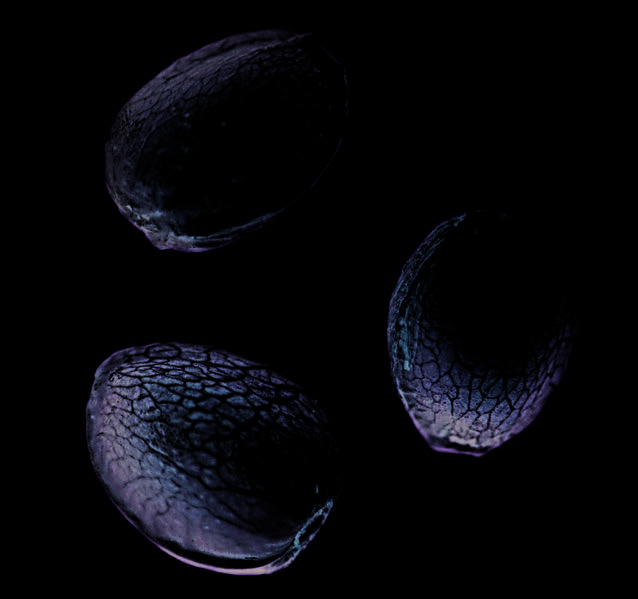
Cannabaceae contaminate crop products with nutlet fruits. Fruits are nutlets. The nutlets are ovoid, slightly compressed on the broad sides, and longitudinally keeled on the narrow sides. The pericarp is shell-like and dense. Sometimes nutlets remain within the perianth. The fruit hilum is almost perfectly round and concave. The surface of the nutlets is smooth and slightly shiny. The color is gray or light gray with white veins, lighter towards the apex and along the sharp lateral sides; the fruit hilum is dark. Length 3.5–4.25 mm, width 2.25–3.5 mm, thickness 2.25–3 mm. It contaminates crops of spring cereals. Distribution: Widely distributed throughout the territory of the Russian Federation. It is cultivated and also grows wild. Poisonous properties: Young tops of female specimens, flowers, and seed are poisonous; a resinous liquid is secreted on the female inflorescences and surrounding leaves of Indian hemp, which is a toxic product with the highest content of narcotic substances. It contains toxic dibenzopyran derivatives: cannabinol, tetrahydrocannabinol, and cannabidiol. Cannabinol, which acts on the central nervous system, is pharmacologically the most active. In experiments, it causes tremors, impairs coordination, suppresses cardiac activity, and induces increased blood pressure, vomiting, and diarrhea. In humans, it causes hallucinations and a state of narcotic intoxication. Repeated use leads to drug addiction. Only hemp grown in southern regions possesses narcotic properties; in temperate and cold climates, this ability practically disappears (although toxicity with a partial narcotic effect still exists).
For the production of hemp oil (for food), only hemp grown in northern regions is used. It is the most frequently encountered weed in crop products.
Read next
Seeds and varieties For agronomists
Morphological description and distribution area of black bindweed seed
Seeds and varieties For agronomists
Biological characteristics and toxic properties of opium poppy
Seeds and varieties For agronomists