
Morphological characteristics and harmfulness of the weed Salsola tragus
1 min read
Family: CHENOPODIACEAE Vent.
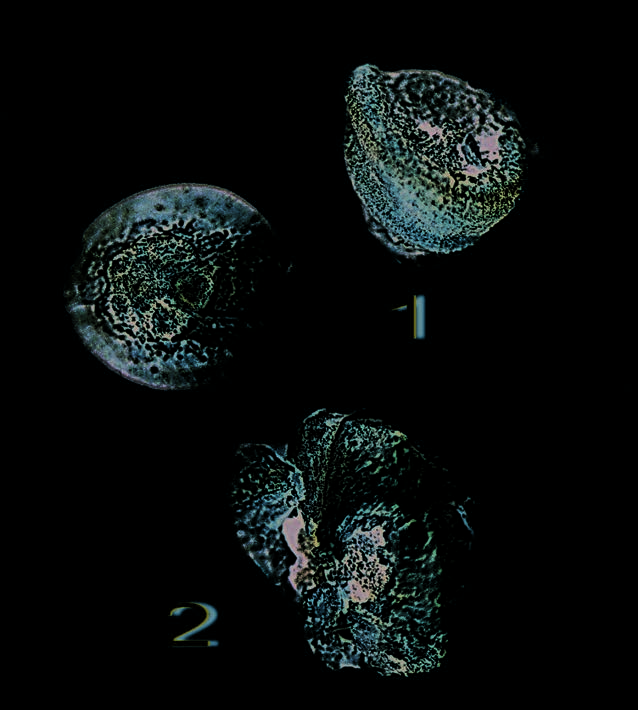
The Russian thistle (Salsola tragus) is an unwelcome guest in fields, actively competing with crops for soil moisture and nutrients. It is crucial for an agronomist to recognize the weed in the early stages of the growing season to correctly select herbicide protection and prevent yield losses. The weed adapts quickly to environmental conditions and spreads easily by wind after seed maturation.
The weed infests grain crops (spring and winter), as well as melons.
Morphological features and geographical distribution of the Russian thistle
The spike-like inflorescences of the weed are inversely conical in shape and consist of wing-like spreading perianth leaves. Their surface is wrinkled, and the color varies from dark grayish-green to straw-gray. The fruit perianth is also inversely conical and consists of five membranous leaves, white or pink in color, which are fused at the base to form a receptacle for the fruits, and bend outwards.
The fruits of the thistle are snail-shaped, broadly inversely conical, with the base of the cone being the top of the fruit. In the perianth, they are arranged horizontally. The thin pericarp is easily rubbed off, revealing a rough, matte gray or brownish-black surface underneath. The seeds completely mimic the shape of the fruit, have a spiral embryo, and are dark gray or dark olive in color.
- Inflorescence length — 68 mm
- Inflorescence width — 46 mm
- Perianth length — 34 mm
- Perianth width — 23 mm
- Nutlet and seed diameter — 1.75–2.5 mm
- Nutlet and seed thickness — 1–1.25 mm
The weed possesses high endurance and adapts to various climatic conditions. It is important for agronomists to consider the geographical factor when monitoring crops. The weed actively spreads in the following territories:
- European part of the Russian Federation (central and southern regions);
- Crimea;
- Caucasus;
- Western and Eastern Siberia;
- Central Asia.
Caution, poisonous! The aerial part of the Russian thistle contains the alkaloids salsoline, salsolidine, and other compounds. The ingestion of the weed in livestock feed causes vasodilation and lowers blood pressure. The toxins affect the central nervous system, depressing the vasomotor center, and also have a pronounced sedative effect.
Read next
Seeds and varieties For agronomists
Morphological characteristics of the fruits and seeds of common lambsquarters
Seeds and varieties For agronomists
Botanical characteristics of seeds and harmfulness of water pepper (Persicaria hydropiper)
Seeds and varieties For agronomists