
Characteristics and hazardous properties of Heracleum sosnowskyi in agrocenoses
2 min read
Sosnowsky's hogweed (the Umbelliferae family — Apiaceae Lindl.) poses a serious threat to agrocenoses. This aggressive weed actively infests meadows and grows along the edges of fields in the European part and in the Caucasus. The maximum concentration of dangerous substances accumulates in the aerial part of the plant during the generative phase, when the weed is most toxic.
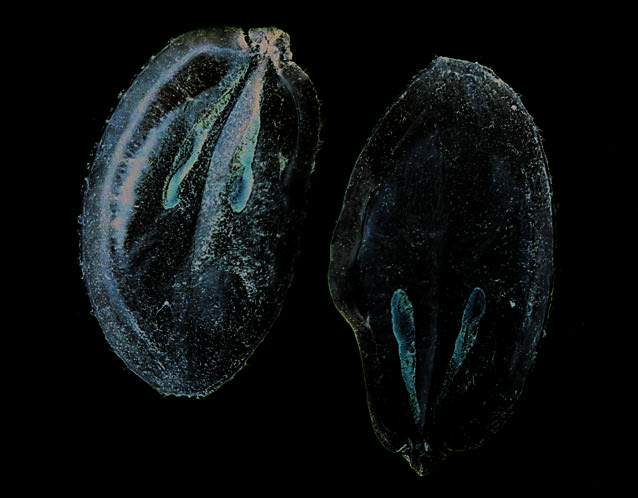
The fruitlets (mericarp) of the plant are obovate, oblong, or broadly elliptical in shape. Along the back, they are covered with sparse long hairs, and along the edge and at the base — with a few spiky hairs.
- Fruitlet length — 1012 mm
- Fruitlet width — 68 mm
- Contact with sap — 1.5 min
- Exposure to sunlight — 2 min
Toxicity of hogweed and its impact on humans and livestock animals
All parts of the plant contain alkaloids, triterpene saponins, flavonoids, and furanocoumarins, including bergapten, isobergapten, isopimpinellin, xanthotoxin, and psoralen. These compounds sharply increase skin sensitivity to ultraviolet radiation. People with light skin — albinos and blonds — are particularly vulnerable to the effects of toxins.
Contact with hogweed sap combined with sunlight causes inflammation similar to a sunburn. A first-degree burn can develop in just two days. In severe cases, second-degree burns are diagnosed with chills, dizziness, headaches, and high fever, and deep scarring ulcers may form at the site of the blisters.
When furanocoumarins enter the body with food, a photosensitizing effect also occurs, and ingestion causes a hallucinogenic effect. Because of this, the plant poses a danger to children. They are attracted by the thick, succulent stems with sweetish pulp, from which they often carve pipes or tubes.
The weed is also dangerous for livestock, causing serious intoxication in cattle when grazing on green feed. Moreover, furanocoumarins persist even during ensiling. They possess pronounced estrogenic activity: in small doses, they stimulate meat and dairy productivity, but in large volumes, they cause reproductive disorders in livestock animals.
Due to the risk of reproductive disorders in cattle, the daily dose of hogweed silage in feed rations must be strictly regulated.
The concentration of toxic substances depends on the specific species of the plant. Species of the section Heracleum have the lowest content of photodynamic compounds. Sensitivity to ultraviolet light upon contact with different species of hogweed varies significantly:
- Furanocoumarins are completely absent: Pontic hogweed (H. ponticum Grossh.) and aconite-leaved hogweed (H. aconitifolium Woronow).
- Minimum content of furanocoumarins: Siberian hogweed (H. sibiricum L.), Carpathian hogweed (H. carpaticum Pore.), Voroshilov's hogweed (H. woroschilowii Gorovoi), and Moellendorff's hogweed (H. moellendorfii Hance).
Read next
Seeds and varieties For agronomists
Caucasian dittany: biological characteristics of the weed and safety precautions
Seeds and varieties For agronomists
Morphological description and identification of the fruitlets of rough chervil (Chaerophyllum temulum)
Seeds and varieties For agronomists