
Caucasian dittany: biological characteristics of the weed and safety precautions
2 min read
Representatives of the rue family (RUTACEAE Juss.) contaminate plant produce with their fruits and seed. Although in some weed identification guides the Caucasian dittany may be mentioned in the section for the legume family (FABACEAE Lindl.), this plant belongs to the rue family. For an agronomist, this weed poses a serious threat: it spoils the quality of seed material and creates dangerous working conditions for field workers.
The Caucasian dittany is extremely toxic. All parts of the plant contain a large amount of volatile essential oil and the alkaloids dictamnine and skimmianine, which have a local irritant and photosensitizing effect. A chemical skin burn can be sustained both through direct contact and without contact — at a distance of up to 12 m.
How to identify the weed by fruits and seed
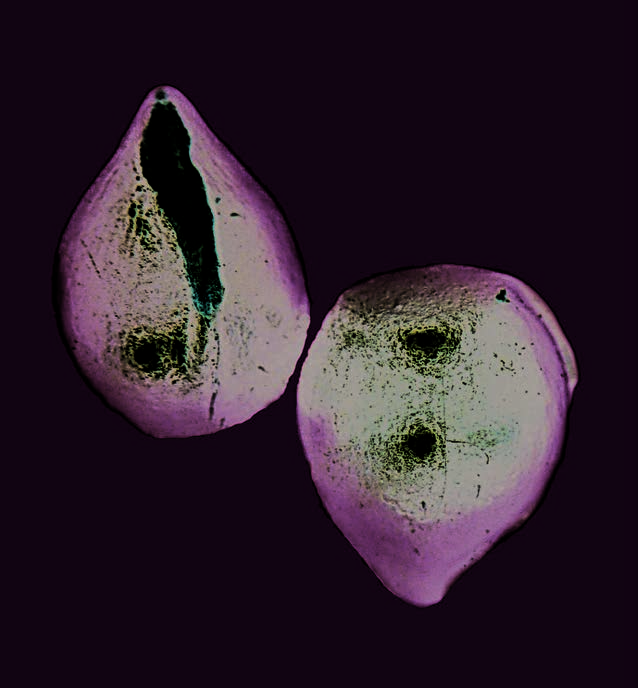
The fruits of the dittany are star-shaped five-celled capsules that open from the inner side. The fruit surface can be glabrous or hairy. The seeds of the weed have an ovoid shape with an elongated pointed base, a shiny black color, and a white linear hilum.
| Seed parameter | Size, mm |
|---|---|
| Length | 45 |
| Width and thickness | 34 |
- Number of seeds in one cell — 23 pcs.
- Length of the horns on the fruit stalk — 24 mm
- Length of the fruit stalk — 23 mm
- Maximum damage distance — 12 m
The weed is most widespread in the southern part of the European territory of the USSR and in the Caucasus. Under field conditions, it is often found among thickets of steppe shrubs, in dry sparse forests, and on mountain slopes. It is important for the agronomist to monitor these areas to prevent contamination of the harvest.
Upon contact with the plant, symptoms of dermatitis develop according to the following pattern:
- Latent phase. The latent period lasts from several hours to a day, after which foci of inflammation, burning, and itching appear on the skin.
- Blister formation. After 12 days, swelling develops in the affected areas and blisters filled with transparent fluid form.
- Healing. After a few days, the itching and burning subside, and dark scabs form at the site of the blisters, which are shed by the body after 710 days.
In case of severe intoxication, local skin lesions are accompanied by general malaise, severe headache, and low-grade fever.
Read next
Seeds and varieties For agronomists
Morphological characteristics and poisonous properties of castor bean seeds
Seeds and varieties For agronomists
Morphological characteristics and toxic properties of European wild ginger seed
Seeds and varieties For agronomists