
Botanical description of seeds and toxic properties of Convallaria majalis
2 min read
Family: LILIACEAE Juss.
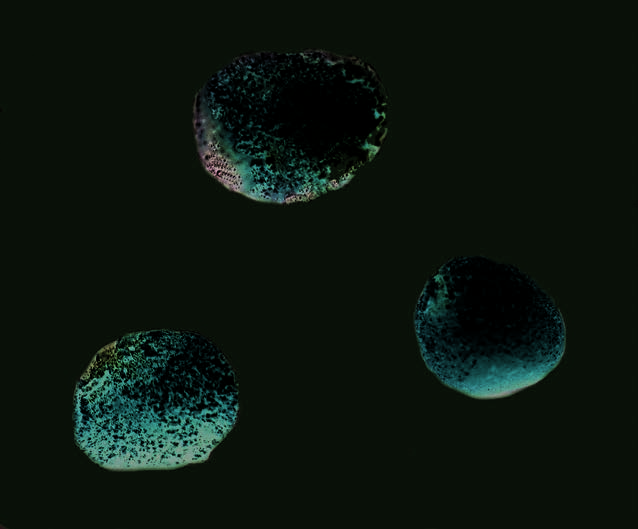
Lily of the valley is widely distributed in the European part of Russia — from the southern taiga to the forest-steppe. The plant has a broad ecological range: it colonizes both dry and humid habitats, occurs in coniferous and deciduous forests, and forms dense thickets. To prevent the contamination of herbage and poisoning of livestock animals, it is important to identify its berries and seed in a timely manner.
The fruits of lily of the valley are oval yellowish-orange or red berries, each containing 810 maturing seed. The rounded seed have a rough surface with a color ranging from light yellow to light brown. Their characteristic feature is a slightly depressed dark brown hilum, bordered by a wide dark brown stripe.
| Plant part | Length, mm | Width and thickness, mm |
|---|---|---|
| Berry (fruit) | 1215 | 812 |
| Seed | 45 | 34 |
Toxicity of lily of the valley and its impact on fauna
The entire plant is poisonous, including its fruits and seed. They contain the saponin convallarin and a number of cardiac glycosides (convallamarin, convallatoxin, and others). The effect of lily of the valley glycosides is similar to that of foxglove. The saponin convallarin strongly irritates the gastrointestinal tract mucosa, causes diarrhea, and affects the kidneys, increasing urination. Poisoning occurs upon ingestion of berries (especially by children) or from an overdose of medicinal preparations; there are also known fatal cases after consuming water in which flowers were kept.
Observations have recorded the following characteristics of the plant's impact on fauna:
- Poisoning has been registered in ducks and geese that pecked at discarded bouquets.
- Foxes and other canines can consume large quantities of lily of the valley berries without harm, using them as an anthelmintic.
Similar poisonous properties are possessed by the Transcaucasian lily of the valley (C. transcaucasica Utkin ex Grossh.), which grows in the North Caucasus, Transcaucasia, and the Mountainous Crimea, as well as Keiske's lily of the valley (C. keiskei Miq.), which is found in the south of the Far East.
Other members of the lily family containing cardiac glycosides and saponins have a similar, but weaker, poisonous effect:
- Representatives of the genus Polygonatum;
- Representatives of the genus Ornithogalum.
Read next
Seeds and varieties For agronomists
Morphological characteristics and toxic properties of European wild ginger seed
Seeds and varieties For agronomists
Morphological characteristics and toxic properties of Colchicum autumnale seeds
Seeds and varieties For agronomists