
Botanical description and characteristics of field pennycress seed
1 min read
Family: POPPY (PAPAVERACEAE)
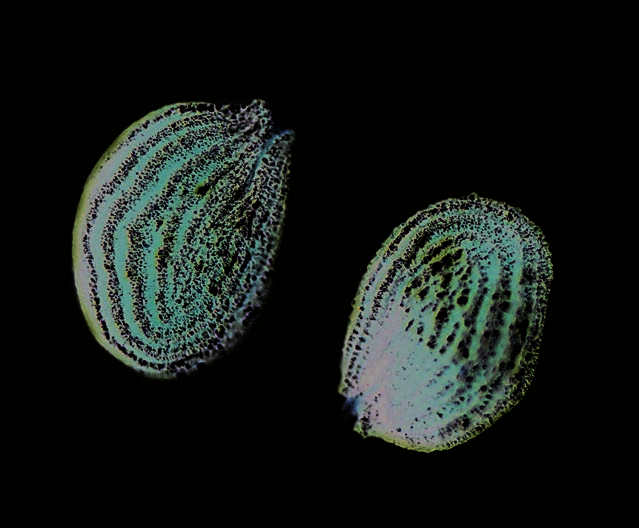
BRASSICACEAE FAMILY Silicles are rounded-compressed, two-celled, multi-seeded. Length 10–15 mm. Seeds are obovate, compressed, slightly inflated in the middle. At the base, there are two small teeth with a white spine between them — the remnant of the seed stalk; grooves run from the teeth towards the apex covering almost half of the seed. The hilum is between the teeth. The surface has 6–8 arched grooves that follow the outline of the seed and converge at the hilum. Color is dark cherry or almost black. Length 1.5–2.25 mm, width 1.2–1.5 mm, thickness 0.5–0.75 mm. It infests all crops, especially spring and winter crops, row crops, vegetable gardens, meadows, and irrigated alfalfa fields. Distribution: European part (everywhere), Caucasus, Western Siberia, Far East, Central Asia. Toxic properties: indicated above. The most frequently encountered weed in plant produce.
Read next
Seeds and varieties For agronomists
Botanical characteristics of seeds of the hoary alyssum (Berteroa incana)
Seeds and varieties For agronomists
Characteristics of seeds and distribution area of field pepperweed
Seeds and varieties For agronomists