
Botanical characteristics of seed and safety measures when handling belladonna
1 min read
Deadly nightshade (family Solanaceae) is a dangerous poisonous plant found in the European part of Russia and Crimea. When cultivating or collecting wild raw materials, an agronomist must strictly monitor staff safety. All parts of the plant, including seed, contain toxic alkaloids: atropine, hyoscyamine, and scopolamine. Severe poisoning most often occurs from eating the berries, which attract the attention of children.
Danger during contact and honey collection! The toxic effect of deadly nightshade can manifest even when touching the face and eyes with hands while working on the plantation. It is extremely dangerous to allow honey collection near crops: bees readily visit the flowers of deadly nightshade and are not poisoned, but the resulting honey becomes toxic to humans.
Honey collected from the flowers of deadly nightshade can be identified by the following signs:
- dark (red-brown) color;
- thick consistency;
- slightly bitter taste.
Botanical description of fruits and seeds
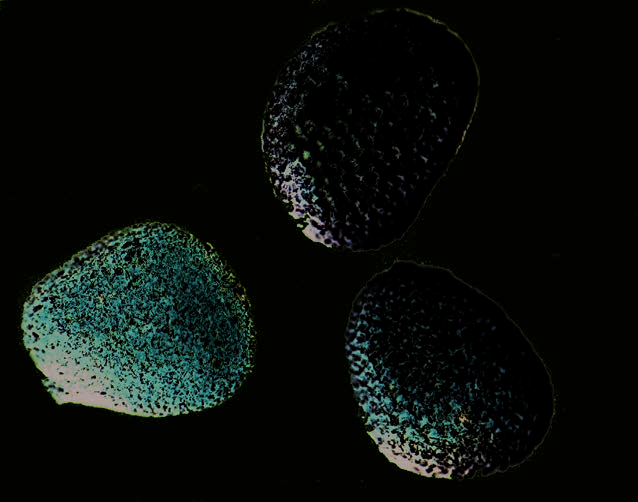
The fruits of deadly nightshade are slightly flattened shiny berries about the size of a cherry, filled with purple juice and numerous seed. In the initial stages of ripening, the fruits are green, and then they turn black or yellow. The seed of deadly nightshade are angular-rounded, slightly flattened, with a pronounced reticulate surface. The hilum on the seed is shaped like a small, light-colored ridge, and the overall color can be yellowish-gray, light brown, or black.
To determine the purity of seed material, the following geometric characteristics are used:
| Seed parameter | Linear dimension |
|---|---|
| Length | 1.52 mm |
| Width | 1.2–1.8 mm |
| Thickness | 1 mm |
Read next
Seeds and varieties For agronomists
Botanical description and morphological characteristics of bittersweet nightshade seed
Seeds and varieties For agronomists
Datura stramonium as a dangerous weed and poisonous plant
Seeds and varieties For agronomists