
Tiered structure and morphological parallelism in the canopy formation of trees
1 min read
Knowledge of the natural laws of tree growth allows an agronomist to predict canopy development and significantly facilitates its training. The main growth is always provided by the terminal bud and those adjacent to it, while the buds at the base of the shoot often remain dormant. Due to this characteristic, strong branches on a tree are arranged in groups — tiers. This tiering is most pronounced on the central leader, whereas on skeletal branches and higher-order ramifications, it gradually smooths out.
The degree of tier expression in an orchard depends on four main factors:
- biological characteristics of the species and cultivar;
- age of the fruit tree;
- natural and climatic conditions;
- applied agrotechnics.
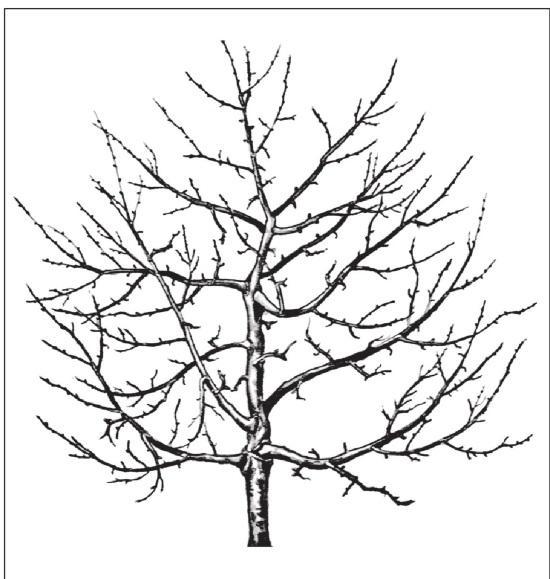
How the law of parallelism simplifies orchard pruning
Branches of the same age that are in identical conditions and occupy equal positions in the canopy develop in a nearly identical manner. This phenomenon is called morphological parallelism. By knowing this law, an agronomist can significantly simplify and standardize the canopy maintenance process by distributing similar tasks among pruners.
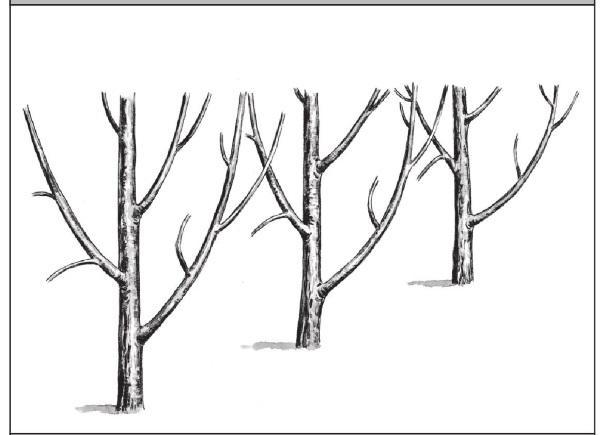
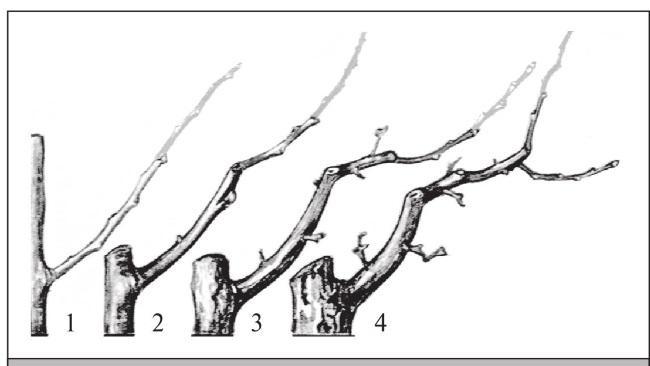
The laws of tiering and morphological parallelism make it possible to copy the pruning scheme from similar parts of a tree to the entire orchard. If you have determined the optimal method for rejuvenation in the second or third tier of one tree, the same scheme can be applied without changes to all trees of this cultivar in the block.
Read next
Pruning and training For agronomists
Main types and purposes of pruning fruit trees in the garden
Pruning and training For gardeners
Features of forming and pruning tree-type and bush-type cherry cultivars
Pruning and training For gardeners