
Apical dominance in growth management of fruit trees
1 min read
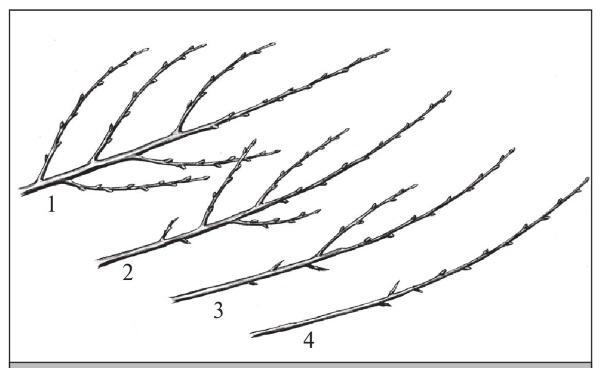
Apical dominance is a key tool for an agronomist to manage canopy shape and growth intensity of fruit trees. The terminal buds of shoots always develop first and grow more vigorously than others, as they are better illuminated and receive maximum moisture and nutrients. Growth-stimulating hormones predominate in the tips, suppressing the development of underlying buds.
Inhibiting substances accumulate in the buds further down the shoot. The further a bud is from the apex, the less chance it has to open and form a strong lateral shoot. The strength of this dominance is influenced by the cultivar's shoot-forming capacity, the tree's age, spatial orientation, and the bending of branches.
How to use dominance in pruning
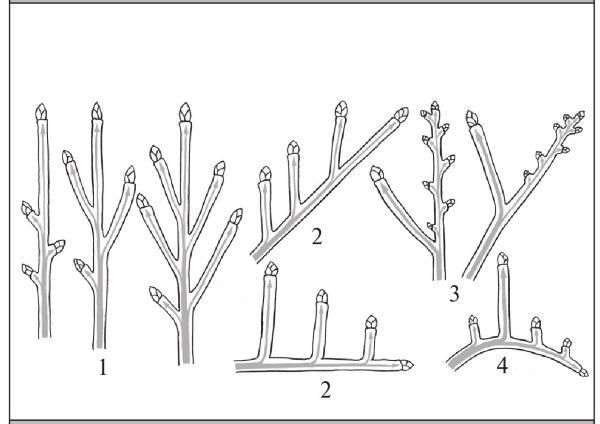
When the terminal bud is removed, its leading role is taken over by the nearest bud below the cut. This basic principle is used to stimulate branching and redirect shoot growth. However, the tree's response strongly depends on the growing season phase and the timing of the work.
If the tip of a branch is cut in early summer during the active growth stage, the restructuring of dominance may not occur. None of the new shoots will become the leader. Instead of strong growth, the tree will only form short fruiting twigs or rosettes of leaves.
This physiological feature is used as a targeted technique when the canopy needs to be quickly filled with short fruiting twigs. During the natural aging process of a branch, apical dominance fades. In this case, the role of the leader automatically passes to any other shoot located in more favorable conditions.
Read next
Pruning and training For gardeners
Pruning and canopy formation of fruit-bearing trees in the orchard
Pruning and training For students
Bud break and shoot formation capacity of fruit trees during pruning
Pruning and training For students