
Growth dynamics and meat productivity of young poultry
15 min read
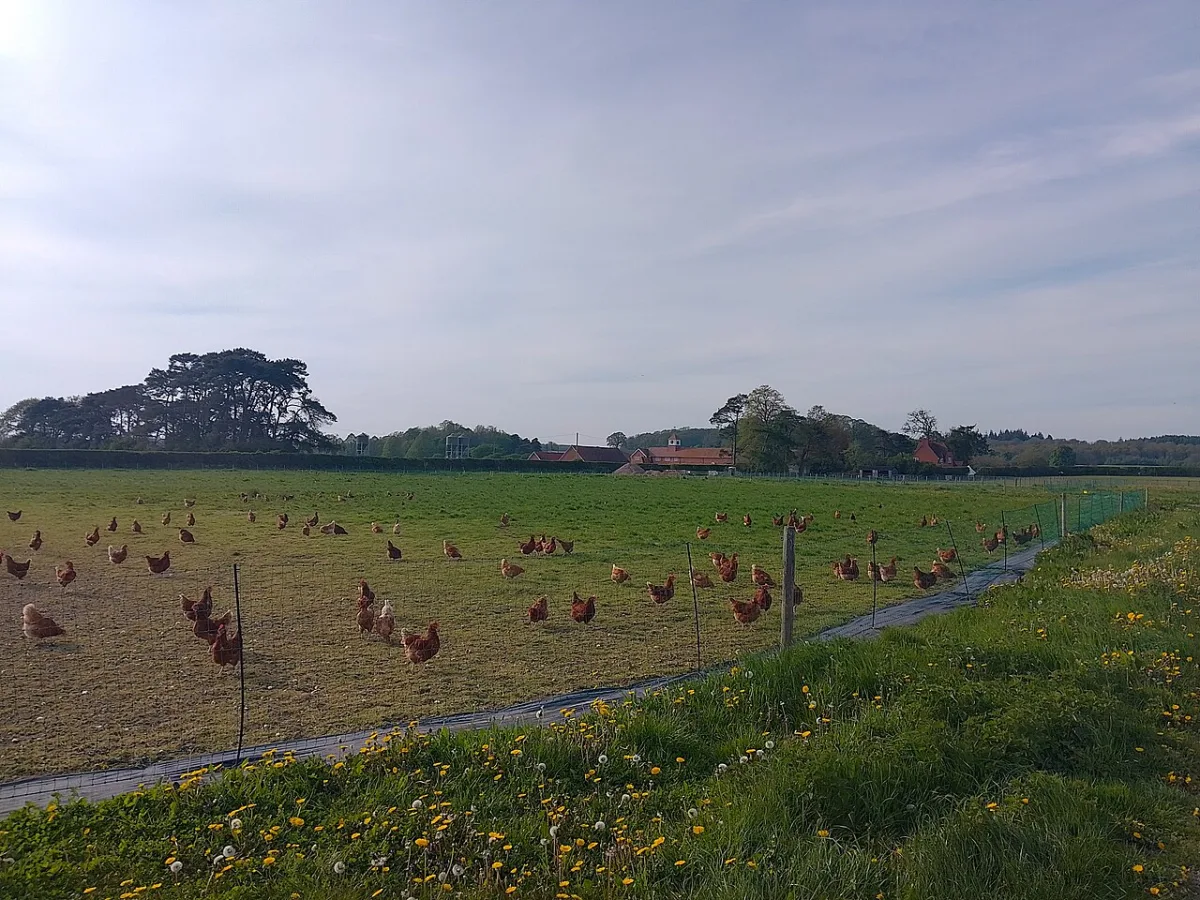
To plan slaughter schedules and optimize feed costs, the poultry farmer needs to understand exactly how young poultry gains weight. Growth dynamics for chicks, poults, ducklings, and goslings vary significantly by month. Knowing these patterns helps to adjust the diet and carry out breeding work in a timely manner.
| Month of bird's life | Chicks, % | Poults, % | Ducklings, % | Goslings, % |
|---|---|---|---|---|
| 1st | 150 | 150 | 180 | 170 |
| 2nd | 85 | 100 | 90 | 45 |
| 3rd | 50 | 70 | 25 | 35 |
| 4th | 30 | 40 | 4 | 10 |
| 5th | 20 | 30 | 4 | 1 |
Goslings grow fastest in the first month. By absolute mass, they exceed poults by 75%, ducklings by 3 times, and chicks by almost 6 times. From the age of three months, the growth of chicks and ducklings drops sharply, while goslings and poults continue to develop intensively up to 4–5 months.
- Difference in mass between cockerels and pullets of egg breeds — 50–100 g
- Difference in mass between cockerels and pullets of dual-purpose breeds — 100–150 g
- Superiority of dual-purpose chicks over egg-type chicks by 70–80 days — 20–30%
- Growth rate increase during first-generation selection — 7–10%
- Individual mass fluctuations in a uniform flock — 10–15%
Productivity factors and breeding selection of young poultry
The speed of weight gain is influenced by sex, breed, and individual characteristics of the bird. Males are always larger than females. In geese at the age of 3–5 months, the difference in live weight ranges from 500 g (Large Grey, Solnechnogorsk, Toulouse, Kholmogory) to 800–1400 g (Arzamas, Kaluga, Shadrinsk, Romny, Chinese, and their crosses). In chicks, this difference is more noticeable in dual-purpose breeds than in egg-type breeds.
Breed differences in mass become noticeable from the age of 30–45 days. For example, Peking ducklings at 70 days are 1.5 times heavier than their peers of the Khaki Campbell breed. Local North Caucasian poults at 60 days are almost 1.5 times lighter than Moscow Bronze and 1 1/2 times lighter than poults of the North Caucasian breed.
Under proper rearing conditions, individual differences in the weight of birds of the same breed reach 10–15% or more. At the age of 60–90 days, about 20–30% of the flock significantly exceeds the herd in mass, and individual specimens can be 50–60% heavier than the average values. It is this early-maturing bird that is selected for breeding new lines.
The mass of day-old young poultry directly depends on the weight of the incubated egg, but does not affect the final growth intensity. During the first 2–3 months of life, a correlation between the starting and current weight is maintained, which allows for accelerated selection based on live weight.
Close inbreeding reduces the growth intensity of young poultry and worsens feed conversion. To increase meat productivity, crossbreeding of combining lines is used, which provides a heterosis effect.
When planning herd reproduction, keep in mind that replacement young poultry in cages, hatched in different seasons of the year, shows almost identical egg productivity. This allows for the organization of year-round intensive production. The technology of year-round hatching is the foundation of modern poultry farming.
Determining feathering speed for development assessment
The speed of plumage formation is directly linked to metabolism and the growth rates of young poultry. Fast-feathering chicks demonstrate higher growth energy and tolerate unfavorable housing conditions better, including low temperatures in the poultry house. There is a direct correlation between feather development and the growth of young poultry of domestic dual-purpose breeds, which allows for the selection of the best individuals as early as the day-old age.
To assess feathering rates, the bird is inspected in three stages:
- At the day-old age, the unfolded wing of the chick is examined under bright light to assess the length of the primary flight feathers.
- At 10 days of age, the length of primary and secondary flight feathers is measured, as well as the ratio of the last flight feather to the tail feather.
- At the age of 28–56 days, the degree of feather coverage on the bird's back is assessed.
In fast-feathering day-old chicks, 5–7 primary flight feathers in the form of tubes are visible on the underside of the wing. They should be approximately 1/3 longer than the down and the paired coverts. In slow-feathering individuals, these feathers are shorter. At the same time, in egg-type chicks, primary and secondary flight feathers are always relatively longer at hatching than in dual-purpose chicks.
The covert feather in fast-feathering chicks (it grows to the side of each primary flight feather) is about 1/3 of the length of the primary flight feather and slightly thinner than it; whereas in slow-feathering chicks, the coverts and flight feathers are of equal length and almost the same thickness. Chicks that are slow-feathering but hatched several hours earlier than fast-feathering ones have long primary flight feathers, and their paired coverts and down are approximately of the same length. At 10 days of age, the length of the tail feathers in fast-feathering cockerels and pullets reaches approximately 1–1.5 cm; slow-feathering chicks at this age are effectively tailless. In fast-feathering chicks, tail feathers begin to develop by the fifth day of life, in slow-feathering ones — by the 20th day. Full feathering of the back, especially in meat chicks, is desirable at 49–56 days of age.
The plumage color of young poultry grown for meat is of great importance for the carcass appearance. White plumage is preferred because pin feathers, accidentally remaining on the carcass after plucking, are less noticeable with this color than with colored plumage. There is a hypothesis that the dominant white plumage factor slows down the growth rate and impairs feed efficiency in young birds up to 7 weeks of age. This can be explained either by the specific effect of the color factor or by its association with the slow-feathering factor.
The heritability of feathering rate and growth rate, along with the close correlation between these traits, allows for their use in appropriate selection and breeding of producers in pedigree work aimed at increasing the mass of offspring and, consequently, the meat qualities of poultry. For these purposes, breeders select large individuals with a high growth rate and rapid feathering, for which good rearing conditions are provided. Research has shown the effectiveness of selecting chicks based on mass and feathering speed. In the first and especially in the second generation, early-maturing chicks grow and feather faster.
Differences in the growth and development of offspring from early-maturing and late-maturing parents are noted as early as the embryonic period. The duration of embryonic development in early-maturing chicks is shorter; usually, about half of the young hatch before the end of the 21st day of incubation, whereas by this time, no more than 20% of the chicks finish embryonic development in the group of eggs from late-maturing parents. Early-maturing chicks are characterized by more intensive development of internal organs in the post-embryonic period. The difference in mass compared to late-maturing chicks is statistically significant from 10 days of age; it gradually decreases after 2 months of age. Since the main differences in feathering speed are determined by only one sex-linked gene pair, it is relatively easy to select lines of fast-feathering birds even among breeds with average body mass, which usually possess the slow-feathering trait. The breeding of such lines has practical significance, as it makes it possible to obtain good carcasses without pin feathers when raising meat chicks and young poultry of other species for meat. Hereditary variability in feathering speed also depends on sex. It is known that among young poultry of breeds and lines with a predisposition to late feathering, pullets feather earlier than cockerels.
The efficiency of improving meat maturity is associated with improving meat quality. The meat of early-maturing chicks at slaughter age contains more dry matter, protein, and fat, and the yield of edible parts of the carcass is higher.
Feed conversion (gain per unit of feed) is a fairly well-heritable trait that has great practical and economic significance when evaluating the meat productivity of poultry. This is because the main goal of meat poultry farming is to produce products in the shortest possible time with the lowest possible feed consumption. Feed conversion is closely correlated with the growth of the bird: the faster the bird grows, the higher the feed efficiency. However, feed efficiency decreases with the age of the bird, as the proportion of maintenance feed in the ration increases with higher live weight, and the growth rate declines.
When raising poultry for meat, it is very important to choose the correct slaughter time, i.e., to determine the optimal slaughter age. When establishing it, one should consider not only the live weight of the bird but also the feed conversion per gain. In farms of the central belt of the USSR, young poultry is slaughtered for meat at an early age. Thus, chicks of dual-purpose breeds are ready for slaughter at 7 weeks of age. During this period, only about 2 kg of compound feed is spent per 1 kg of live weight. Ducklings, which grow faster and finish their growth period earlier compared to the young of other species, are slaughtered at 45–55 days of age, yielding carcasses with tender, juicy meat containing 20% protein and 10–12% fat. Feed efficiency in this case is high — about 3 kg of concentrated feed is spent per 1 kg of live weight. From 2 months of age, ducklings begin their second molt, leading to the formation of adult plumage. During molting, growth slows down; the carcasses of molting birds are of low quality, with residues of growing feathers, so-called pin feathers.
Goslings and poults are usually raised for meat up to 2.5–4 months of age, resulting in large carcasses. Feed conversion during this period is good, and the meat is distinguished by its tenderness, juiciness, and low fat content. Guinea fowl are slaughtered for meat at 63–70 days of age with a mass of 1.2–1.4 kg, with an expenditure of about 3 kg of compound feed per 1 kg of gain. Squabs are raised until 6 weeks of age. At this age, they weigh 600–700 g and are characterized by tasty, tender, and juicy meat. Young quails are slaughtered for meat at 2 months of age upon reaching a mass of 100–110 g.
The meat quality of poultry is characterized by the weight and marketability of the carcass, meat conformation, etc. In live poultry, these are assessed by weighing, taking basic body measurements, and inspecting the muscles and skin.
Within the complex of poultry meat quality indicators, the body conformation type and the meat conformation of the carcass occupy a special place. The body type is more strongly influenced by paternal heredity, meaning the father's body type is transmitted to the progeny to a significantly greater degree. The influence of roosters is particularly noticeable on the length of the back, the length of the keel of the breastbone, and the shank. As a rule, the offspring of long-legged roosters have longer limbs (legs), a longer breastbone, and a deeper body compared to chicks obtained from short-legged parents. In addition, the offspring of long-legged roosters grow faster and utilize feed more efficiently.
The meatiness of carcasses is not always linked to high live weight. It has been revealed that at slaughter age, with the same live weight, the meatiness of carcasses can differ. This depends mainly on the development of the pectoral muscles, which account for up to 40% of the mass of all muscles, or up to 17% of the live weight of the bird. Better development of the pectoral muscles is a highly heritable trait, transmitted to the offspring primarily through the paternal line. In experiments by V. A. Sergeyev, it was established that when mating broad-breasted roosters with broad-breasted hens, 41% of the F1 generation offspring had better pectoral muscle development than their parents; furthermore, in groups of young birds from broad-breasted parents, up to 90% of chicks had a breast angle measurement above 68°, while only 42% of chicks from narrow-breasted parents reached this indicator. Numerous studies have identified correlations between the development of pectoral muscles and indicators of growth and development in young birds; between live weight, breast width and depth, and keel length; and between the mass of pectoral muscles and the mass of the edible parts of the carcass.
Table 13. Change in breast angle in progeny in relation to mating type (according to data from V. A. Sergeyev)
| Mating type | Breast angle at age 77-13 | Distribution by breast angle size (%) at age 72-68 | 67-63 | ||
| Broad-breasted rooster X broad-breasted hen | 73.5 | 72 | 41 | 50 | 58 |
| Broad-breasted rooster X narrow-breasted hen | 70 | 70 | 23 | 56 | 21 |
| Narrow-breasted rooster X broad-breasted hen | 70 | 68 | 14 | 49 | 37 |
| Narrow-breasted rooster X narrow-breasted hen | 65.5 | 67 | 8 | 38 | 54 |
To assess the development of the pectoral muscle, it is proposed to use an objective indicator—determining the size of the breast angle. A highly significant correlation has been found between the size of the breast angle, the mass of the pectoral muscle, and the live weight of the chicks: the larger the breast angle, the greater the mass of the pectoral muscle and, as a rule, the higher the live weight of the bird at slaughter age.
Based on this, meat-type chicks are selected for breeding purposes at 63 days of age, identifying young birds with the following breast angle values:
- for the paternal line — 70—75° for cockerels, 65—70° for pullets;
- for the maternal line — 65—70° for cockerels, 60—65° for pullets.
The size of the breast angle in chicks is determined as follows:
- The chick is secured by the legs head-down, supporting it by the back with one hand.
- The cheeks of the goniometer are placed against the pectoral muscle at a distance of 1 cm from the front edge of the keel of the breastbone towards the head.
- The degrees—the size of the breast angle—are read on the goniometer scale.
The goniometer must be held perpendicular to the pectoral muscle, pressing firmly but without indenting the cheeks of the goniometer along their entire length into the pectoral muscles. A long keel of the breastbone plays a certain positive role in the development of the pectoral muscles, and consequently in the meat quality of the bird. A positive correlation has been revealed between breast measurements (breast angle size, keel length of the breastbone, and breast width) and the mass of the pectoral muscles. The heritability of keel length by the offspring, however, is average.
One of the defects in poultry conformation is a crooked keel of the breastbone. Its presence in meat-type chicks reduces carcass quality. This defect can be corrected to a certain extent through proper management and feeding of the poultry. There is also data indicating that keel crookedness is an inherited trait that behaves as a recessive one. To prevent this defect in breeding work, selection is conducted by family, selecting birds with a normally shaped keel for breeding.
In breeding work, both the degree of inheritance of certain traits and their interrelationship (correlative dependence) are taken into account. The latter facilitates and increases the efficiency of selection and pairing, since selection for one trait promotes the improvement of others that are correlatively linked to it.
The degree of inheritance is highest for such traits as live weight, growth rate, egg mass, shank length, etc. Average heritability is noted for keel length and breast width.
Meat productivity is heavily influenced by the feeding and housing conditions of poultry. Experiments have established, for example, that feeding young stock using high energy value rations not only allows for raising meat-type chicks with high live weight and superior meat quality at lower feed costs (by 20%) per kilogram of gain, but also produces meat with excellent nutritional, sensory, and dietary characteristics.
The quality of feeding directly determines the meat yield and the value of young bird carcasses. Improving the ration increases not just the total weight of the bird, but the mass of the most valuable edible parts — the breast and leg muscles. At the same time, the ratio of edible to inedible parts improves significantly. Increasing the energy value of balanced feed allows for better digestibility and additional production.
- Additional meat per 100 kg of gain — 20 kg
- Peak fertility of chickens, ducks, and turkeys — 1–2 years
- Peak fertility of geese — 3–4 years
Biological factors of parent flock fertility
Poultry fertility is expressed by the amount of young stock obtained from a parent pair over a certain period of time. This indicator consists of three factors: the number of eggs laid, their fertility rate, and the hatchability percentage. In practice, the highest fertility is demonstrated by females with high egg production and a minimal number of infertile eggs. For example, all other conditions being equal, a goose that lays 40 eggs per year outperforms a bird with a productivity of 30 eggs, and a layer with five infertile eggs out of 40 is more efficient than one with ten.
Reproduction indicators are closely related to the bird's productivity type. The highest fertility is possessed by egg-type chickens, while the lowest is found in meat-type chickens, ducks, geese, and turkeys. Individual characteristics of the birds also play a significant role. Within the same breed and under identical housing conditions, one can find layers with 100% egg fertility and over 95% hatchability, as well as practically infertile birds.
Pay attention to pair compatibility when assembling the parent flock. It is not uncommon for a female to produce few offspring with one male but prove highly fertile when mated with another.
Remember that close-inbreeding (inbreeding) sharply reduces flock fertility. To increase the embryonic viability of the poultry, use crossbreeding — hybrid young stock is always more viable than purebred stock.
Young stock obtained from highly fertile parents is characterized by higher quality indicators. When provided with balanced feeding and standard housing conditions, the survival rate of such chicks during the growing period remains consistently high. Systematic selection of poultry based on fertility indicators is the foundation for rapid population growth and increased volumes of egg and meat production.
Read next
Poultry For agronomists
Meat productivity and quality indicators of poultry
Poultry For agronomists
Technology of broiler battery cage rearing and fattening of egg-breed cockerels
Poultry For agronomists