
Evolution of feeding standards for poultry in industrial poultry farming
11 min read
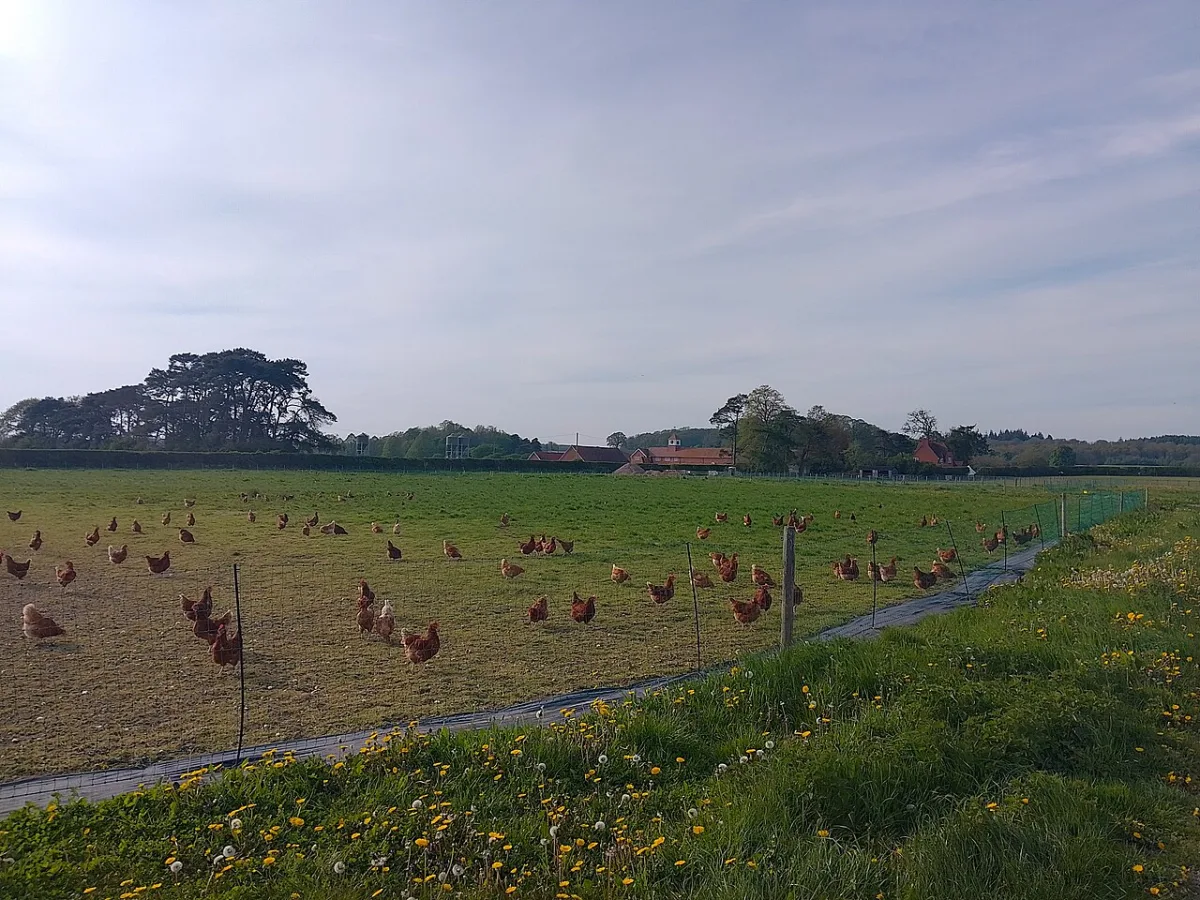
Poultry feeding
Scientifically-based feeding standards for different species and age groups of poultry, taking into account their genetic characteristics, type of productivity (meat or egg), and management conditions, are of great importance. The first standards, established as a result of experimental work on chickens, were proposed by Academician M. I. Dyakov. In this case, the need for nutrients and the energy value of feed were expressed in starch equivalents and digestible protein. For many years, M. I. Dyakov's standards served as the basis for formulating poultry rations, and later research in this area was conducted with their consideration.
The organization of poultry farms on collective and state farms and the widespread use of purebred poultry necessitated a revision of the existing feeding standards. By that time, the influence of various feeds on the productivity of poultry and its need for nutrients had been studied. In 1938, at the Research Institute of Poultry Farming, A. A. Sergeyev and his colleagues developed new standards that were differentiated depending on the species, breed, age of the poultry, egg production, and the course of molting. All calculations of poultry requirements for nutrients and feed were carried out per head per day, which was convenient for farms raising one or two batches of young stock and having batches of birds of the same age. The total nutritional value of feed and rations was expressed in feed units. In addition, the content of digestible protein, calcium, phosphorus, sodium, and vitamins A, D, and B were standardized. These feeding standards were of great importance when feeding poultry on collective and state farms and contributed to an increase in its productivity.
However, at present, these standards and the assessment of feed nutritional value do not correspond to the technology of large poultry farms, where many batches of poultry are raised in different seasons with year-round flock replenishment. The organization of poultry factories and mechanized collective and state poultry farms, specialized in the production of eggs or meat, and the use of highly productive poultry required the development and application of new methods and standards of feeding that correspond to the conditions of intensive poultry farming.
5* 131 The staff of the All-Union Research and Technological Institute of Poultry Farming under the leadership of Prof. I. T. Masliev and the Department of Poultry Farming of the TSHA proposed feeding standards for poultry, calculated according to a complex of nutrients and metabolizable energy. They are compiled taking into account the species, age, and production direction of the poultry. The development of intensive poultry farming was facilitated by the growth in the production of complete compound feeds.
As a result of coordinated activities and the generalization of data from many experimental works on biochemistry, physiology, and poultry feeding, under the guidance of the Poultry Farming Section of the Animal Husbandry Department of VASKhNIL, scientifically based recommendations for standardized feeding of poultry were prepared and approved by the Main Directorate of Animal Husbandry of the USSR Ministry of Agriculture. The new feeding system has found wide application in practice and in the compound feed industry.
The physiologically determined basis of this system is balanced feeding based on a complex of nutrients, biologically active substances, minerals, and trace elements, based on their synergistic action in metabolic processes in the body with the most effective conversion of feed into poultry meat and egg products. The interaction of nutritional elements is diverse and comprehensive. The links between energy, fats, and protein in the ration are significant. With full and even excessive supply of laying hens with high-calorie feed, but with a lack of protein, egg production decreases, and excess energy is spent on fat deposition. For example, when feeding a Leghorn chicken 40–45 kg of grain feed per year without the addition of protein feed, egg production will be only about 120 eggs per year, whereas the inclusion of an additional 4–5 kg of protein feed of plant and animal origin in the ration will increase annual productivity to 200–250 eggs and reduce grain consumption by 5–10 kg. In a farm with a population of about 100,000 laying hens, and we have many such farms, in our example, balancing the ration for protein can provide an increase in annual production of approximately 10 million eggs and a saving of grain of 600 tons or more.
The standardized feeding system provides primarily for ensuring the poultry's need for metabolizable energy and crude protein. Standardization by metabolizable energy and a complex of nutrients corresponds to the physiological needs of highly productive poultry and the preservation of its health. Metabolizable energy is determined by the difference between the gross energy consumed by the poultry with feed and the energy excreted in feces and urine. The assessment of the nutritional value of feed and rations for poultry in terms of metabolizable energy is facilitated by the fact that urine is excreted together with feces. This allows for relatively quick analysis and the accumulation of factual data on the energy value of feed produced in different zones of the country in a short time. The need for metabolizable energy and its content in feed are expressed in kilojoules per 100 g of dry feed. Standardization of protein feeding is carried out by crude protein, which is easy to determine by standard zootechnical analysis. The need for crude protein and its content in feed are determined as a percentage per 100 g of dry feed.
The energy-to-protein ratio is of great importance for increasing feeding efficiency. This indicator determines how much energy corresponds to 1% of protein; it is calculated by dividing the amount of kilojoules contained in 1 kg of feed by the amount of protein as a percentage. For example, for broilers under 30 days of age, [00 g of compound feed must contain 1239 kJ and 21% crude protein, which corresponds to an energy-to-protein ratio of 1:590.
Assessment and rationing of feed are also carried out according to essential amino acids, primarily methionine, tryptophan, and lysine, the content of which in many feeds is limited, while the poultry's requirement for them is quite high. The study of the requirements of livestock animals for amino acids and their content in rations has brought significant changes to poultry feeding. Increasing the efficiency of feed protein utilization and reducing its content in rations was of great importance, which led to their cost reduction without decreasing the productivity of the poultry. The poultry's requirement for amino acids is influenced by the energy supply of the ration, its content of protein, vitamins, fats, and other nutritional factors. The amino acid content in rations is expressed in milligrams per 100 g of dry feed.
The diverse role of vitamins in the vital activity of poultry has been established; they participate in versatile metabolic reactions and influence physiological processes. Choline, for example, besides regulating fat and protein metabolism, allows for a reduction in the consumption of feedstuffs containing vitamin A and vitamin B, when added to the ration; it promotes the transformation of carotene into vitamin A, and vitamin D—the absorption of calcium. At the same time, the range of standardized vitamins in poultry rations has expanded; in addition to the long-practiced standardization of vitamins A, B, and B2 (riboflavin), vitamins E and K have proven important, as have vitamins from the B group—thiamin, niacin, pyridoxine, pantothenic and folic acids, choline, biotin, and vitamin B12. It should be remembered that poultry must receive such an amount of vitamins that not only prevents avitaminosis but also ensures high productivity. Increasing the vitamin content in the ration contributes to the enrichment of eggs and improves their nutritional value and incubation qualities.
Vitamins are standardized in milligrams or international units per 100 g of dry feed.
Significant progress has been achieved in the study of mineral nutrition of poultry and in refining the standards for macro- and microelements. Mineral substances have a very great and diverse significance in the vital activity of poultry and constitute 3—4% of the live weight of the poultry and 10% of the weight of an egg with shell. A deficiency of one or more mineral substances reduces the productivity and fertility of the poultry, and sometimes leads to diseases and even its death. Mineral substances included in the ration in appropriate quantities contribute to better utilization of nutrients and feed savings. For this, it is necessary that mineral substances enter the ration in specific ratios.
In poultry rations, calcium, phosphorus, sodium, chlorine (in the form of common salt), iodine, cobalt, zinc, manganese, iron, copper, etc., are standardized. The requirement for them and their content in feeds are established in milligrams and as a percentage of the dry feed weight.
Many years of experiments and practice show the effectiveness of using antibiotics in poultry feeding, which influence the composition of the gastrointestinal microflora, the activity of digestive processes, and the digestibility and utilization of feed. However, there are concerns about the accumulation of antibiotics in eggs and meat, which can lead to their systematic introduction into the human body with food and develop resistance to antibiotics, reducing the effect of their use for medicinal purposes. The most important task being solved in our time is the search for non-medical feed antibiotics and the refinement of their dosage for agricultural poultry in relation to other components of the rations. The use of enzyme preparations in poultry feeding has begun, however, the effect of their action requires study of the possibility for wider use in practice.
Normalized feeding is designed to obtain high egg or meat productivity, maintain the poultry flock, and obtain high-quality products. For breeding poultry, rationing is aimed, in addition, at increasing the fertility of the poultry.
Improving the efficiency of feed utilization, which is of vital economic importance in the production of poultry products, is based on balanced feeding according to scientifically substantiated standards, creating conditions for high poultry productivity, the use of phase feeding taking into account the periodicity in the intensity of young growth and egg production, as well as limiting the amount of feed on certain days and weeks. It should be remembered that only healthy poultry uses feed efficiently and the system of veterinary-preventive measures is inseparable from poultry feeding in the technology of egg and meat production.
Rationing is differentiated for egg-laying or meat lines of poultry and is linked to age-related changes, which allows for matching feed consumption, especially protein-rich feed, with higher requirements, for example, during the peak laying period for egg-laying lines at 180—300 days of age, and subsequently gradually reducing feed expenditure up to 420 days of age and beyond. A slightly different periodicity is provided for meat lines of poultry due to their constitution and laying intensity. Such phase feeding saves feed and improves its conversion into products. For example, for laying hens of egg-laying lines, 100 g of dry feed should
134. contain 1134 kJ and 17 g of crude protein with fluctuations across phases from 1134 to 1050 kJ and from 17 to 14 g of protein.
Due to the species-specific characteristics of turkeys, ducks, and geese, their varying laying intensity, body weight, and egg mass, the standards specify a content in dry feed of 250—280 kcal, or 1050—1239 kJ of metabolizable energy, and 14—16% crude protein. Turkey poults, ducklings, and goslings raised for meat receive 250 to 295 kcal, or 1050 to 1239 kJ of energy, and 16 to 22% protein in their dry feed, depending on the species and age of the bird. Feeding standards for young chickens, turkeys, ducks, and geese intended for flock replacement are determined separately.
In conditions of high temperature in a number of regions with a long hot season, feed consumption by poultry decreases, and in order to provide them with a smaller amount of feed with sufficient nutritional value, a change in standards is provided. For example, in moderate temperature conditions, 100 g of dry feed for meat lines of chickens should contain 1097—1134 kJ and 14—16% crude protein, while at high air temperatures it should contain 1197—1270 kJ and 18.5—19% protein.
The rationing of all nutrients and minerals, as well as vitamins (see appendix tables 4—6) per 100 g of dry feed rather than per individual bird is explained by the fact that feeding with dry feed, mainly compound feed, has significant advantages.
Standards for microelement and vitamin additives per 1 ton of compound feed (see appendix tables 8, 9), which is the staple feed for breeding and commercial poultry, are provided.
On farms of a number of collective and state farms, combined poultry feeding is also used. In this case, balanced rations are composed of grain (dry and sprouted), dry compound feed, and mashes (in the form of compound feed mixed with moist feed). This feeding method allows for the use of inexpensive local feed to partially replace concentrates, although it requires time for preparation and feeding (see appendix tables 10—12). In this case, one has to regulate the nutritional value of the rations not per dry feed, but per bird.
In the feeding system, scientifically grounded standards for the nutrient requirements of adult birds and young stock have been developed, calculated to achieve high productivity and improve the quality of eggs and meat. These standards can also be used in combination with rationed feeding based on the mass of dry compound feed. Having determined the possible amount of compound feed in grams that the bird will receive per day and having established its nutrient content, local feed additives are planned in such a way as to provide the bird, per head, with all nutrients, minerals, and vitamins.
Rations are composed based on poultry feeding standards and the nutrient content of feed calculated for planned productivity. The ration must correspond in its complex of nutrients to the needs of different species, age groups, and production directions of poultry, and also be as inexpensive as possible.
Read next
Livestock For students
Fundamentals and history of standardized livestock animal feeding
Poultry For agronomists
Housing and feeding technology for pedigree poultry for the production of hatching eggs
Poultry For agronomists