Classification of poultry constitution and its influence on productivity
4 min read
Concept and classification of the constitution of poultry
Constitution should be understood as the general physique of an organism, determined by anatomical and physiological structural features and hereditary factors, and expressed in the nature of the animal’s productivity and its response to the influence of environmental factors. Understanding the processes of constitution formation is inseparably linked to the laws of genetics and the inheritance of traits based on the interaction between genotype and environment.
All the most important traits and properties of an organism depend on the genotype, and the result of its realization during development under certain conditions finds expression in the phenotype — the constitutional features of the bird. Under the influence of selection and a number of rearing factors, the constitutional features of the bird change in the desired direction, creating various constitutional types associated with the direction of productivity, for example, laying and meat poultry.
The classification of constitution types of livestock animals is based on the works of Prof. P. N. Kuleshov, Prof. E. A. Bogdanov, Acad. M. F. Ivanov, as well as the study of types of higher nervous activity in animals put forward by Acad. I. P. Pavlov, and the research of other scientists. When studying the constitution of poultry, its biological features compared to mammals are taken into account. But the traits of the following constitution types, established for large livestock animals, are also characteristic of poultry and are expressed to a greater or lesser extent in its different species and breeds:
- strong;
- delicate;
- dense;
- loose;
- coarse.
Poultry of a strong constitution is characterized by good development and normal functioning of all organs and the organism as a whole, health, and high productivity. Such birds have a proportional physique without exterior defects that affect productive qualities.
Characteristics of constitutional types in poultry farming
Transitional forms of constitution types are often encountered: delicate-dense, delicate-loose. Hens of egg-laying breeds possess features of a delicate-dense constitution. They have a small mass and are capable of rapid growth. They are characterized by early sexual maturity and intense sexual activity, expressed in high egg production and egg fertility.
Metabolism and the activity of endocrine glands are high. Birds of this type are agile and react strongly and quickly to changes occurring in the external environment. Skeletal bones are thin, muscles are dense, and the skin is thin and dense.
Hens of meat and meat-and-egg breeds are characterized to a greater or lesser extent by a shift toward a delicate-loose constitution: the more strongly the signs of meat productivity are expressed, the more clearly these constitutional features appear.
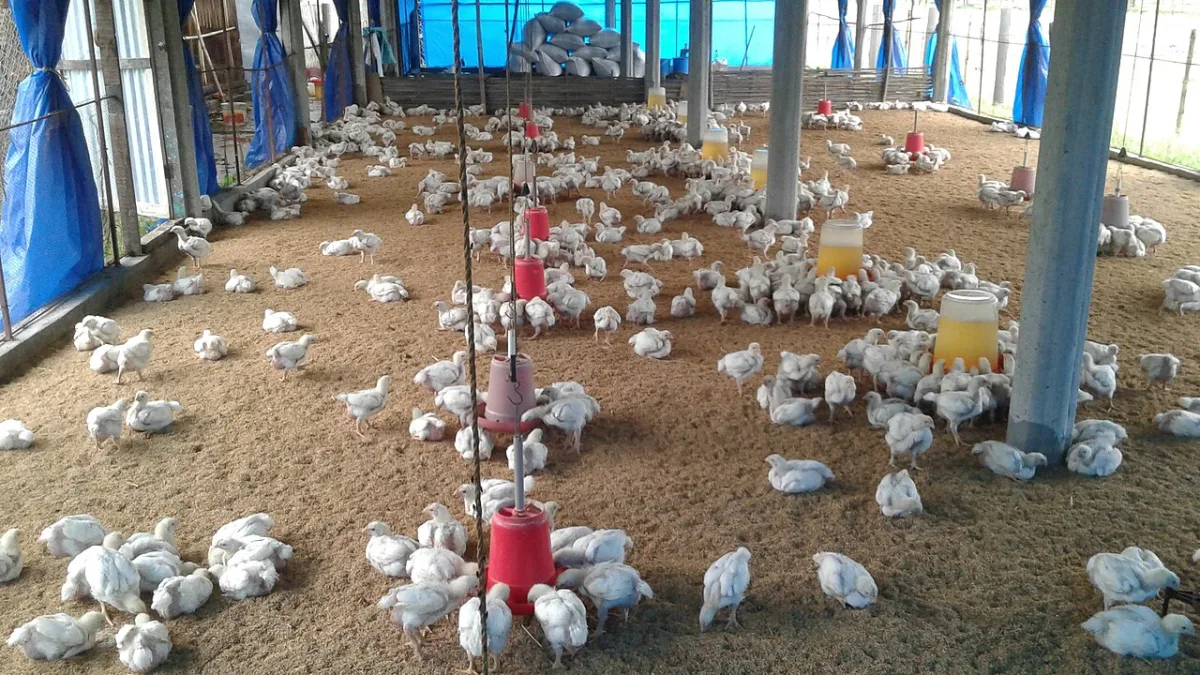
Large and heavy hens differ in lower sexual maturity and sexual potency, produce fewer eggs with somewhat lower fertility, and have a reduced metabolism compared to hens of the egg-laying type. Birds of this type are more phlegmatic and less agile, but possess high meat qualities. It should be noted that different constitution types have their own specific features of exterior and metabolism.
Formation of constitutional types during growth
Features of constitutional type formation in poultry
The formation of a constitutional type occurs during the growth process and is determined by inherited breed qualities. In an experiment on the comparative study of Leghorn and Rhode Island Red hens, it was shown that simultaneously with the faster increase in the mass of Rhode Island Red chicks compared to Leghorns, the growth of the body differentiates by breed.
The increase in body length in cockerels of both breeds is similar, but from the age of one month, a difference in body depth is established, associated with a shift toward the meat-and-egg type characteristic of Rhode Island Reds.
Age-related changes are also observed in the structure of muscle fibers. The difference in the average fiber diameter gradually increases: by the age of 5 months, the diameter of the muscle fiber in Rhode Island Red hens exceeds this indicator in Leghorn hens by 10 microns. The growth of gonads in Leghorns proceeded faster and egg production began earlier than in Rhode Island Reds.
Characteristics of constitution types of poultry
A coarse constitution is much less characteristic of poultry than a delicate-dense and delicate-loose one. Hens of a coarse constitution are characterized by the following traits:
- massive body;
- thick skeleton;
- loose subcutaneous connective tissue;
- in hens — head of a rooster-like type with a relatively small comb;
- in roosters — a very deep and wide head with a thick beak, plumage is loose;
- the bird is phlegmatic and reacts weakly to improvements in feeding and housing conditions.
With close inbreeding and improper rearing, individuals that are overdeveloped, most often in the direction of excessive refinement, are found among hens of egg-laying breeds. Such hens have the following exterior features:
- low productivity and weak vitality;
- narrow, long head, very thin neck;
- flat chest, narrow back;
- thin legs, often close together at the joints;
- small-sized abdomen.
Due to the fact that poultry of different constitutional types is characterized by specific productivity, selection and pairing based on constitutional traits play a major role in creating new breeds and improving existing ones.
Read next
Poultry For agronomists
Characteristics of productive dual-purpose poultry breeds and breed groups
Poultry For agronomists