
Assessment of exterior and body conformation of poultry for the selection of productive individuals
16 min read
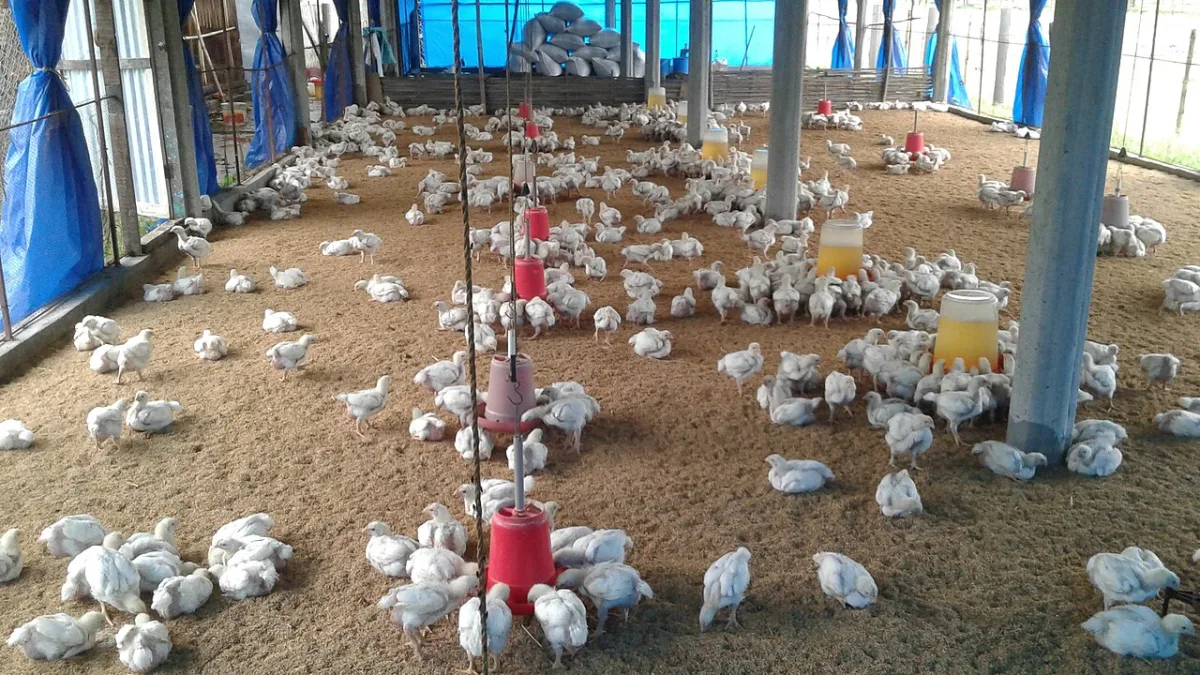
Exterior, or the external body conformation, of poultry is related to its constitution and economic performance traits.
Based on external features, it is, of course, impossible to accurately determine how many eggs a bird has laid or will lay, as well as their weight and hatchability. However, by evaluating the exterior, one can identify the best individuals in a flock and divide the birds into classes with more or less high productivity. Therefore, the study of the exterior is of practical importance for the selection and mating of poultry.
Exterior features are conditioned by the anatomical and physiological properties of the bird and are formed during the development process. Some exterior traits change depending on whether the bird is laying or not, the season of the year, the level of feeding, and the housing conditions. The most constant indicators are those related to the peculiarities of the skeleton, which to a certain extent determines the body type. The characterization of a productive bird by body length, chest depth, pelvic width, and other main measurements is due to the development of its skeleton. During the growth of long bones, the posterior end of the keel of the sternum, for example, remains flexible until the bird is 12 months old. This trait is used to determine whether a hen is a pullet or an older bird.
A long keel of the sternum usually corresponds to the good development of both the body and internal organs and characterizes high meat quality of the bird. Therefore, when evaluating meat chickens (broilers), great attention is paid to the size of the keel of the sternum. Skull measurements are used to judge the length (from the occipital condyle to the base of the beak), width (behind the orbits), and depth of the head (from the rear edge of the lower jaw along the shortest line, behind the orbits, to the occipital bone). Ch. Darwin established craniological differences between domestic chickens and their wild ancestors that arose under the influence of selection. Selection for the crested trait, for example, influenced the shape and connection of the intermaxillary and nasal bones, the shape of the olfactory foramen, the width of the frontal bones, and, finally, the internal outlines and shape of the brain. Geese of some breeds, with a "knob" above the beak,
1 — skull; 2, 3 and 4 — second, third and fourth digits; 5 — third metacarpal bone; 6 — carpal bone; 7 — ulna; 8 — radius; 9 — cervical vertebrae; 10 — humerus; 11 — thoracic vertebra; 12 — scapula; 13 — ilium; 14 — pygostyle; 15 — caudal vertebrae; 16 — ischium; 17 — pubis; 18 — process of the sternum; 19 — femur; 20 — ribs; 21 — coracoid bone; 22 — clavicle; 23 — keel of the sternum; 24 — patella; 25, 26 — processes of the sternum; 27 — tibia; 28 — tarsometatarsus; 29 — first digit; 30, 31 and 32 — second, third and fourth digits.
have craniological features expressed in the proliferation of the frontal bone.
The mineral content in bird bones is higher than in livestock animals of other species, but it does not remain constant. Mineral substances participate in the metabolism taking place in the organism and are necessary for the formation of an egg, especially its shell. The ends of the pubic bones spread apart and become flexible during the laying period due to their partial decalcification. The keel of the sternum moves slightly downward at this time. These traits are used during appraisal to identify laying hens.
Fig. 9. Exterior of a good and poor layer:
right — a well-developed hen; left — a poorly developed one.
Influence of rearing conditions on bird exterior
The growth of skeletal parts and individual bones occurs at different rates depending on the age period. When raised under conditions corresponding to the physiological needs of the bird, its growth proceeds harmoniously and leads to the formation of proportionally developed body parts and shapes.
If the rearing conditions at any age are violated, the skeleton develops disharmoniously, which is reflected in the exterior. In this regard, there are chickens with the following defects, which serve as a basis for culling them from the flock:
- narrow, long head;
- narrow chest;
- deformed keel of the sternum;
- thin legs;
- humped back and other defects.
The pectoral and leg muscles are the most developed in birds, which, along with the skeleton, also determine the external body forms.
Fig. 10. Musculature of a chicken.
Anatomical features of the integument and plumage
Skin. In birds, the subcutaneous connective tissue is well developed, so the skin is thin and movable. Birds do not have sweat glands. The uropygial gland is located above the last sacral vertebrae; the fat secreted by it prevents the feathers from getting wet, especially in ducks and geese. The skin is pigmented, and its color varies in different breeds from white-pink and yellow to bluish-white.
A horny scaly covering is strongly developed on the skin of the legs. With age, the scales increase and become less compact, which serves as a sign for an approximate determination of age. The color of the legs and beak ranges from bright orange to black. In the most common breeds and lines of chickens, the legs and beak are yellow. The intensity of the color depends mainly on the content of carotenoids in the body, which accumulate as a result of consuming feed with a large amount of these substances, for example, greens and grass meal, yellow corn, carrots, etc.
During the egg-laying period, when pigment is deposited in the egg yolk, the color of the beak and shanks fades. This characteristic is used to determine how long a hen has been laying.
Feathers protect the body of the poultry from adverse factors — cold, moisture, and reduce heat loss. Some groups of feathers serve for flight, others are secondary sexual characteristics. In poultry, feathers are named according to their location on the body (cervical, lumbar, etc.), structural features (contour, down, filoplumes), and functions performed (remiges, rectrices).
Areas of skin free of feathers are called apteria, and those covered with feathers are called pterylae. A feather consists of a shaft, the lower part of which is located in the feather follicle and is called the calamus. During the feather growth period, nutrients are supplied through the shaft, which is flexible and succulent at this time. The shaft of an old feather is filled with a grey, dry mass, which is why an old feather can be distinguished from a young one.
During the embryonic development of feathers, primordia appear in the chick around the 6th day. Mesenchymal cells accumulate under the epidermis where the feathers will emerge. As the feather primordium grows, the surrounding area of skin deepens and forms a feather follicle, in which the feather papilla is located. Individual parts of the embryonic down gradually differentiate from the deep layer of the epithelium. Later, feathers grow from the same papillae, displacing the down. The most complex process occurs during the formation of contour,
Fig. 11. Pterylae and apteria on a chicken's body (according to V. P. Nikitin).
Fig. 12. Development and structure of a feather:
| 1, 2, 3 | feather development |
| 4 | barbs of a contour feather |
| 5 | calamus |
| 6 | shaft |
| 7 | vane |
| 8 | interlocking of feather barbs |
or cover feathers, in which primary barbs extend from the shaft, and secondary barbs with tiny hooks, which interlock, extend from them. The surface of a cover feather, called the vane, is very dense. On the wings of chickens, there are long and wide remiges, and on the tail — rectrices. There are 10 primary remiges. Down feathers do not have hooks, their shaft is flexible and small; they lie under the contour feathers and serve as thermal insulation. The density of plumage depends on the number and ratio of cover feathers and down. Filoplumes, resembling hair, are located on the body. They are visible on a plucked carcass.
Feather coloration depends on their physical structure, pigment content, or a combination of both factors. The primary plumage color of poultry is solid: white, black, red, yellow, buff, blue (grey with a bluish tint), or slate (in pigeons). In birds of some breeds, the primary color has a tint of another tone, for example, bronze turkeys are black with a bronze tint, while in white guinea fowl, round white spots with a pearly sheen appear on the white feathers. Plumage consisting of black and white feathers is called mottled, and that consisting of black, white, and red feathers is called calico. Some types of coloration are due to the complex coloring of the feathers or the arrangement of differently colored feather groups.
The coloring of individual feathers can be transverse-striped, arc-shaped striped, bordered, spotted, dotted, etc. When describing plumage with complex coloring, the primary
Fig. 13. Shape and pattern of bird feathers:
1, 2, and 5 — transverse-striped feathers; 3, 4 — bordered feathers; 6 — spotted feather; 7, 9 — arc-shaped striped feather; 8 — dotted feather.
color and the color of feathers on individual parts of the body are indicated. For some groups of feathers, the sex of the bird can be determined. For example, in the tails of roosters, there are long feathers called sickles. In drakes, the sickles are curled into a ring. The conformation of poultry is evaluated by body parts.
1 — comb; 2 — ear; 3 — earlobe; 4 — wattle; 5 — neck; 6 — back; 7 — loin; 8 — breast; 9 — wing coverts; 10 — wing remiges; 11 — lumbar feathers; 12 — small sickles; 13 — large sickles; 14 — rectrices; 15 — tail base (cushion); 16 — shank; 17 — spur; 18 — toe; 19 — crus.
Head. The length, depth, and width of the head can vary. It can be more or less refined or massive; it often corresponds to the general body type.
The shape and size of the comb are typical for the breed. Combs can be single, rose, or other shapes. A single comb is a red blade-shaped structure with points. In laying breeds, the comb droops to one side after the 2nd or 3rd point; in roosters, it must always stand upright. A rose comb is a fairly wide, fleshy red mound with small tubercles on the upper part.
Anatomical features of the bird's head and neck
In turkeys, skin formations known as caruncles are located above the beak along the throat and the upper part of the neck. When the bird is excited, its color changes from red to bluish-green. In guinea fowl, there is a skin appendage above the beak, which is somewhat larger in males than in females.
The beak of a bird varies in shape and color depending on the species and breed. It can be short and thick, yellow, slate-black, reddish, or pink (flesh-colored). Based on the shape of the beak, geese are divided into straight-billed, hump-billed, and shovel-billed types.
Fig. 15. Comb shapes in roosters and hens:
| 1 | single comb in a rooster |
| 2, 3 | the same, in a hen |
| 4 | pea comb |
| 5 | rose comb |
| 6 | cushion comb |
The bird's eyes have an iris of various colors, most often brown, red-yellow, and blue. Geese with white plumage have blue eyes. The ears appear as an opening covered by a tuft of short, stiff feathers. Below the ears are the earlobes, which are white or red—one of the breed characteristics. The beard, muffs, and crest are parts of the plumage peculiar to certain breeds; they are located, respectively, in the sub-mandibular area, on the side, or on the top of the head.
The neck can be short, long, thick, or thin. Birds of the egg-laying type of productivity have a thinner and longer neck than birds of meat or dual-purpose breeds.
Conformation assessment and constitutional traits
The back is more or less long, wide, level, and necessarily straight. The chest is wide and convex. The keel of the breastbone is straight, with well-developed muscles. The tail in egg-laying breeds of hens is long, while in meat or dual-purpose breeds, it is short; it must be straight.
The legs are strong and straight. The shanks are bare or feathered, usually colored the same as the beak. The toes (of which there are usually four, and in some breeds five) are bare or feathered. In geese and ducks, there is a web between the toes, which facilitates swimming. Roosters have a bony growth (spur) in the lower part of the shanks.
When assessing conformation, however, one cannot judge the merits of a bird by any single trait or several traits taken in isolation. For example, attempts to establish a correlation between egg productivity and more than ten measurements of a hen's head have ended in failure. It is necessary to take into account a complex of traits related to the interior, the physiological state of the bird, and the type of its higher nervous activity.
Hens of dual-purpose breeds have roughly the following conformation:
- Head of medium size, wide, deep, short, with a short, downward-curved beak.
- Skin of the facial part of the head is red and delicate.
- Eyes are large, bulging, and bright; the iris is most often orange.
- Comb is medium-sized, single or rose.
- Wattles and earlobes are oval and red. The skin of the comb, wattles, and earlobes is delicate and elastic.
- Skeleton is strong, the body is long, horizontally positioned, and widens toward the pelvic area.
- Neck is of medium length.
- Chest is wide and convex.
- Back is wide, level, and long.
- Keel is long and straight.
- Legs are straight, fairly thick, and set wide apart.
- Abdomen is capacious and soft.
- Pubic bones are flexible and widely spaced during the laying period.
- Plumage is dense or loose, depending on the breed.
- Tail is fairly short, straight, and moderately raised in relation to the back line.
- Coloration of legs, beak, and plumage corresponds
to breed characteristics. The rooster differs in conformation by its larger size and weight. Its head is more massive; the comb and tail plumage are more luxuriant, and there are spurs on the legs.
Hens and roosters of egg-laying breeds, compared to dual-purpose ones, differ in having less weight and smaller size. They have an elongated body, a light head with a large comb and wattles; a fairly thin neck, a long back, a voluminous abdomen; widely set, thin legs; dense plumage, and a longer tail. The skeleton is thin, the muscles are dense, and the skin is thin and firm.
Fig. 16. Body measurements of a hen: 1 — body length; 2 — chest depth; 3 — pelvic width; 4 — shanks.
Conformation features of meat-type birds
Hens and roosters of meat breeds, compared to dual-purpose ones, have a greater weight, a massive head, a deep and wide body, and a convex and very wide chest. Their back is wider and often relatively shorter, rising smoothly toward the tail and neck; the shanks are thick, the tail is short; the plumage is luxuriant and loose.
When assessing the conformation of turkeys, geese, and ducks of meat breeds, special attention is paid to indicators of meat productivity: the width and convexity of the chest, the length and width of the back, the length of the keel, and the development of the chest and leg muscles. Turkeys and geese of different breeds differ in size, weight, precocity, and partly in egg-laying capacity, among other features, but they always maintain a meat-type build.
Methodology for measuring conformation and body indices
The exterior of poultry is most often assessed by inspecting the bird, taking into account its live weight and condition. For a more detailed examination and description of the exterior, measurements are taken that characterize the productivity of the bird:
- Body length is measured with a tape between the last cervical vertebra and the tailbone.
- During mass measurements of birds, excluding waterfowl, the diagonal body length is more often determined between the front upper joint of the collarbone and the ischial tuberosity.
- The anterior body depth is measured with calipers in the lateral position of the bird: one leg of the calipers is placed at the front end of the sternum keel, and the other — at the shortest distance on the thoracic part of the vertebral column.
- The length of the sternum keel is determined with calipers from the front to the back end, and the pelvic width at the hip joints — between the protrusions of the pelvic bones.
- The length of the thigh, shank, and metatarsus is measured with a tape between the extreme points of the thigh, shank, and from the upper extreme point of the metatarsus to the angle between the third and fourth toes.
These measurements are necessary for the bonitation of poultry, special examinations, and also for scientific research work. When assessing the exterior, an exterior profile is used, which makes it possible to compare the structural features of birds of different breeds.
Based on the use of measurements and the live weight of the bird, it is possible to determine conformation indices related to the characteristics of the constitution and condition of the bird; indices are calculated by dividing the relative indicators of measurements or live weight by body measurements. According to P. A. Kabystina, the conformation indices of poultry are as follows:
| body width at the hip joints / body length |
| keel length / body length |
The massiveness index characterizes the compactness of the conformation; a shortened lower part of the body is often characteristic of meat and dual-purpose chicken breeds and is associated with the meat qualities of the bird; the wide-body index shows the development of the body in the area where the reproductive organs are located.
Determining the sex of poultry at one day of age
The sex of chickens can be determined at one day of age by inspecting the cloaca. The procedure is carried out as follows:
- The chick is placed on the palm of the left hand so that its neck is between the middle and ring fingers, and the feet are between the ring finger and the little finger.
- The chick must be held firmly, preventing it from moving, but very gently so as not to cause injury.
- The thumb of the left hand is placed on the chick's abdomen, and with the thumb and index finger of the right hand, the cloaca is rudimentarily and carefully opened.
In cockerels, a small tubercle is visible on the mucous membrane. The accuracy of sex determination by experienced specialists reaches 95% and higher.
The sex of day-old chicks is also determined using a special device, which is a tube with an eyepiece on one side and a blunt glass needle on the other. An electric light bulb and a system of mirrors that direct light into the needle are located in the tube. It is inserted into the cloaca, and through the eyepiece, a part of the ovary or testicle becomes visible (see fig. 17. Cloaca of a day-old cockerel).
With the help of this device, experienced workers determine the sex of 600—800 chicks per hour. The sex of day-old chicks in autosex breeds and crosses is determined with high reliability by differences in plumage color or the development of wing plumage.
From 20—30 days of age in egg-type chicks and from 40—60 days of age in dual-purpose chicken breeds, the sex is distinguished by the development of secondary sexual characteristics: the comb and tail plumage. In addition, cockerels are usually larger than pullets and have a more massive head, a wider chest, and thicker metatarsus.
The age of chickens can be determined accurately only by records. In most cases, a pullet can be distinguished from a yearling by external signs: the latter usually has a higher live weight and larger size, a wider pelvis, the scales on the metatarsus are spaced apart, and the rear end of the sternum keel is hard. A reliable sign for determining the age of roosters is the length of the spurs; in a young rooster, they have the appearance of small tubercles, and with age, the spurs lengthen (on average by 2 cm annually in roosters of early-maturing breeds, and by 1—1.5 cm in later-maturing ones).
In day-old turkey poults, the sex can be determined in the same way as in day-old chicks. When raising turkeys, the sex is easily recognized due to the large difference in live weight between males and females, the appearance of a skin appendage above the beak, and the behavior of the bird.
Sexual differences in ducks are visible at one day of age. The drake has a rudimentary penis. A simple and reliable method for determining the sex of day-old ducklings was proposed by the Poultry Science Department of the TSHA. It is based on the sexual dimorphism of the lower larynx: in the drake, the lower larynx is enlarged, spherical in shape, and easily felt at the entrance to the thoracic cavity in the center of the triangle formed by the two upper joints of the collarbone with the shoulder blades and its lower connection with the sternum. The sex of growing ducklings and adult ducks is distinguished by the development of tail feathers curled upwards in drakes and by their voice: ducks quack, while drakes make hissing sounds. The main external signs distinguishing yearling birds from young ones are their larger size and looser plumage.
An adult gander can be distinguished from a goose by its higher live weight, more massive head, broad chest, and thick legs. When selecting poultry for a breeding flock, errors are possible, so it is necessary to examine the reproductive organs. In a gander, as in a drake, the phallus appears as a distinctive fold on the ventral wall of the cloaca. During erection, the penis protrudes from the cloaca.
Studying the constitution and exterior of poultry is of great importance in selection and pairing, developing new and improving existing breeds and lines, as well as in developing microclimate parameters and designing production equipment. Chapter P ®
Read next
Poultry For agronomists
Breeding and conservation of the gene pool in modern domestic poultry farming
Poultry For agronomists
Classification of poultry constitution and its influence on productivity
Fish farming For students