
Technological machinery systems for feed harvesting and mower design
5 min read
for feed harvesting 4.2.1 Mowers
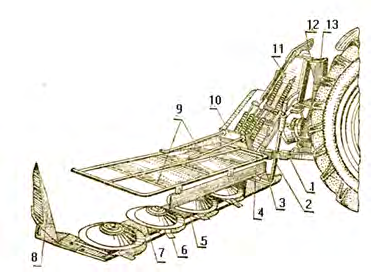
Depending on working conditions, mowers of various brands are used. Machinery systems include mounted single-bar mowers KS-F-2.1, rotary mounted mower KRN-2.1A, as well as mower KSG-F-2.1 for working on slopes and semi-mounted mower KD-F-4.0.
Mower-conditioners – for simultaneous mowing of grass and crushing of stems – KPS-5B, as well as rotary trailed mower-conditioner KPRN-3A.
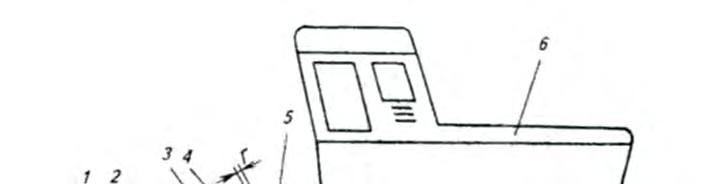
1 – reel; 2 – reel support; 3 – header; 4 – auger; 5, 9 – scrapers; 6 – self-propelled chassis; 7 – swath-forming device; 8 – conditioning unit; 10 – cutting unit; 11 – swath divider
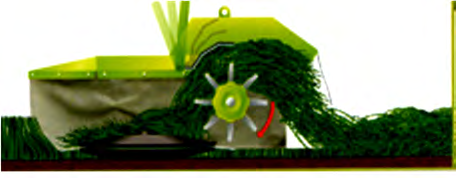
The use of mowers with a conditioner significantly accelerates the process of drying and wilting, and therefore ensures the preservation of nutrients.
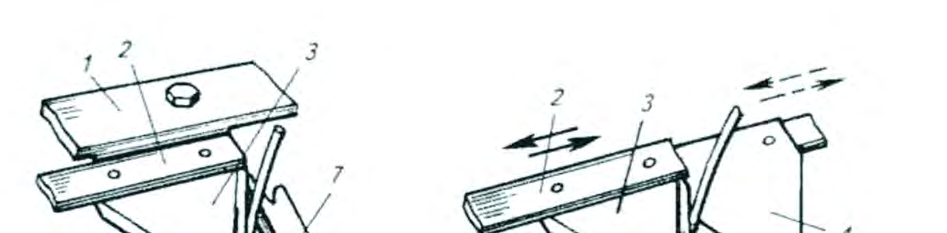
There are finger-cutter-bar, fingerless, and rotary cutting units. The first two perform cutting on the scissor principle, where the stems rest on the counter-cutting elements of the unit and are cut by segments fixed on the knife. In rotary units, the knives are fixed on a disk (rotary-disk) or a drum (rotary-drum), and they cut plant stems by impact. The bending of the stems is limited by their stiffness, inertia, and partially by the support of adjacent stems. The finger-cutter-bar cutting unit consists of a finger bar 1 and a knife 10, which performs reciprocating movement at an average speed of 1.8–3 m/s. The finger bar 1 is a steel strip to which steel fingers 7 are attached. At the top, the finger is equipped with a projection, and on the sides – with lateral projections. A steel counter-cutting plate 9 with sharp side edges is attached to it. The finger is attached to the finger bar with a bolt. The finger collar rests against the bar, holding the finger from lateral deviation. The finger has a groove in which the knife back 2 moves. Steel plates 3 of trapezoidal shape with sharp side edges (segments) and a head articulated with the connecting rod of the knife drive mechanism are attached to the knife back.
a, c, e – finger-cutter-bar; b – fingerless; d – rotary-drum; f – rotary-disk
Design and adjustment of finger-cutter-bar cutting units
During the cutting of stems, forces arise that press the knife back 2 against the finger bar 1. To prevent wear of the finger bar, friction plates 12 are attached to it, against which the knife back and segments rest. The diameter of the hole in the plates is larger than the diameter of the bolt, which allows the plate to be moved as it wears.
Hold-down clips 11 press the segments against the counter-cutting plates 9, thereby providing the necessary clearance in the segment-plate cutting pair. The toe of the segment 3 is in contact with the counter-cutting plate, and the base rests on the friction plate 12. Therefore, there must be a clearance of 0.3–0.5 mm between the segment and the rear edge of the counter-cutting plate. If it is larger, the clips are bent.
At the ends of the finger bar, inner 5 and outer 8 shoes are fixed. Under each shoe, there is a runner, the rear end of which can be raised and lowered, adjusting the height of the crop cutting.
Fingerless cutting unit differs from the finger-cutter-bar one in the design of the counter-cutting element, which uses fixed segments 4 or narrow fingers without a projection with an open counter-cutting plate. This type also includes units with two moving knives, where the stem is pinched between segments moving towards each other. Such units are used when harvesting tangled and lodged plants, as the fingerless unit is less prone to clogging in these conditions and ensures a high-quality cut.
Counter-cutting units (finger-cutter-bar and fingerless) have segments with a smooth edge, with a sharpening angle of about 19°. The side and front edges of the segments are hardened. Segments must be sharpened in a timely manner, as when working with blunt segments, the cutting force increases sharply, the quality of the cut deteriorates, and the cutting height increases.
For mowing seeded grasses and plants with stiff tubular stems, a knife made of segments with notches on the cutting edges is used. They cut stems with significantly greater force compared to smooth segments. Notched segments do not need to be sharpened.
Rotary and drum cutting mechanisms
Rotary-disk cutting unit consists of a bar on which rotors (disks 14) with articulated or rigidly fixed knives 15 are mounted. The knives rotate at a peripheral speed of 40–60 m/s and cut plant stems by impact. Such units allow for high forward speeds and ensure a high-quality cut of plants in high-yield areas.
Rotors can be designed with top, bottom, or combined drives:
- With a top drive, rotation is carried out by means of a V-belt transmission located on top of the cutting unit.
- With a bottom drive, the disks receive rotation from a gear transmission housed in a casing on which the disk bearings are mounted.
- Combined drive consists of the fact that part of the rotors is driven by a V-belt transmission, and part by a gear one.
The rotary drum cutting unit consists of a drum 16 rotating around a horizontal axis and knives 17, which are attached to the drum either pivotally or rigidly. Rotating at high speed, the knives cut the stems by impact and throw them onto a conveyor device. In such devices, the crop cutting is usually combined with their shredding.
Units with pivotally attached knives are used on universal forage harvesters, while those with rigidly attached knives are used on machines for harvesting coarse-stemmed forage crops.
Technological machine complexes for hay raking
Rakes are intended for raking hay into windrows.
Among rakes, the following have become most widespread:
- trailed wheel-finger GVK-6;
- transverse semi-mounted rakes GP-F-16;
- rotary rake-tedders GVR-6B.
a – transverse; b – rotary; c – wheel-finger


Read next
Farm machinery For agronomists
Technical features of mower-choppers and modern CLAAS forage harvesters
Farm machinery For agronomists
Features of combine threshing units and increasing the efficiency of grain threshing
Farm machinery For agronomists