
The influence of a polycarbonate greenhouse on the duration of the growing season of heat-loving crops
11 min read
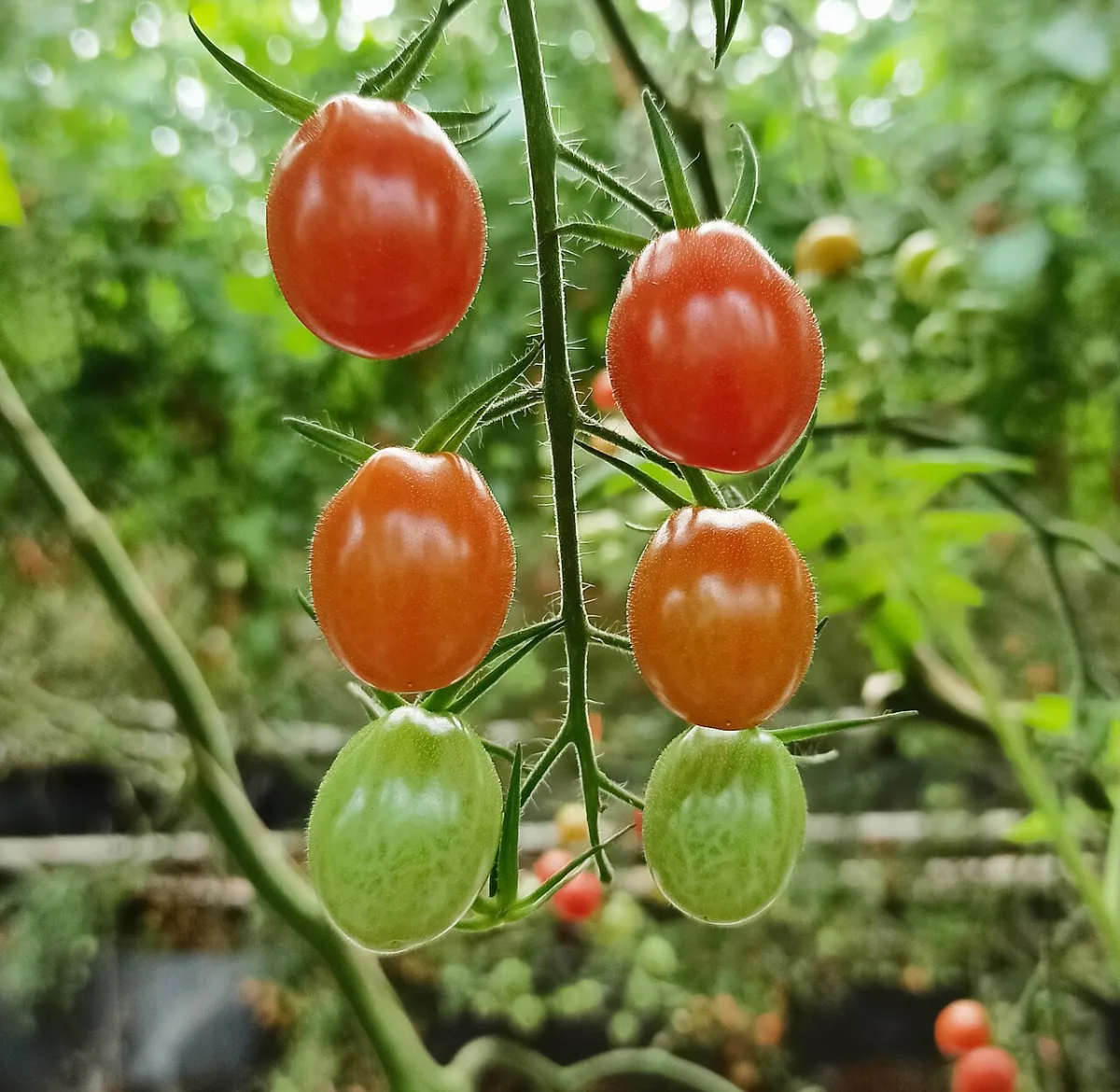
Undoubtedly, it is correct to ask yourself when planning your greenhouse activity: by exactly how many weeks or months will the greenhouse extend the boundaries of the growing season in your region?
Keeping track of time and remembering to count every ten-day period is the foundation of growing heat-loving crops. In the open field in the Central region, even just 10 extra days added to the frost-free period is a great achievement. But what kind of advantage does a greenhouse provide?
If in your initial view the issue with tomatoes was fundamental: no greenhouse means no tomatoes, and with a greenhouse—there are, then as you delve deeper into the subject, you start to care about which cultivars and hybrids are now available to you, and which ones are simply too southern and will not fit within the limits of the summer. And there are also purely practical questions:
- when is it safe to move transplants into the greenhouse;
- when to start sowing greens;
- and later—when to start preparing everything for winter.
A well-maintained PC greenhouse (polycarbonate, i.e., with an air gap in the walls, which is more heat-insulating), without drafty gaps and placed in the right spot, in long-lasting sunlight, really significantly pushes back the boundaries of the growing season. So much so that you can grow the best domestic large-fruited cultivars and hybrids without any particular difficulty regarding planting dates.
Soon you will begin to boldly conduct cultivar trials with almost any cultivars and hybrids available for sale, both with established classics like Bull's Heart and with new products. They will all have time to fully ripen right "on the branches," and all will produce the first red fruits as early as July-August, and the last ones in October. Your success will be composed not only of the extra days, but also of the accelerated development of the bushes throughout the summer months.
In steady warmth, tomato shoots grow rapidly day by day, they are confidently covered with fruits, and their tops sometimes rise by 5—10 cm per day.
After the planted transplants have gone through the period of acclimatization and rooting, the foliage of any cultivar is capable of filling the entire greenhouse to the top in just a month. Over the next month, the fruit sets grow and begin to ripen on it, and the foliage itself turns into an impenetrable jungle. Only systematic suckering and training to a specified number of stems will help "keep these vines in check" (the tomato is by nature a creeping and rooting semi-vine).
I will repeat the same thing, just in different words. When growing heat-loving crops in the Central region in the open field, or, simply put, in garden beds—such as cucumbers, pumpkin, and tomatoes—the novice vegetable grower usually adheres to certain time frames due to periodically bad weather and slowed plant development.
This schedule, if the beginner manages to keep to it, allows them to get at least some fruits of heat-loving crops. And that is already good, otherwise, they might have gotten nothing at all. In a greenhouse, however, they have a different regime, and certain guarantees of success appear (there they are dealing with melons, watermelons, tomatoes, sweet peppers, and eggplant).
Comparison reveals everything. Agree, the picture in a greenhouse will be brighter. With such a schedule, it is difficult to be left without ripe fruits, even if the cultivar chosen has a longer growing season than your region allows. Fruits can be obtained even from French, Italian, and English tomato cultivars.
As for eggplant, it is the easiest; you can safely take any European cultivars available for sale, since its fruit can be used for frying at any stage of readiness (it grows from the flower already blue).
In essence, the tomato is not all that heat-loving. No matter how southern a tomato cultivar or hybrid may be, its optimal temperature for development still lies within the following limits:
| Time of day | Temperature (°C) |
| Day | 25–30 |
| Night | 20–23 |
In a PC greenhouse in the summer, it is often warmer during the day than required, so with skillful management of night temperatures, plants receive everything necessary for the fastest possible growth and continuous fruit setting.
The same applies to watermelon and melon: they are not all that heat-loving; they are not equatorial species, after all. This is the main secret of the greenhouse's potential for growing tomatoes, peppers, melons, and watermelons in the Central region. You must be able not only to correctly regulate the temperature in the greenhouse during the day but also to heat the soil for the nocturnal release of heat.
A keen vegetable grower (and there is no doubt about it) from the very moment they planted their first tomato transplants or bought them at the market, constantly accumulates observations (based on results): what the tomato loves, what it responds to with a guaranteed harvest, and conversely, what it dislikes and what results in fruit rot or diseases.
Over twenty or thirty years of cultivation, especially in different gardens, in different climatic zones, and on different soils, an understanding of this mysterious crop is formed. Hardy and pliable on one hand, and unpredictably fragile on the other.
In some situations, a tomato can grow like a weed, with almost no care. Sometimes it sprouts from self-sown seeds all over the garden plot after a frosty winter, demonstrating that low temperatures are not at all frightening for it. In other situations, it "breaks" under the most careful tending.
And sometimes you read literature on its cultivation around the world, in which countries and geographic conditions this vegetable is a priority in terms of exports, and you are surprised: it is a humid maritime climate there, it grows under frequent rains. How can that be, since our literature says that it dislikes humid air?
Well, regarding many questions about what a tomato likes and what it does not, I have gradually found answers for myself.
The tomato — at any rate for many, even now — is a crop that is understood very slowly. A one-time success with it does not mean anything and should not be a cause for your overconfidence. Despite the mountains of books and magazine articles on its cultivation, despite the multitude of proposed technologies, there are few true experts — those aces who can confidently and clearly answer all arising questions.
For example, how tolerant is a tomato to dense planting? It is categorically intolerant; it does not like overcrowding!
And how tolerant is it to the volume of soil? Here it is the opposite: a tomato can be satisfied with a modest volume of soil. Within reasonable limits, of course, which allows growing it in containers or on a relatively thin layer of added soil.
And to what extent do ants harm the tomato? Actually, it likes ants and an anthill underneath it; they protect it from diseases. But it does not like earthworms earthworms.
Note that all kinds of creatures are also included in the list of important growing conditions, and this is often not taken into account. And so on. There are many questions and answers to them.
I want to say that standard basic knowledge about tomatoes may not be enough. Authors will admonish you that cultivars and hybrids are divided into determinate and indeterminate… Well, that is quite basic. Whether you remember this scientific term or not, I will only explain that the former are low-growing, and therefore are used only for open ground. We are not interested in them in this book, as it is about greenhouse cultivation. High-growing cultivars are a different matter; they are suitable for the extended growing season that we are talking about in this chapter.
An indeterminate (or "endless," continuous growth) cultivar or hybrid of tomato is specifically intended for greenhouses. During the season, it grows very tall and hits the transparent dome. As it grows, flower clusters are simultaneously formed along its entire height. They are set as early as June, sometimes even on seedlings at home.
Fruit development periods for large-fruited cultivars:
| Development stage | Period (days) |
| From fruit set to the onset of reddening | 50–60 |
Small fruit ripens faster.
Thus, an adult tomato bush always has fruits of different sizes and ages. With favorable weather, which allows 2- or 3-month-old tomato transplants to be planted in the greenhouse in early to mid-May, the bushes already produce their first red fruits by the end of June. The greenhouse grower's task is to maintain approximately the same, more or less optimal conditions for the tomato plant's development throughout the entire season. Then its bushes will simultaneously grow actively and be in fruit, providing red tomatoes continuously from July to mid-autumn. Indeterminate cultivars fit perfectly into greenhouse frames.
On the other hand, I do not want to paint an overly bright picture of easy success. A novice vegetable grower may not cope with indeterminate cultivars immediately, as they are often late-maturing and may prolong their growth, failing to provide a ripened harvest in time. And the reason will simply be that their owner does not yet know how to "count the season" and does not know about the 60 days of fruit development. And that is two months! It is easy to lose them…
An experienced vegetable grower feels much more confident throughout the entire season, calculating every decade, every week better. They clearly know what the plants should look like at any given time. And if, by the required deadline, they do not yet have a mass of ripening fruit set, the grower will take measures to immediately curb the growth of the foliage and switch it to setting fruit. In short, an experienced grower will cope. For a beginner, it is more reasonable to bet on early-ripening cultivars, perhaps even starting with determinate (dwarf, with limited growth) ones. Nevertheless, they still need to gain experience, so it is even wiser to plant both.
In crop production, you are moved forward significantly by experiments, comparisons, and a variety of methodologies. There is no need to be afraid of unsuccessful experience. It is wrong to get hung up on some single, supposedly best technology.
Attention: The growing season expands more due to the autumn boundary, not the spring one. The spring boundary in the Central region has, by and large, shifted by only two weeks: if tomatoes can be planted in the open field in your area in the second half of May, you can transplant them into a greenhouse in the first half.
The level of risk will be the same: here and there, plants can occasionally be damaged by a strong night frost, whereas a light one is not dangerous for them (it is implied that in the open field, if there is a threat of a light frost at night, tomatoes are covered with lutrasil or polyethylene film, or they grow under a film tunnel all spring).
The autumn boundary, however, is pushed back much more, by at least a month and a half: now it is no longer mid-September, but at least the end of October, or even in November, undamaged by frost red tomatoes, peppers, and eggplants still hang in night temperatures near zero.
Why is there such a difference between the short spring shift of the growing season boundary and the long autumn one? Mainly because adult plants with semi-lignified trunks and no leaves tolerate lower temperatures better than young ones.
In the spring period, without additional heating, early planting is associated with high risk. Returning frosts easily damage the tender young tissues of heat-loving plants. In the autumn period, the situation changes: the stems of the crops are already partially dehydrated, so ripening tomatoes tolerate lower temperatures without damage.
The main limiting factor for growing heat-loving crops in the Central region is heat, not a lack of sun. Plants have enough of the 40–70% of sunlight that penetrates even through dense cloud cover.
In the summer months, the Central region has a light advantage over the equator due to the long daylight hours and white nights. In total, over the season, the sowings may receive even more solar radiation. However, to obtain high-quality harvests, this resource is still insufficient due to the influence of climate risks.
| Factor category | Limiting conditions of open ground |
|---|---|
| Adverse factors | Cold soil, cold wind, cold nights |
To compensate for these adverse conditions, agronomists use greenhouses. Protected ground neutralizes the influence of cold air and temperature fluctuations. This becomes the main trump card of the farm, allowing for a significant extension of the growing season.
Features of agrotechnics in protected ground
Creating an optimal temperature regime in a greenhouse is just one of the conditions for obtaining a high harvest. The technological process of growing crops in closed ground includes many details that must be considered in combination. This is especially critical for demanding heat-loving plants:
- tomatoes;
- melons;
- watermelons.
Often, authors of popular growing methodologies mask technological errors with intensive chemical treatments. Total disease suppression allows for the demonstration of a beautiful harvest but makes the products environmentally "dirty." For a practical agronomist, it is important to obtain a stable result through precise adherence to technology.
Regular treatment of plantings with Bordeaux mixture and other chemical preparations leads to the accumulation of harmful substances in the fruits. Clean growing technologies require a deep understanding of plant biology and microclimate control.
An alternative to aggressive treatments is a scientifically based plant protection system. Precise agronomic knowledge allows for the successful control of pathogens without the use of herbicides and pesticides. This approach eliminates the shift to "dirty" working methods characteristic of large industrial complexes.
Read next
Soil and tillage For students
Influence of soil structure and composition on capillary moisture transfer
Soil and tillage For students
Diagnosis of soil profile compaction types: plough pan and natural overcompaction
Soil and tillage For students