
Technology for growing high-quality transplants in containers and organizing lighting
9 min read
Soil and containers: disease protection and root formation
Transplant quality begins with the right choice of soil mixture and container volume. Using fertile garden soil from your own plot is preferable to store-bought peat amended with mineral fertilizers. Natural soil allows plants to adapt in advance to the conditions of their permanent location and eliminates an unnecessary stress factor during transplanting.
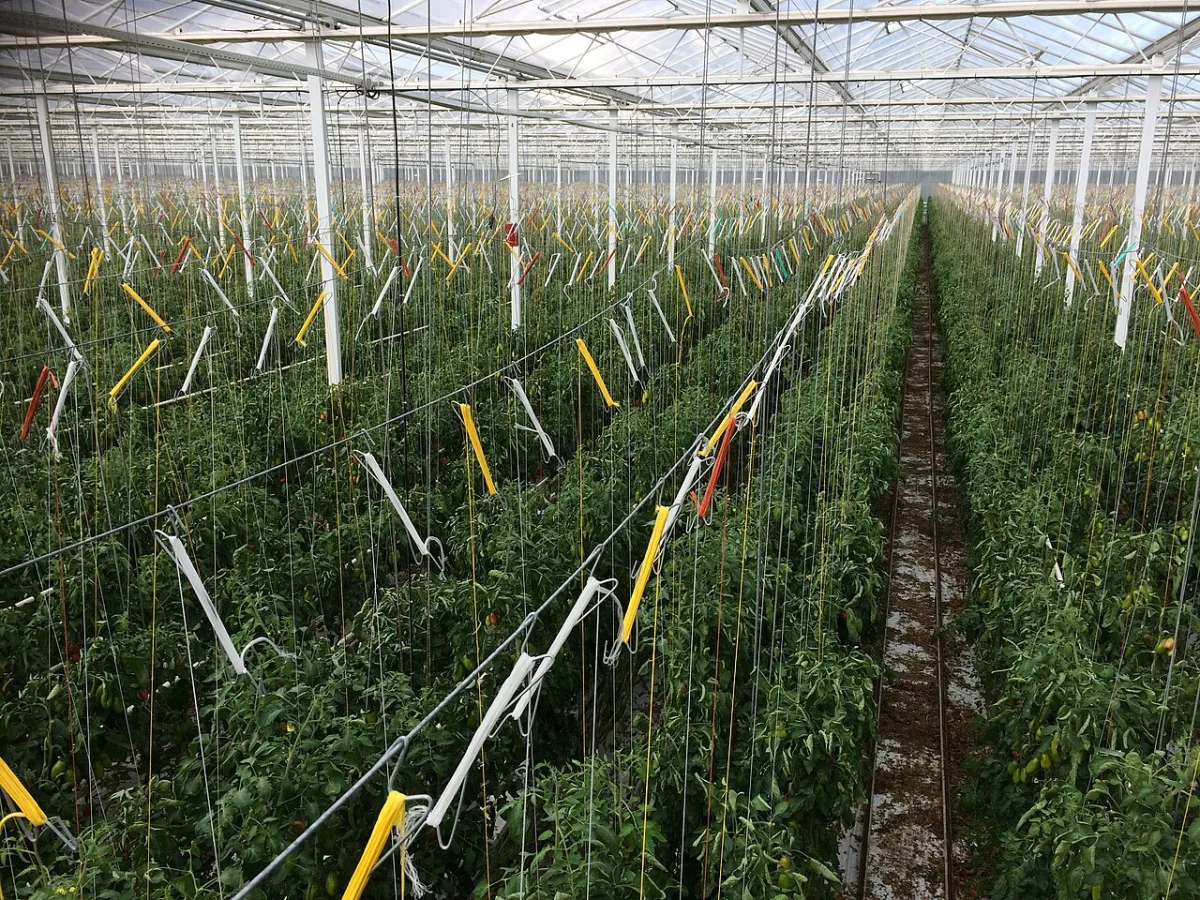
Container volume directly determines the development of the root system and the phytosanitary condition of the plantings. In greenhouse vegetable growing, the Technology of growing transplants">technology of growing tomato transplants in large plastic containers with a volume of 5–10 L or more (options from 0.5 to 20 L are available for purchase) is effective. Plants are planted in their permanent location directly in these containers after first enlarging the drainage holes in the bottom and sides with a knife. For the conditions of the Central region, this method reduces the risk of late blight infection and prevents "fatigue" of the transplants by the time of planting.
A large container filled with fertile soil allows for the complete elimination of mineral top dressing during the 2–3 months of growing transplants. Constant irrigation compacts and settles the soil, freeing up to 1/3 of the container space. Adding fresh garden soil towards the end of this period completely replaces traditional top dressing.
- Container volume for planting in a greenhouse — 5–10 l
- Growing period without top dressing — 2–3 months
- Soil settling from irrigation — up to 1/3 of the volume
- Target photoperiod — 12 hours
- Night air temperature — 15–18 °C
- Day air temperature — 20–23 °C
Light Regime and Hardening: Building Transplants' Resilience
In February and March, natural light is insufficient due to the short daylight hours, so transplants require mandatory supplemental lighting with fluorescent lamps. During this period, the seedlings develop flower buds, and a disruption of the light regime will lead to a loss of yield. The total duration of natural and artificial lighting should be about 12 hours a day. Starting in April, supplemental lighting is turned off completely, as the natural day becomes sufficiently long.
| Supplemental lighting period | Lamp operating interval |
|---|---|
| Morning supplemental lighting | 7–10 h |
| Evening supplemental lighting | 16–19 h |
The schedule for turning on the lamps is adjusted to the farm's operating hours, shifting the times earlier or later. Cold hardening is carried out throughout the entire growing process: it prepares the plants for cool nights in the greenhouse in May, June, and later in August and September. The base regime involves maintaining a temperature of 20–23 °C during the day and 15–18 °C at night, however, seedlings must be adapted in advance to near-zero values as well.
- In the first weeks of growing, take the transplants out twice to a glazed loggia or directly into the greenhouse for the day and night at an outdoor temperature of 0–5 °C.
- In April, transfer the transplants completely into the greenhouse for final hardening under closed-ground conditions.
Do not be in a hurry to cull and discard frost-bitten transplants. Solanaceous crops (tomatoes, peppers) are significantly more resistant to frost than cucurbits (cucumbers, melons), which perish at just –1 °C. Tomatoes and peppers easily withstand a temperature drop to –1 °C and even slightly lower. Give the damaged plants one week to recover: in the absence of sharp frosty winds, the plants successfully recover after gradual cooling.
Frostbite leading merely to slight wilting of the foliage is nothing to worry about; tomato, eggplant, and pepper plants recover easily afterward. If the frostbite was so severe that the leaves turned mushy and subsequently blackened and withered, then transplants will later regenerate foliage from the preserved stem. In solanaceous plants, the stem proves to be more frost-resistant than the leaves, and plants damaged in this way often produce a vibrant harvest later, as if their reserve forces have been activated. Sometimes a frost is severe enough to penetrate the stem itself, but this usually happens only in individual, weakest plants, which subsequently die.
Long-term practice shows that in the vast majority of cases, transplants that have been exposed to frost almost entirely recover. Lost plants can be safely categorized as statistical culls, which only improves the overall stock. We do not need weak plants anyway, so it is even good if some plants are lost at different stages of growing transplants (you should manually cull even the severely stunted bushes, the so-called "runts," as they will be of no use).
One should always plan for approximately one-third more seedlings than will ultimately be needed for the planting spots. And do not be afraid to carry out hardening.
Also highly desirable for tomato transplants is heat hardening. It will help the plants withstand summer overheating under the transparent dome, which is inevitable. This applies specifically to tomatoes, as they tolerate overheating the worst.
Heat hardening is easy to perform if the weather allows, during the first weeks of growing. Small seedlings should be packed along with the tray into a transparent bag and placed in the sun for "steaming." Moreover, the effect of hardening is higher at an early age. Two heating sessions under a transparent cover in the sun with a break of a few days will be sufficient.
Technically, everything is quite simple; you will only need a thermometer. On a sunny day, place the tray with seedlings into a transparent plastic bag and, in the middle of the day, around 12 o'clock, set it on a windowsill in direct sunlight. Roughly for two hours, but perhaps even less.
- Monitor the temperature to ensure it does not exceed the threshold of 40–45 °C.
- The bag acts as a hotbed; under it, the temperature in the sun rises significantly.
With prolonged exposure to direct sunlight, there is even a risk of "cooking" the transplants completely, to the point of death — this applies if you forget about them and they stay like that all day (although this refers to the May sun; in March–April, such heat is not yet present, and you don't need to worry too much about the seedlings).
Let the seedlings be exposed to heating of about 35–40 °C; that is the same temperature they will experience in a greenhouse in the summer during the day in the sun. If the temperature inside the bag has reached these values and does not rise further, which is typical for the low and mild March sun, you can leave the plants to "steam" for a few hours. If there is a perceived threat of a further temperature rise, an air gap in the bag will help stop the heating from exceeding these temperatures.
What other types of hardening make sense to apply? In the course of growing, with skillful irrigation based on the "inhale-exhale" principle, plants are subjected to both drought hardening and overwatering hardening. They should also experience all of this in advance before entering your greenhouse. Then neither cold, nor overheating, nor temporary drought, nor waterlogging from rain will cause them stress later on.
If they have also been introduced to your soil and its microflora instead of a sterile peat mixture, such transplants can be considered the best, regardless of their modest appearance. It may lose out to the lush, store-bought transplants that have not undergone such hardening, but in the long run of the season, justice will prevail. After being moved to the greenhouse, it takes root perfectly, as if not noticing the transplanting: and soon it is rapidly gaining growth and setting inflorescence after inflorescence.
* * *
I consider it necessary to repeat: in terms of the number of bushes, seedlings are sown and grown with a significant surplus. It is incorrect to set the number of plants exactly to the limit. At first, you can aim for twice as many seedlings as you will ultimately need for the number of spots in the greenhouse.
This is where a reserve of self-collected seed helps out. In terms of seedling size, any transplants show a strong variation, which is especially evident in eggplants: individual plants grow huge compared to small, lagging ones. You must not take the lagging ones! It is important for us to gradually select for our greenhouse only the largest specimens of each crop.
Then they can be placed at optimal distances, i.e., as spaciously as possible. Bushes yield a harvest in proportion to their size. Dwarfs produce a dwarf harvest.
Usually, people perform the culling of the sick and undersized parts indecisively because they have not been explained the theory of statistics. You cannot waste a planting spot on dwarfs!
Well-grown, strong transplants of the best cultivars are already half the success.
Depending on the region and the weather, gardeners begin to populate their greenhouses with grown transplants around the end of April – beginning of May. Inside polycarbonate, it is not the same as outside: May is a full-fledged month of the growing season in terms of temperature for growth! With our skillful handling of doors and vents, the planted bushes have a slow but steady start during May.
Read next
Greenhouses and covers For gardeners
Classification of hotbeds and modern methods of their heating in agriculture

Greenhouses and covers For gardeners
Construction and operation of efficient greenhouses for a home garden
Greenhouses and covers For agronomists