
Preparing the hotbed for the spring season and selecting structures for the site
13 min read
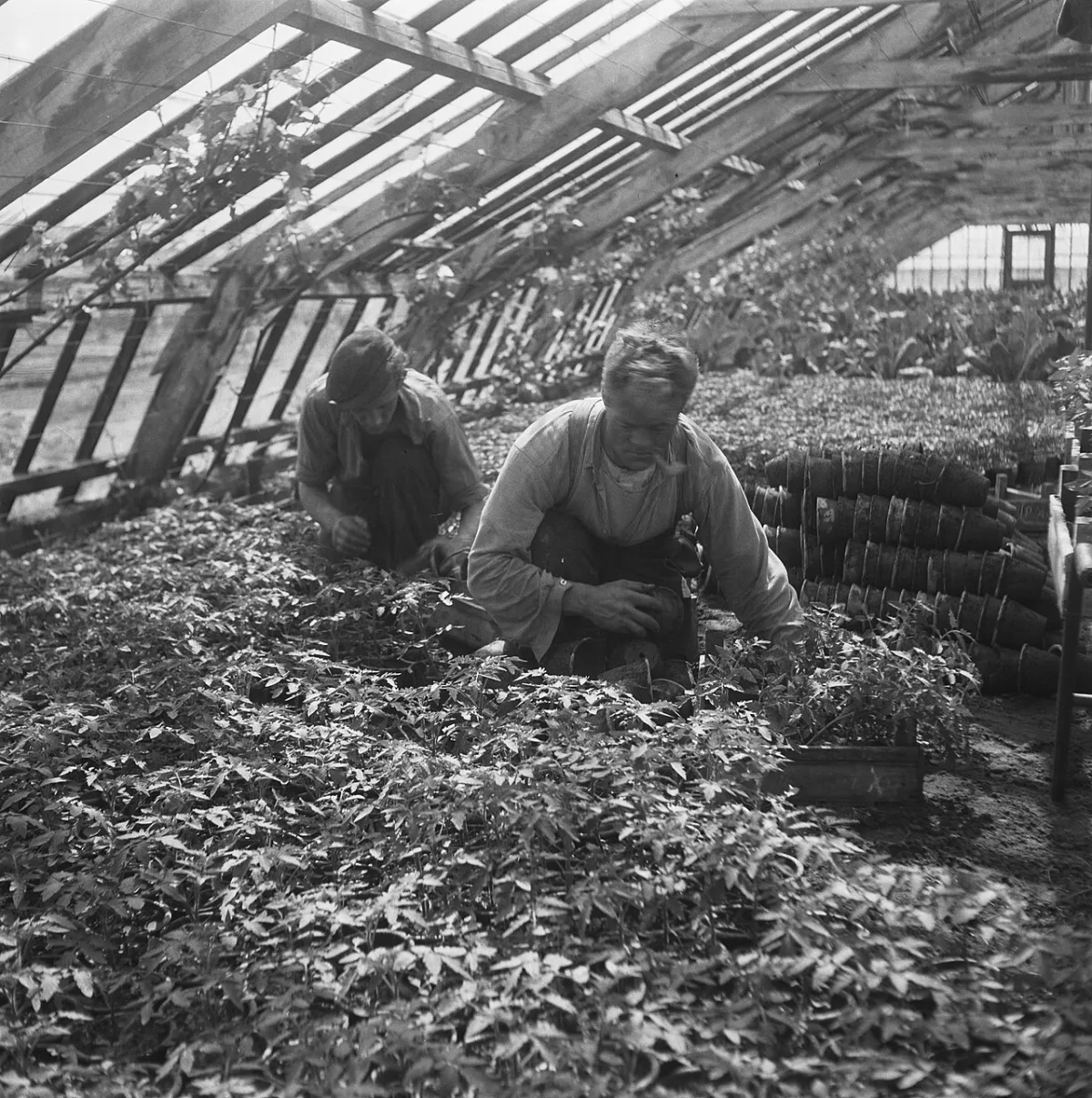
Hotbed preparation: biofuel activation and frame protection
For the proper operation of a hotbed using biological heating, it is essential to strictly follow the technology of bed preparation and soil application. A disruption of air exchange in the lower layers will cause the manure to stop "burning" and releasing heat. After the end of the season, the spent organic fuel must be removed from the pit and used as fertilizer for the plot.
- Cover the hotbed with frames, lay mats on top, and leave the structure for 2–3 days to let the manure settle.
- Sprinkle the settled manure with lime to prevent the appearance and growth of fungi.
- Cover the limed layer of manure with straw or mats before backfilling with soil.
- Fill the hotbed with good garden soil or old decomposed humus.
Do not apply a layer of soil that is too thick and do not compact it heavily. This will block air access to the manure, causing heat release to drop sharply.
The wooden elements of the hotbed operate under conditions of constant humidity and rot quickly, so they must be protected. The best way to protect wood from destruction is to impregnate it with hot linseed oil, and it is better to do this a couple of times. The hot mixture penetrates the pores of the wood much deeper than a cold one, ensuring long-term protection of the structure.
Heat the linseed oil exclusively in a water bath (by placing a tin can in a basin of water) so that it does not catch fire. The impregnation should be applied with a natural bristle brush.
Selection of hotbed design and covering materials
Above-ground hotbeds without a pit are essentially similar to small greenhouses. Their frames are assembled from wood, metal, or plastic, after which they are covered with film, secured with nails or large clips. For simpler tasks, cheap tent structures made of two glass sheets on clips are suitable, which are optimal for seed germination, protection of spring transplants, or covering slow-growing crops.
For strawberries and early carrots, long tunnel hotbeds made of flexible or rigid plastic are often used, where the film is stretched over curved wire hoops. Models in the shape of a house with vertical walls are more expensive due to higher material consumption, but allow for growing tall plants due to the additional height. A removable or lifting roof in such structures facilitates ventilation in warm weather and also simplifies weeding, irrigation, and harvesting.
Individual covers are used to protect single valuable plants at early stages of development or during winter bad weather. DIY versions made of waxed paper or cut plastic bottles are inferior to factory-made domes made of rigid plastic or glass. The special curved shape of the industrial dome walls directs condensation into the soil rather than onto the leaves, preventing sunburn and disease development in plants.
Key indicators of cover film quality are its strength and durability. Solar ultraviolet radiation destroys the structure of polyethylene, making it brittle and fragile. Regular film in the south lasts no longer than 4–5 months, which is why greenhouses in June-July are often left open, leading to harvest losses. The introduction of light stabilizers into the film composition protects the material from UV rays and extends its continuous service life to 2–3 years.
- Manure settling time — 2–3 days
- Service life of regular film in the south — 4–5 months
- Service life of light-stabilized film — 2–3 years
- Growth in popularity of special films — the last 3–4 years
How additives in modern greenhouse films work
Ordinary polyethylene without additives quickly degrades in the sun and does not protect the crops from adverse conditions. Modern modified materials solve three key tasks of an agronomist at once: heat retention, protection from burns, and the fight against excess humidity. This is achieved by introducing special components into the polymer composition — light stabilizers, infrared absorbents, and anti-fog agents.
Infrared absorbents convert ultraviolet light, which is harmful to plants, into visible light and retain heat radiation inside the greenhouse. This smooths out daily temperature fluctuations, protecting the crops from stress. Another common problem is cold condensation, which accumulates on the film due to the temperature difference inside and outside the greenhouse. Droplets falling on the leaves provoke the development of fungal and bacterial diseases. To combat this, anti-fog agents are added to the composition — substances that reduce the surface tension of water. Instead of individual droplets, a continuous thin layer of water forms on the film, which flows down the walls of the greenhouse.
The most practical solution is three-layer co-extruded films, where each layer performs its task. For example, in the three-layer "Antikap" film, the outer layer contains an infrared absorbent, the middle one consists of extra-strong polyethylene, and an anti-fog agent is added to the inner one. At the same time, the light stabilizer is distributed across all three layers. Such a structure makes the material uniform in strength in all directions.
- Temperature during spring frosts — 3–5 °C higher than outside
- Temperature in summer heat — 3–5 °C lower than outside
- Increase in average strength of three-layer film — by 10–15 %
- Increase in minimum strength of three-layer film — by 20–25 %
- Cost increase for each additive in the composition — at least 10 %
Three-layer modified films have outer and inner sides. When installing, strictly observe the orientation of the sheet: if the sides are confused, the anti-fog will end up on the outside and will not protect the plants from dripping.
Choosing the film type for specific farm tasks
When choosing covering material, it is important to compare its cost with its service life and physical-mechanical properties. Simple single-layer films are cheaper to buy, but they require annual replacement and do not protect plants from temperature shock. Multilayer and specialized materials pay for themselves through durability and an increase in yield.
Below are the characteristics of the main types of greenhouse films available on the market.
| Film type | Light transmission | Properties and service life |
|---|---|---|
| Unstabilized polyethylene | About 90 % of light energy | Ages and wears out quickly under the influence of ultraviolet light and heat within 3–4 months. |
| Polyvinyl chloride (PVC) | Up to 90 % of visible light, about 80 % of UV rays | Almost does not transmit infrared radiation, retaining heat at night. Lasts 2–3 seasons. |
| Foamed double-layer (monolithic + foamed layers) | 70 % of visible light | Reduces air temperature in the greenhouse during the day and retains heat at night. |
| Reinforced stabilized | Low | Has a pressed-in HDPE mesh (cells 10x12 mm, thickness 0.29–0.3 mm) or fiberglass. Distinguished by high strength and heat retention. |
| Ethylene-vinyl acetate copolymer (EVA) | High light permeability | Hydrophilic material with increased tensile strength. |
| Photodegradable polyethylene | Used for mulching | Used for frameless soil covering. Requires making round or slit-like holes before laying. |
| Light-converting "Biosvet" | Converts light spectrum | Contains phosphors, UV absorbers, and IR reflectors. Optimizes lighting for plant growth. Available in single-layer (red/bluish), three-layer two-color, and non-woven types. |
Although the introduction of additives increases the cost of the film, these investments pay off. Reduced plant morbidity due to the absence of dripping and protection from frosts directly affect the marketability of products and the volume of the harvest.
Stabilized hydrophilic polyethylene film differs from all others in that the water condensing on it rolls down instead of falling onto the plants. It has antistatic properties (does not collect dust, remains transparent for a long time). The service life is 2–3 times longer compared to conventional polyethylene. The ability to transmit infrared (thermal) radiation is reduced from 80 % to 30-35 %.
Heat-retaining antistatic hydrophilic polyethylene film is opaque in the infrared (thermal) part of the spectrum, as a result, the temperature underneath is 1.5-2 °C higher than under a conventional polyethylene film. In greenhouses covered with such film, heat is well retained at night and overheating from sunlight is reduced during the day.
Black polyethylene film is practically opaque. Intended for soil mulching: 0.04—0.05 mm thick — for one season; 0.06—0.08 mm — for 2-3 seasons; 0.1-0.12 mm — for 3–4 years.
Thus, it can be concluded that with a correctly chosen film type for the greenhouse, you have every chance to grow a harvest that is not inferior to one grown in a glass greenhouse.
The first, until recently the only, and still widely used type of covering is glass. Common window glass is most often used for glazing greenhouses. It has the following advantages:
- high light transmission;
- availability;
- durability with proper maintenance;
- ease of keeping clean.
However, there are a lot of disadvantages:
- low breaking strength (about 7.5 kg/m), leading to the glass breaking at the most inconvenient moment;
- high thermal conductivity, which threatens large heat losses.
Glass sheets are fixed so that they overlap (the recommended overlap is about 0.6 cm), which allows rainwater to drain completely without getting inside the greenhouse. The gaps that form in this process allow air to pass through, increasing heat loss, and over time they become overgrown with algae, reducing light transmission. Glass should be fixed in frames so that no gaps remain. A traditional method is thorough sealing with putty. The latter degrades over time, which leads to the need for replacement.
To reduce time spent on repairs, putty-free glazing methods are increasingly being used. Modern mass-produced greenhouses provide for the possibility of fixing glass in special grooves of sash bars. This greatly simplifies installation and operation, but increases heat loss due to incomplete airtightness. In general, for glass greenhouses, heat loss is the main problem.
There are two ways to prevent heat loss through gaps: meticulously seal them and monitor for the appearance of new ones, or use glazing materials that provide maximum airtightness during the winter.
Sealing gaps between glass panes is a thankless task. In large greenhouses, their total length can measure in kilometers. To avoid these problems, preference should be given to types of coverings that provide the maximum possible convenience in operation.
| 9 | 9 | 9 | 9 | 9 | 9 |
Using double glazing seems the most reasonable approach. In this case, heat loss is reduced by 36%. However, building a greenhouse with double glass is an expensive undertaking. So-called insulated glass units are the ideal option for double glazing. The airtight cavity between them is an excellent heat insulator. Mounted in special frames, they offer every possible advantage, but this is extremely costly.
One could provide for the possibility of lining the greenhouse from the inside with polyethylene film for the winter. The air gap between the film and the glass will create a double glazing effect; it is only important that no gaps remain in the film cover. This method is convenient because it is cheap and simple to execute.
In order for the film to produce the necessary effect, it must be well-stretched over a pre-made wire frame, forming a kind of dome inside the greenhouse. It should be taken into account that the tension angle of the film must be such that water droplets can flow freely down its outer surface without accumulating as lenses.
A radical solution to the problem of saving heat and installing double glazing is the use of modern polymer materials. Transparent roofing made of cellular polycarbonate is the most interesting in this regard. Two-layer transparent plastic of various thicknesses possesses a mass of attractive properties, which in the very near future may make it the primary material for greenhouse construction.
Cellular polycarbonate is distinguished by high light transmittance and low thermal conductivity. Being two-layered, it provides significant fuel savings.
The low specific weight and high strength of the material allow for the use of light, openwork structures without numerous supports, as is the case otherwise. The simplicity of installation and the presence of seals allow for proper airtightness, which again positively affects heating costs.
Lastly, and importantly: a plastic greenhouse looks very attractive and modern and can become a real ornament to your site.
Fig. 19. Installation of a greenhouse transparent roof
Fig. 20. Greenhouse roof mounting assembly
Any greenhouse consists of a foundation, load-bearing structures, and a covering. Depending on the size, the load-bearing structure can consist of load-bearing elements, structural trusses, purlins, and rods.
Use of structural elements depending on the greenhouse type:
Structural load-bearing elements and the role of the foundation
When planning plantings, it is important to correctly correlate the scale of the greenhouse with its engineering solution. Large greenhouse complexes require reinforcement of the frame, therefore trusses and purlins are mandatory for them. In standard small greenhouses, the stability of the structure is ensured by a standard set of elements:
- load-bearing structures and wind braces;
- ridge and gutter;
- foundation.
The foundation performs the most important engineering function — it transfers the entire mechanical load from the greenhouse to the soil. The support must stand firmly so that the underlying rock can bear this weight without deformation of the entire structure. A correctly laid foundation guarantees that the frame will not warp during seasonal changes and wind loads.
In addition to the stability of the frame, the foundation directly protects plants from unfavorable external factors. It acts as an insulating barrier, smoothing out sharp temperature fluctuations, protecting plantings from cold, heat, and excessive external moisture, and also blocks the path into the greenhouse for mice.
Read next
Greenhouses and covers For gardeners
Frame covers and modern agrotextile materials for plant protection
Greenhouses and covers For agronomists
Siting of greenhouse structures and selection of polymer film covers
Greenhouses and covers For gardeners