
Using organic biofuel for efficient heating of greenhouse beds
13 min read
1. Selecting organic feedstock for heating hotbeds
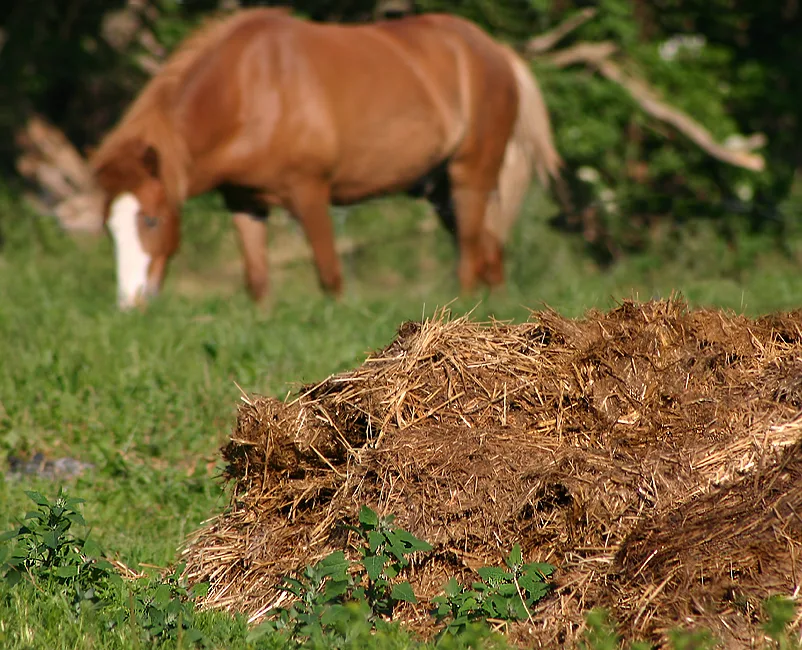
For the successful cultivation of most vegetable crops in hotbeds, it is necessary to maintain a temperature within the range of 20—30 °C. Providing such a thermal regime for a long period is possible through the self-heating of organic materials — biofuel. Traditionally, the most effective feedstock is considered to be horse manure, however, due to its scarcity, agronomists have to use alternative materials and combined mixtures.
- Optimal temperature for vegetables — 20—30 °C
- Peak heating temperature of horse manure — 65—70 °C
- Humidity of cow manure — up to 80 %
- Maximum humidity of peat in mixtures — 40 %
Pure horse manure heats up to 65—70 °C on the 7th to 12th day after turning. Such a temperature is lethal to the root system of plants. To avoid burns, horse manure must be mixed with less heat-conductive organic additives.
For filling hotbeds, various types of manure, household waste, and residues from wood or leather processing are used. Each material possesses its own thermal characteristics and requires individual preparation. Optimal selection of components allows for extending the heating of the beds.
| Type of biofuel | Humidity, % | Days to peak heating | Peak temperature, °C | Burning and heat retention regime |
|---|---|---|---|---|
| Horse manure | — | 7—12 | 65—70 | Cools to 30—35 °C 5—7 days after the peak and maintains this level for 50—70 days. Then it gradually cools to 20 °C. |
| Cow manure | Up to 80 | 18—20 | 40—45 | Dense and humid, heats up slowly. Cools to 15—20 °C 10—12 days after the peak, then maintains 12—15 °C for 10—20 days. Suitable only in mixtures. |
| Manure from small livestock (sheep, goats, pigs, rabbits) | Dry, loose | 10—14 | 50—55 | Requires mandatory moistening with water or liquid manure. Holds peak temperature for 5—7 days, then quickly cools to 15—20 °C. Burning fades within a month. |
| Household waste | 40—70 | 19—20 | Close to horse manure | Temperature decreases to 30—35 °C 7—10 days after the peak and stays at this level for up to 70 days. Suitable as a full-fledged substitute for manure. |
| Leather dust (tannery waste) | 70—72 | — | Low | Heats up very poorly due to high humidity. Used only as a component for mixtures. |
| Wood sawdust | 35—40 | — | Low | Provides weak heat. Used as a loosening material for dense feedstock. |
Household waste must be sorted with a pitchfork before being placed in hotbeds. Stones, glass, bones, tin cans, and other foreign objects must be completely removed from it.
Flax shives and fallen leaves are also used as auxiliary components. Flax shives heat up well when moistened and loosen dense feedstock. Fallen leaves increase temperature slowly, so they are used only as part of combined mixtures.
2. Technology and recipes for preparing peat mixtures
Peat in its pure form is unsuitable for filling hotbeds, as it practically does not self-heat. However, in mixtures with manure, it shows excellent results. Experiments have shown that a mixture of horse manure and peat in a 1:1 ratio allows for an average daily temperature in the hotbed of 28 °C, whereas pure horse manure provides only 26.6 °C. At the same time, the mixture heats up to a maximum of 46 °C by the 10th day, while pure manure reaches its maximum of 32 °C only on the 11th day.
For preparing biofuel, moss peat from upland bogs is best. It is harvested in areas with continuous sphagnum moss cover, where labrador tea, bog pine, and cranberry grow. Lowland peat from floodplains and ravines overgrown with sedge, reed, alder, willow, and birch can also be used, but thermal results will be lower.
Peat humidity for mixtures should not exceed 40%. Wet peat freezes in winter, turning into blocks that cannot be evenly mixed with manure. Peat harvesting is strictly carried out in summer, dried in the sun, and stored in piles.
Proportions of components in the mixture depend on the hotbed filling dates and the type of manure used. The correct ratio allows for controlling the rate of heating and the duration of biofuel combustion. This ensures a stable microclimate for the seedlings.
| Hotbed type or purpose | Primary manure | Proportion and type of peat in mixture |
|---|---|---|
| Early hotbeds | Horse manure | 35—50% upland or lowland peat |
| Mid-season hotbeds | Horse manure | 50% well-decomposed lowland peat |
| Any hotbeds | Cow manure | 35—50% poorly decomposed peat |
| Late hotbeds and nursery beds | Any manure | 2—3 parts lowland peat per 1 part manure |
Recipes for alternative biofuel and rules for its heating
For biofuel to consistently release heat, it needs to be properly prepared and the combustion process initiated on time. In case of a shortage of pure horse manure, agronomists use peat-fecal masses and mixtures based on cow dung, sawdust, shives, or household waste. They ensure a stable temperature regime in hotbeds with different filling dates.
- Preparation of the mixture before filling — 12–19 days prior
- Thickness of peat layers on the site — 25 cm
- Turning of the heap before filling — 8–10 days prior
- Height of storage stacks — up to 1.5 m
To prepare peat-fecal biofuel, take 1 part of poorly decomposed sphagnum peat and 3 to 5 parts of feces. In late hotbeds, a 1:1 ratio is used, adding 10–20% horse manure or household waste for better heating. If the peat bog is nearby, the mixture can be prepared directly on the bog. To do this, the drained area is ploughed or disked, the peat is dried, collected into ridges up to 60 cm high at a distance of 4–5 m, filled with feces in the furrows, and after absorption, it is loosened again, collecting the mass into heaps 2–2.5 m high.
If the peat has to be brought from afar, the layer-by-layer preparation of peat-fecal masses is organized on a special site starting in autumn:
- Clean the site of debris and distribute the dried peat in a 25 cm layer.
- Water the peat layer with feces in the required ratio.
- Lay the next layer of peat and water it again with feces, repeating the process until the heap is formed.
- Pack the finished heap tightly to prevent premature burning of the mass.
- 8–10 days before filling the hotbeds, turn the heap and place horse manure in its center to initiate heating.
Heating mixtures should be prepared 12–19 days before filling the hotbeds. If the heap does not heat up by itself, place hot stones in it in separate pockets or add easily combustible horse manure.
As an alternative to horse manure, combined mixtures from other available materials can be used. The compositions are selected depending on the hotbed operation schedule.
For early vegetable hotbeds, the following options are suitable:
- Horse manure with household waste in any proportions.
- Horse and cow manure in equal parts (1:1).
- Cow manure (not more than 30%) mixed with household waste or horse manure.
- Household waste with the addition of sheep or rabbit manure.
- Horse manure (50%), cow manure (40%), and sawdust (10%).
- Cow manure (80%) and sawdust (20%).
- Cow manure (85%) and flax shive (15%).
For medium (transplant-vegetable) hotbeds, new combinations are added to the recipes mentioned above:
- Cow manure and wood bark in equal parts.
- Cow manure (70–80%) and sawdust (30–20%).
- Cow manure and household waste in equal parts.
- Cow manure (70%) and flax shive (30%).
- Household waste (70%) and tree leaves (30%).
For nurseries, any mixtures from the lists for early and medium hotbeds can be used. The effectiveness of these compositions has been confirmed by practical tests.
| Type of biofuel mixture | Average daily heating temperature, °C |
|---|---|
| Horse manure (control) | 38.3 |
| Pure cow manure | 25.9 |
| Cow manure (80%) + sawdust (20%) | 38.8 |
| Cow manure (85%) + flax shive (15%) | 39.5 |
| Household waste | 36.3 |
| Household waste mixed with horse manure | 39.7 |
When harvesting biofuel for future use, place well-mixed mixtures into stacks up to 1.5 m high and 4–5 m wide. Make the edges of the stack gentle so that equipment can drive onto them for compaction. Pack the finished stack tightly and cover the edges to avoid premature burning.
Preparation of hotbed soil from humus and peat
Hotbed soil must be light, moisture-retentive, and breathable, have a neutral pH reaction, and a sufficient supply of nutrients. It is extremely important to prevent soil contamination with pests and diseases. To save resources, farms can prepare high-quality soil mixtures themselves.
Mass harvesting of sod destroys valuable meadow lands. Reduce its consumption by replacing natural sod soil with mixtures based on humus and peat.
To prepare high-quality soil, two main components are used:
- Humus soil. In autumn, the biofuel used in the hotbeds is unloaded and placed into a stack. During the following year, the heap is turned several times, and if it dries out, it is watered with liquid manure.
- Peat soil. Lowland well-decomposed peat is harvested in summer and stored in large heaps. Winter freezing reduces its acidity and improves its structure. In the second winter, the heap is covered with straw, manure, or peat crumbs to prevent freezing, and in spring, it is sifted through a screen.
To obtain high-quality peat soil, mix the sifted peat with an equal weight of sand (1:1) and add well-rotted manure at a rate of 1 part manure to 10 parts peat. Such a peat-sand mixture has excellent air permeability and an optimal level of soil moisture. The root system of the transplants forms fibrous and strong in it, which facilitates transplanting into open ground.
Peat soil is ready for use 1–2 years after its harvesting.
Field soil. In the absence of turf and peat soil, some farms are forced to use ordinary field soil. The use of field soil in hotbeds and greenhouses can be allowed only as an extreme temporary measure until proper hotbed soil is prepared.
In this case, soil is taken from fields previously used for sown grasses, grain crops, and grain legumes. It is not recommended to take soil from vegetable garden plots to avoid infesting hotbeds with pests and diseases of vegetable crops. To increase the supply of nutrients, it is recommended to add humus to the field soil. Furthermore, the field soil should be allowed to freeze during the winter to improve its structural condition.
These are the basic soils from which mixtures can be made for preparing hotbed soil.
Different crops require mixtures of different compositions.
Approximate composition of soils for individual crops grown in hotbeds
For transplants Turf soil 40% - humus 60% Cabbage, rutabaga Loamy field soil 40% + humus 60% Field soil 40%, - humus 40% + peat 20% Turf soil 50% - old hotbed soil 50% Field soil 40%, peat 20% - humus 30% - sand 10%
Cucumbers Field soil 50% - peat 20% - humus 30%, Tomatoes Field soil 50%: peat 20%, | humus
Turf soil 50% - old hotbed 50%, Onion, beet Old hotbed soil Field or turf 40%, -|- humus 40% -| peat 20% | Turf 90%, - sand 10% For production growing Cucumbers | Turf 60% humus 35% - sand 5% | Field 50%, - peat 20%, - humus 30%, Green onion, parsley, radish | Old hotbed humus Turf 40%, peat 20%. |: humus 40%
When determining the need for biofuel and soil, one can proceed from the following data (per one frame in cubic meters):
Need for biofuel Need for soil Early hotbeds 1.0 0.25 Mid-season 0.6 0.25 Parisian 1.2—1.5 0.25
It is necessary to know the weight of 1 m³ of soil and biofuel, which we provide in the following table:
Weight of 1 m³ of materials for biofuel and hotbed soil
Type of material Weight (in tons) Horse manure 0.5 Cow manure 0.5 — 0.55 Horse and cow manure, compacted 0.8 Waste 0.45 — 0.60 Humus hotbed soil 0.33 Bark 0.4 Decomposed black peat 0.32 Tree leaves 0.2 — 0.3 Sawdust 0.14 — 0.20 Miscellaneous soil 1.0 — 1.3 Sand 1.46
Replacement of the soil substrate in hotbeds is performed once every three years. Taking this into account, fresh soils should be prepared. Here it must be taken into consideration that good soils are ready 1—2 years after their preparation.
Read next
Greenhouses and covers For agronomists
Selection of substrates and management of mineral nutrition in greenhouses
Greenhouses and covers For gardeners
Technology for forcing green crops in spring hotbeds
Greenhouses and covers For gardeners