
Microclimate optimization in the greenhouse for plants and recreation
15 min read
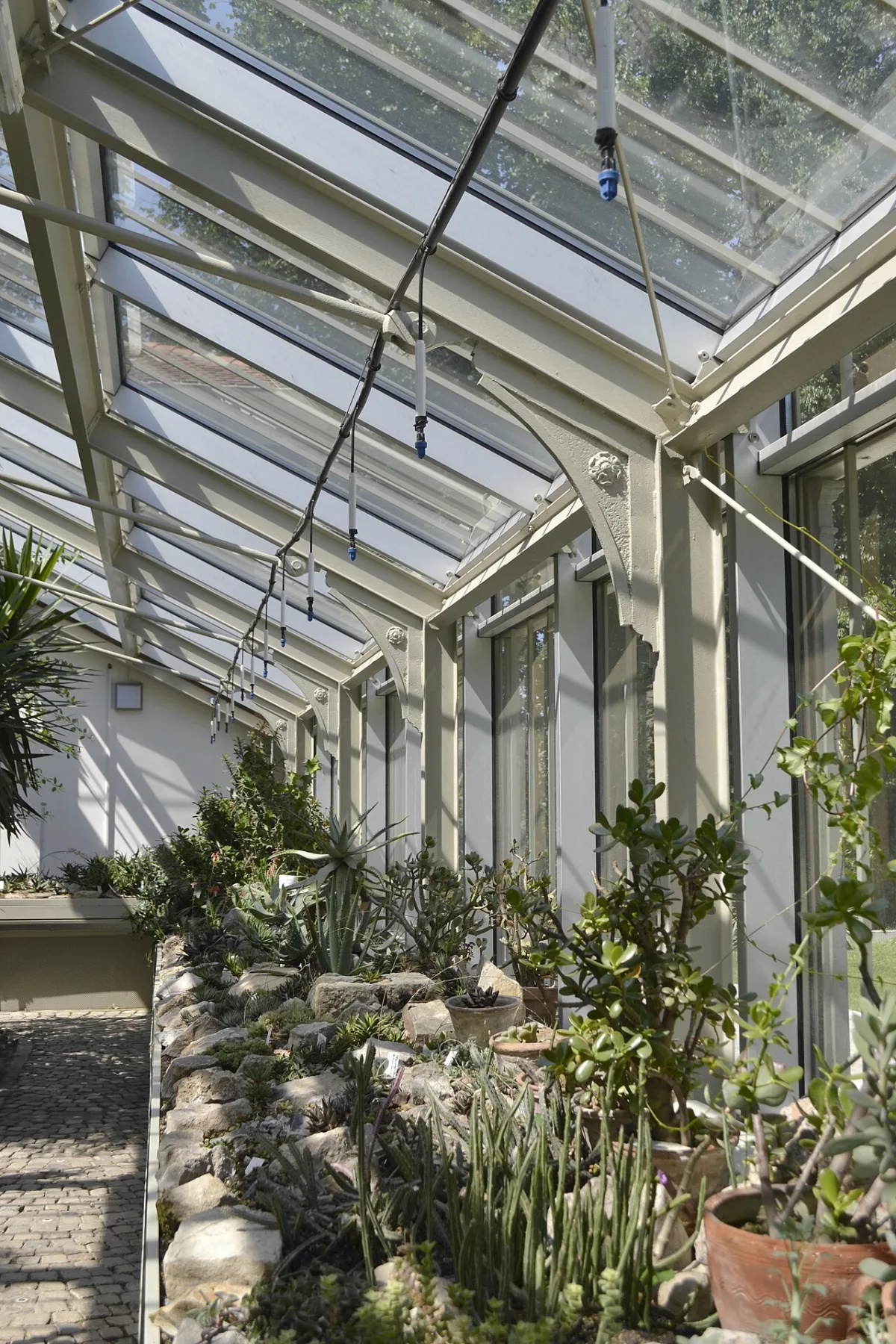
_ If greenhouse does not meet its purpose, i.e., it is unsuitable for growing plants and cannot serve as a recreation room, the reason for this may be an unsatisfactory microclimate within it. The author assumes in this case that the greenhouse was appropriately designed and built. However, even with a high level of craftsmanship from the greenhouse builders, ideal conditions for human stay or
plant growth will not be achieved if greenhouse has an incorrect orientation towards cardinal directions or is located in the shade, if the airtightness of the structures is not ensured (wind can blow through it, and heat will escape from it), or if artificial shading is not provided (at high temperatures).
If you cover the greenhouse premises with film or glass, it may have the following effect on its microclimate: the internal temperature, as a rule, will be higher than the outside temperature (during insolation even too high, sometimes reaching values at which seed germination of some plants stops). The soil in the greenhouse does not freeze; the amount of light is almost half that of the open air: the amount of sunlight penetrating the greenhouse depends on the type of covering material; some amount of light in certain areas of the sun's optical spectrum does not pass through the covering material; the influence of wind is almost completely eliminated, which significantly increases comfort for humans and only partially for plants; air exchange decreases, plants may lack carbon dioxide (CO2);
greenhouse protects against natural rain, and moisture intake by plants completely depends on the person who cares for them;
the access of beneficial insects to plants is hindered, as they can only enter the greenhouse through doors, ventilation hatches, or vents;
the penetration of pest insects into the greenhouse is also difficult, but if they still get into the room, they begin to multiply in the favorable conditions of the greenhouse, which makes a rather depressing impression on some people; —_ in the greenhouse, the humidity is higher than necessary for
Fig. 101. Plant life is regulated by numerous environmental factors
1 — plant development and fruiting; 2— plant growth; 3 — survival
Fig. 102. Temperature, humidity, air exchange rate, and solar radiation — environmental factors that regulate the level of comfort for humans -
1— comfort zone; 2 — permissible conditions zone; 3 — possible existence zone and
plants, as mold formation and fungal growth are observed during prolonged humidity;
in an unheated greenhouse, excessive humidity, as a rule, does not create additional difficulties for people;
during insolation, as a rule, favorable conditions for human stay are created in the greenhouse;
due to the presence of plants, the air in the greenhouse contains more oxygen than in an apartment.
are interconnected: for example, a decrease in the height of the sun in the afternoon leads to a decrease in the amount of solar lighting and thereby causes a decrease in temperature, as well as an increase in humidity
To regulate the microclimate of a greenhouse or conservatory, it is first of all necessary to organize ventilation systems.
Fig. 108. Methods for providing carbon dioxide in the amount necessary for biological plant growth
1 — from outside air; 2 — from natural soil in beds; 3 — from active compost; 4— as a result of fermentation reactions
Reduction of ventilation demand can be achieved by accumulating excess heat in a heat-accumulating mass (see ch. 5), using shading devices, and creating shower and fog-producing devices (see cl. 7.5).
’ The demand for carbon dioxide (CO2) can be met in the following ways:
due to emissions from soil with compost or from organic soil laid in hotbed boxes. This proves to be sufficient if the activity of the plant base is continuously maintained;
as a result of fermentation processes. If the temperature in the greenhouse is low, which prevents fermentation processes from occurring, then carbon dioxide can be supplied from a vessel through a polyethylene hose via a water seal (CO2 is heavier than air). In this way, carbon dioxide can be obtained, as a rule, even in greater quantities than required;
as a result of the presence of people in the greenhouse who exhale carbon dioxide, which increases its content in the air.
One of the tasks of the ventilation system is to reduce the level of odors, rotting formations, and mold. This is of great importance in the conditions of a humid, rainy autumn, when it is necessary to quickly ventilate the greenhouse premises. Mold growth can still be minimized by regulating cultivation processes and plant protection.
Due to the desire to save energy, the greenhouse ventilation regime is often violated. Below are two automatic devices that facilitate ventilation in greenhouses.
Automatic door and vent opener. An automatic door or vent opener, a so-called door pump, which is shown in Figs. 104 and 105, is a self-opening device that does not consume electricity. Small models are low-power. Strong wind or a door or vent that is too heavy can hinder their operation. At the same time, it is necessary to prevent the possibility of the door or vent jamming.
Automatic ventilation without electricity
To maintain an optimal microclimate in the greenhouse, it is not necessary to connect to an electrical grid. Ventilation can be automated using autonomous openers that operate on the expansion of liquids or gases. Such devices are mounted directly on vents, transoms, or doors. They allow for precise regulation of fresh air supply depending on the ambient temperature.
The principle of the device's operation is based on the physical properties of a special wax or gas hermetically sealed in a cylinder. As the temperature rises, the filler expands and pushes out the rod, opening the vent. When the air cools, the volume of the working medium decreases, and a return spring closes the frame. Setting the activation threshold between 13 and 30 °C is provided by an adjustment screw.
The automatic opener reacts exclusively to changes in temperature. The device will not trigger upon the appearance of mold or the accumulation of impurities in the greenhouse air.
Another autonomous option is a solar ventilation pipe, which works through solar heating. Its southern side is made of glass, and the internal rear wall is made of sheet iron painted black. In the sun, the air inside the pipe heats up significantly more than in the greenhouse, creating a powerful convection draft. In cloudy weather, the draft is maintained due to the natural chimney effect and wind pressure. In practical tests, such a system, combined with heat accumulators and shading blinds, proved more effective than an axial fan.
- Ventilation pipe dimensions — 0.5x0.5x4 m
- Window glazing area — 25 m²
- Orangery floor area — 30 m²
- Analog fan power — 140 W
- Maximum air temperature — 4 °C
At an outdoor air temperature above 30 °C, standard ventilation is insufficient. In this case, it is recommended to shade the plantings, use artificial mist, or spray cold water.
Seasonal ventilation schedule and light regulation
Timely ventilation regulation directly affects plant health. At the beginning of the growing season, especially in March and April, the weather is unstable. If the vents are left open for too long, there is a risk of overcooling the plantings, and if they are kept closed, the plants will suffer from overheating. During this transition period, it is recommended to use automatic doors or thermal actuators on the vents.
For manual ventilation control, one should be guided by monthly average norms. Below is the optimal ventilation regime during the daytime. The calculation is based on the fact that the soil releases carbon dioxide, and heat accumulators are installed in the greenhouse to maintain nighttime temperature. It also assumes the use of shading means in case of intense solar activity.
| Weather | Jan | Feb | Mar | Apr | May | Jun | Jul | Aug | Sep | Oct | Nov | Dec |
|---|---|---|---|---|---|---|---|---|---|---|---|---|
| Sunny | 0 | 1 | 2 | 3 | 3 | 3 | 3 | 3 | 2 | 1 | 0 | 0 |
| Cloudy | 0 | 0 | 1 | 1 | 2 | 2 | 2 | 1 | 0 | 0 | 0 | 0 |
Table notation: 0 — vents fully closed; 1 — vents slightly open; 2 — vents half-open; 3 — vents fully open.
Greenhouse use usually begins on sunny days in February or March, when the soil and air warm up to comfortable temperatures. During this period, natural light is quite sufficient for active growth. In the autumn, the opposite situation occurs: there is still enough warmth in the greenhouse, but due to the short daylight hours, the plants experience a lack of light.
During the summer months, deciduous trees planted in front of the greenhouse help regulate the heat influx. They create natural shade during the hottest period of the year. However, one should not leave too many trees on the southern side, otherwise, they will critically reduce the amount of incoming solar radiation.
Sometimes artificial lighting is installed. However, the authors of the book do not recommend using it. Plants require significantly more light than humans. For example, a person can read with lighting that is barely enough for plants to maintain metabolic reactions. Artificial light can still be used in early spring for growing transplants in special boxes. | Excessive greenhouse lighting is also unfavorable, especially for elderly people. Therefore, the authors recommend using materials that diffuse sunlight for greenhouse glazing. In March, sunlight reflected from snow is particularly irritating to vision. Later, plants require shade. Excessive light, like extreme overheating, can lead to unfortunate consequences for plants. The authors recommend using shading means to reduce solar illumination to 50%, resulting in 0.9*0.5=0.45 of the total outdoor illumination in the greenhouse. This is easy to set using a photoelectric exposure meter.
A greenhouse attached to a residential building generally receives less sunlight than a traditional greenhouse or conservatory. This is because the residential building blocks at least half of the sky. Illumination is significantly improved if all opaque greenhouse surfaces are painted white or covered with some other light-reflecting material. If the partition wall between the house and the greenhouse is not used for heat storage (see Chapter 5), its surface can be covered with a light-reflecting material, which will increase the illumination of the greenhouse. In this case, illumination during insolation is approximately the same as in an open area, and on a cloudy day, the greenhouse receives as much light as it would if the back wall of the greenhouse were made of glass and the residential building did not shade the greenhouse at all.
Temperature Changes and Regulation
Temperature regulation in a greenhouse differs significantly from regulation in a residential house. In a greenhouse, as a rule, additional heat sources are not required during the plant growing season. Temperature regulation here essentially involves managing natural energy flows. For this purpose, vents, shading devices, lockable hatches, curtains, water spraying, etc., are used.
The microclimate of a greenhouse is influenced by wind, snow, ice, insolation, cloudy weather, and changes
Г м - Уаь о — ке П.А НТВ а ке ОСИ | ^^ 4-7 АДА - ы р: въ:
Fig. 107. In a greenhouse with a back wall painted white or covered with an aluminum sheet, plants receive almost the same amount of illumination during insolation (1) as in the open air (3), and under cloudy conditions (2) — almost the same amount of illumination as in a greenhouse that
Fig. 108. Temperature change in a greenhouse compared to the outside air temperature. Monthly temperature drops — daily maximums and minimums (data from an economical
Fig. 109. Comparison of a solar greenhouse with a conventional one. Typical temperature curves obtained in an economical greenhouse in Puistola Park (sunny weather before noon, no precipitation after
1 — conventional greenhouse; 2 — solar greenhouse with thermal insulation on the north wall, a reflective surface, and a water heat accumulator; 3 — temperature of the water heat accumulator; 4 — outside air temperature | Fig. 110. Comparison of a solar greenhouse with a conventional one. Typical temperature curves (day without precipitation); 1 same as in | and—293 outside air temperature. Characteristic annual changes in minimum and maximum temperatures are shown in Fig. 108, and daily temperature change curves are shown in Fig. 109 and 110. All these curves display temperature changes of a small conventional greenhouse (but not a greenhouse attached to a residential building). In conventional greenhouses with polyethylene film cover, cooling is observed in the early morning hours (about 5 a.m.), unlike a greenhouse attached to a residential building, which receives heat from the living quarters. In conventional greenhouses, a decrease in the maximum and an increase in the minimum temperatures are also observed, and growing conditions improve significantly, for example, for growing lettuce and Chinese cabbage; for this, the authors of the book recommend using thermal insulation curtains or heat-accumulating mass. When using these means, there is no need for additional heat sources. An increase in temperature by even 1° is of great importance, as the relative humidity of the air decreases by approximately 6%. Thus, the night air entering the greenhouse needs to be heated by only 9—3°C so that on the leaves of the plants it does not
Temperature favorable for humans in a greenhouse attached to a residential building. Temperature changes favorable for a person in a greenhouse are very limited, since a person is in a state of rest (practically without movement), as
Temperature conditions for plant growth. The development and growth of plants occur within a small amplitude of temperature fluctuations, approximately from 7 to 30°C. However, the best conditions for plant growth are achieved with an even smaller amplitude of temperature fluctuations. Plants react not only to the air temperature of the greenhouse. During intense insolation, the temperature of plant leaves is often 10—12°C higher than the air temperature, and at night it can drop below the air temperature by 5—6°C. On cool nights, moisture accumulates on plant leaves, which creates a serious danger of freezing and mold formation. To combat
Some builders place a grill, a small fireplace, or some other hearth in the corner of a greenhouse. It is important that such a hearth does not produce smoke and functions well, i.e., that it does not turn into a decorative device. |
Air humidity in an attached greenhouse is, as a rule, excessively high, and on sunny days it is too low. To prevent the formation of excessively high air humidity during summer nights, ventilation hatches are left open all night (in dry weather). |
A certain increase in air humidity on sunny days can be achieved in several ways. The outdated method of "irrigation" of paths and all warm masses has an effect for one or several hours. Such "irrigation" is performed by spraying water using a watering can or a hose. This method is used, as a rule, only during overheating. It is advisable to create a water mist in the greenhouse very early in the morning, before the sun's rays penetrate the greenhouse. It is not recommended to arrange a water mist after 4 p.m., as the leaves of the plants must have time to dry before nightfall.
Microclimate in different parts of the greenhouse space and plant placement
The greenhouse microclimate is created by a combination of the interdependence of components. In different parts of the greenhouse, conditions can differ significantly. It is important to understand these differences, as well as the periods of their changes (during the day, when the weather changes, when the seasons change). Based on this, it is determined when and where planting should be carried out.
Fig. PT. Typical daily change of main factors
1— relative humidity; 2 — illumination, lx; 3 — air temperature, °С; 4 — CO2 concentration in the outside air, %; 5 — CO2 concentration in the inside air, %
Read next
Greenhouses and covers For gardeners
Calculation of greenhouse natural ventilation parameters for air exchange optimization
Agrochemistry For students
Application of carbon fertilizers to increase crop yield
Agrochemistry For students