
Features of carp breeding in pond farms of fish-farming zones of Russia
19 min read
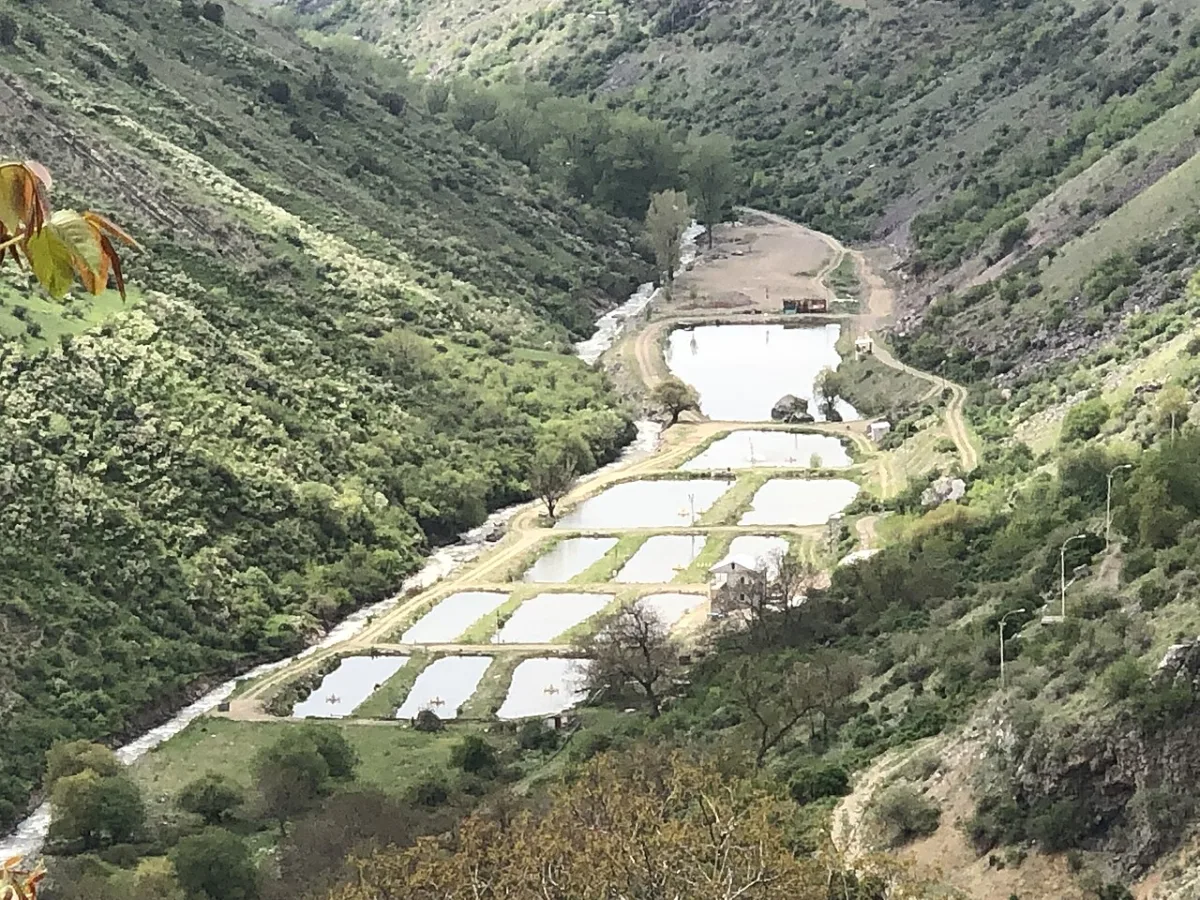
In Russia, carp is the main object of commercial fish farming, and it is raised in 6 fish-farming zones. Table 1 – Fish-farming zones of Russia
Days with temperature Start of Growing Season Zone over 15 °C of the warm period (kg/ha of fish per year) 1 60–75 7/05 – 16/06 70 2 76 – 90 28/05 – 12/06 120 3 91 – 105 23/05 – 2/06 160 4 1 0 6 – 120 15/05 – 22/05 190 5 121 – 135 5/05 – 12/05 220 6 1 3 6 – 150 26/04 – 10/05 240
Southern part of Buryatia and Udmurtia, Mari El, Krasnoyarsk Krai, southern part of Khabarovsk Krai, Tver, Ivanovo, Novosibirsk, Kemerovo, Pskov, Omsk regions, northern parts of Nizhny Novgorod and Moscow, southern part of Kostroma, Irkutsk, Leningrad, Novgorod, Tyumen, Chita, Yaroslavl and Sverdlovsk regions
Northern part of Bashkortostan and Tatarstan, Altai and Khabarovsk Krais, Jewish Autonomous Oblast. Republic of Khakassia, Vladimir, Kaluga, Kurgan, Kaliningrad, Ryazan, Smolensk, Tula, Chelyabinsk regions, southern part of Moscow and Nizhny Novgorod regions.
Southern part of Bashkortostan and Tatarstan, Mordovia, southern part of Primorsky Krai. Kursk, Samara, Oryol, Penza, Tambov, Ulyanovsk regions, northern part of Karaganda, Kostanay, southern part of Ryazan regions.
Belgorod, Voronezh, Orenburg, Saratov, northern part of Kostanay regions.
Volgograd, Rostov and Ural regions,
Kabardino-Balkaria, Dagestan, Chechnya, Ingushetia, Krasnodar and Stavropol Krais, Astrakhan region.
Pond farms come in two main varieties.
Full-system farms – where fish are raised starting from the egg stage to obtaining marketable fish (or broodstock).
Non-full-system farms. These either house broodstock, incubate the eggs obtained from them, rear larvae to the fingerling stage and sell fingerlings for further growing (fish hatcheries); or they grow fingerlings purchased from fish hatcheries to market weight and then sell them (commercial farms).
Carp are kept in shallow (depth up to 1 m over at least half the area, maximum depth up to 3.5–4.0 m) low-flow ponds with water that warms up well. A system of ditches is built at the bottom of the pond, through which water (and fish) flow into the fish collection pit located near the spillway device during pond drainage.
− riverbed ponds, when the channel of a small river, stream, or ravine is blocked by several dams, forming a cascade of ponds;
− floodplain ponds, when a system of dams is built in a river floodplain, between which
Water can enter the ponds from rivers, streams, reservoirs, springs, artesian wells, etc. It is better to supply water to the pond through a pipe located above the water level so that the flowing stream is saturated with oxygen.
Spawning ponds. Their area ranges from 0.05 to 0.1 ha, depth from 0.15 to 1.20 m (average – 0.4–0.5 m) for optimal water warming. Protection from northern and north-eastern winds is desirable. Spawning ponds are located in quiet places. Ditch depth – 0.4 m. The bottom should be seeded with soft meadow grasses. Spawning ponds are usually drained after the larvae are transferred until the next spawning.
Fry ponds. Their area ranges from 0.5 to 1.0 ha, depth from 0.5 to 0.8 m. It is better to locate fry ponds near spawning ponds to facilitate the transfer of larvae.
Rearing ponds. In these, fingerlings are reared until hibernation. The area of a rearing pond is from 10 to 20 ha, depth from 1.0 to 1.2 m, and 0.2–0.3 m deeper if there are many fish-eating birds.
In farms with a three-year rotation, there are rearing ponds for two-year-olds as well; they are made 0.3–0.5 m deeper than those for fingerlings. The total area of rearing ponds in a farm should be at least 15% of the area of fattening ponds.
Fattening ponds. In these, fish fatten up before sale. The larger such a pond, the more productive it is: ponds with an area of 150 ha yield more fish than 100 ha ponds, and these, in turn – more than 50 ha ponds. In Russia, the area of ponds is usually from 50 to 100 ha. The depth of fattening ponds is from 1.2 to 2.5 m, maximum – 3–4 m. Deeper ponds are more productive than shallow ones (in a pond 3–4 m deep, the production of carp two-year-olds is 3.7 kg/ha higher, and three-year-olds – 2.5 kg/ha higher than in a pond 1.2–1.3 m deep). The depth of ponds varies in different regions. Full water exchange in fattening ponds occurs in 25 days; if there are signs of fish kill, the water exchange is accelerated.
Wintering ponds. These are ponds where fish are kept during winter. There are such ponds for broodstock, for replacement stock, for fingerlings, and for two-year-olds. The area of such ponds is from 0.2 to 2.0 ha.
The depth of a wintering pond depends on the ice thickness (in northern regions, ice is up to 1.2 m thick). Wintering ponds are always excavated, on dry and dense soil (the water cools down less in them). The flow rate is regulated so that the water flowing out of the pond contains at least 3 mg/l of oxygen.
Broodstock ponds. In full-system farms and hatcheries, they are used to keep broodstock. The depth of broodstock ponds is from 1.2 to 2.5 m, maximum up to 4 m.
Broodstock ponds. These are used in full-system farms and nurseries to hold fish that replace culled broodstock. The depth of broodstock ponds ranges from 1.2 to 2.5 m, with a maximum of 3–4 m.
Quarantine ponds. These are used to hold fish suspected of having any diseases, as well as fish brought from other farms. The area of such ponds ranges from 0.1 to 0.5 ha, with an average depth of 1.2 m. These ponds should be located at a distance from the others (no closer than 20 m). Water discharged from quarantine ponds must be disinfected.
Isolation ponds. For adult fish with obvious signs of disease. The depth over 60% of the pond area is 1.5 m. These ponds should be located at a distance from the others (no closer than 20 m). Water discharged from isolation ponds must be disinfected.
Carp farming cycle and broodstock preparation
The production process in a carp pond farm is clearly divided into two independent stages. The first stage is aimed at obtaining and rearing seedlings and takes from 10 to 12 months. The second stage ends with the production of market-sized fish and lasts from 6 to 7 months. Failure to meet deadlines or conditions at any of the stages directly reduces the final productivity of the water bodies.
- Duration of rearing fish seedlings — 10–12 months
- Duration of rearing market-sized fish — 6–7 months
- Area of a live fish cage — 0.1 ha
- Stocking density in cages — 78–125 kg/m²
- Oxygen content at the cage outlet — no less than 3 mg/l
- Water reserve in storage tanks — 3–5 days
- Obtaining seedlings: summer and winter maintenance of broodstock, nursery preparation, obtaining offspring, rearing fingerlings, their overwintering, and spring harvesting of wintering ponds.
- Rearing market-sized fish: preparation of grow-out ponds, stocking of yearlings, holding fish in grow-out ponds, final harvesting, and product sales.
Temperature regime of the water body in July and August has a key influence on the survival rate and weight gain of carp. In small ponds, the temperature factor is more important than the stocking density indicator. For temporary holding of fish before sale, live fish cages with an area of 0.1 ha and a side ratio of 1:3 or 1:4 are used. The cage depth is selected taking into account ice thickness: the non-freezing water layer should be 1.0–1.5 m. Farm storage reservoirs must have a water reserve ensuring 3–5 days of continuous operation.
In spring, broodstock are removed from wintering ponds and undergo a thorough veterinary examination. Healthy fish are divided into two categories: those with clear signs of readiness for spawning and those with indistinct signs. Fish of the first group are strictly passed through preventive medical baths before being stocked for spawning.
| Operation / Purpose | Treatment time / Distance | Applied preparations and concentration |
|---|---|---|
| Preventive bath | 5 min | 5% NaCl solution |
| Preventive bath (alternative) | 1–2 min | 0.2% ammonia solution |
| Short-distance transport | 0.5–1.0 h | NaCl (1 kg/m³), or baking soda (1 kg/m³ or 10 g/m³), or bleaching powder (22–24% active chlorine, 10 g/m³). Addition of dyes (malachite green, brilliant green, bright green oxalate) is permitted |
| Medium-distance transport | 2–10 h | Levomycetin (150–400 mg/l) or methylene blue (50–200 mg/l) |
| Long-distance transport | Over 10 h | Chlorophos (1–10 mg/m³) |
After processing, the broodstock are transferred to summer broodstock ponds, live fish cages, or left in the wintering pond. Males and females are kept separately; the stocking density for females is 2–3 individuals per 10 m³ of water. During the holding period, it is necessary to monitor the water temperature and adjust it by changing the flow rate.
Pond spawning: preparation of water bodies and campaign execution
Preparation of spawning ponds begins in early spring: the bed and ditches are cleared of debris, and liming, fertilizer application, and harrowing are performed. To create a natural substrate for spawning, the pond bed is sown with soft meadow grasses. The choice of crops depends on the hydrological conditions of the site.
| Groundwater level | Recommended grass mixture composition | Stand properties |
|---|---|---|
| High level | Reed canary grass, beckmannia, bentgrass, swamp bluegrass | Resistant to rotting in water, actively aerates the aquatic environment |
| Low level | Timothy grass, couch grass, crested wheatgrass | Form a dense sod, enrich water with oxygen |
It is forbidden to sow orach, clover, and brome on the bed of spawning ponds — these plants rot quickly in water, worsening the hydrochemical regime. Hard and acidic grasses (horsetail, sedge, rush) are not suitable, as carp avoid laying eggs on them. Sowing is carried out as densely as possible: with sparse vegetation, the loss of laid eggs reaches 25–30%.
In the absence of vegetation in the pond, artificial spawning grounds are set up: bundles of juniper, spruce twigs, tumbleweed, rice straw, or bunches of green synthetic threads are fixed on pegs. Spawning ponds are filled with filtered water at a temperature of 14–15 °C strictly 1–2 days before stocking the fish. This prevents the mass reproduction of predatory invertebrates that destroy eggs and larvae.
Ponds are filled early in the morning in clear and stable weather. After the water has warmed up by evening, the broodstock are introduced into the pond. In commercial fish farming, the nest method of planting is used (one female and two males) at a rate of 1–2 nests per 100 m² of pond area. Planting an increased number of males ensures more complete fertilization and increases the yield of juveniles. Pair planting (1:1) is used in cases of broodstock shortage or in breeding work.
During the development of fertilized eggs, the oxygen regime is critical. To prevent suffocation, increase the aeration of the water supplied to the pond, especially during the night and pre-dawn period—from midnight to 2–3 hours after sunrise.
Carp spawning occurs at dawn or dusk and usually concludes within 24 hours. The adhesive eggs attach to the plant substrate. The absolute fecundity of females weighing 5 kg is 600–900 thousand eggs or more, and the average relative fecundity reaches 180 thousand eggs per 1 kg of body weight. The effectiveness of spawning is evaluated 3 hours after its completion: a sample of 100 eggs is taken from each pond and examined under a magnifying glass. A rate of 80–85 % of fertilized eggs is considered a normal result.
Immediately after spawning ends, the water level in the ponds is lowered without exposing the grass with the fertilized eggs; the broodstock are caught and moved to summer brood ponds, where they remain all summer until they are moved to wintering ponds. This is necessary because the carp broodstock can be carriers of various diseases for the juveniles; furthermore, they can mechanically injure them and sometimes even swallow them. Then, the spawning ponds are refilled with water, exceeding the initial level by 10–15 cm, in order to prevent possible desiccation of the eggs and sharp fluctuations in water temperature in the mornings.
The duration of development of fertilized carp eggs until larvae emerge depends primarily on temperature conditions and the hydrochemical regime. At a water temperature of 17–20 °C, egg development lasts 3–6 days, and if the water temperature drops to 8–12 °C, the emergence of pre-larvae (free embryos) can occur on the 10th–12th day after egg fertilization. At 27 °C and fluctuations from 20 to 30 °C, embryonic development accelerates, but the hatching of pre-larvae decreases. A temperature of 30 °C is unfavorable, and if the oxygen content drops to 3.6 mg/L, it becomes fatal.
The size of the eggs also matters. Large eggs contain more yolk and are characterized by higher viability: they develop faster, and more larvae are produced from them than from medium or small eggs. The quality of the eggs is influenced by the conditions and nutrition of the broodstock. In broodstock kept in unsatisfactory conditions, both the fecundity and the quality of the large eggs decrease, and consequently, the quality of the resulting offspring deteriorates.
The hatched pre-larvae, 4–6 mm in length, have a small yolk sac, the contents of which are consumed as they grow. On the very first day after hatching from the eggs, the pre-larvae lead a sedentary lifestyle—hanging tail down. They are equipped with adhesive glands or a cement organ, which serves for attachment to underwater objects.
By the end of the second day and the beginning of the third day, when the yolk sac begins to be absorbed and the juveniles partially transition to external feeding, the pre-larvae turn into larvae. By the fifth to sixth day, when the yolk sac disappears in the larva, it enters the fry stage. The fry looks like a small, fully formed fish.
Thus, in the development of fertilized carp eggs and the first post-embryonic period of juvenile life, the following are distinguished:
- embryonic period – from egg fertilization to the emergence of the free embryo;
- early post-embryonic period – from the emergence of the free embryo from the egg until its transition to active feeding – pre-larva;
- larval period – from the beginning of active feeding until the complete absorption of the yolk sac;
- fry period – from the complete absorption of the yolk sac until the appearance of all signs of an adult fish (fry).
Despite the significant fecundity of carp and a high percentage of egg fertilization, the yield (survival) of fry is still low. This happens, first, because many fertilized eggs die from diseases and are destroyed by pests; second, from the moment the larvae become mobile, they are even more accessible to all kinds of predators than the dormant eggs. This is the main reason for both high losses of eggs and especially fry, as well as the low yield of fingerlings during the first growing season.
Predatory invertebrates (diving beetles and their larvae, water bugs) and frogs, as well as large tadpoles weighing 6–10 g or more, destroy young carp. The daily diet of the predators is presented in the table:
| Predator name | Number of larvae consumed (pcs./day) |
| Marsh frog | 17 |
| Large tadpoles | 5–8 |
| Diving beetle larvae | 7–9 |
| Water bugs | 4–8 |
It is very important to determine the most appropriate time for transferring fingerlings to fingerling ponds.
During the transfer period, a strict record of the yield of fingerlings from each nest and pond is kept. The results of the harvest and transfer are entered into a special ledger. When harvesting fingerlings, the water from the ponds is drained through a screen covered with clean gauze. They are caught at the outlet (when the water remains only in the ditch) by scooping them up with a gauze net. To avoid delaying the fingerlings during the transfer, it is necessary to prepare containers for their transport in a timely manner.
Canvas stretchers, milk cans, barrels, and tanks are used to transport fingerlings from spawning ponds to rearing farms. After harvesting the entire spawning pond, the number of caught fingerlings is counted using a standard. The standard is prepared as follows:
- A specific number of fingerlings are counted into a bowl or basin.
- Subsequent portions of water with fingerlings are collected, comparing them to the standard by planting density.
- A count of the number of portions of water with fingerlings is maintained.
- To determine the total number of transferred fingerlings, the number of portions is multiplied by the number of fingerlings in the standard.
Standards are prepared for 1, 5, 10 thousand pieces of fingerlings or more, depending on the volume of the container. This method is simple and widely used in fish farming. Data on the harvesting of spawning ponds are recorded in a log.
Factory method for obtaining carp offspring
The factory method for obtaining carp larvae has been used in fish farming since the beginning of the 60s. The biotechnological chain of artificial – factory – carp reproduction consists of the following links: obtaining mature gametes using pituitary injection, de-adhesion of fertilized eggs, their incubation, and rearing larvae in artificial, factory conditions
Selection of broodstock and preparation of pituitary injections
To guarantee the production of early carp larvae, the incubation facility is equipped with a water heating system. This allows for creating optimal conditions for embryo development and conducting the campaign at an early date, regardless of weather whims. Preparation of the broodstock begins during the spring emptying of overwintering ponds, combining the unloading with careful culling and selection of fish.
Only healthy fish without injuries or damage to the skin are selected for work. A female is prepared for pituitary injections if she has a soft, enlarged abdomen and pronounced reddening of the genital pore. Upon spring warming of the water to 16–18 °C, the gonads finally mature, and the fish's body enters a pre-spawning state. Males are selected by the release of a drop of sperm upon light pressure on the abdomen. They are required in 3–4 times fewer numbers than females, as sperm can be obtained from one breeder multiple times. For early production of larvae, 12–15 days before stocking the ponds, breeders are separated by sex and placed in earthen ponds with an area of 0.1–0.3 ha with well-regulated water exchange.
- Pre-spawning water heating — 16–18 °C
- Temperature during injection — 19–25 °C
- First dose for females — 0.3 mg/kg
- Second dose for females — 2 mg/kg
- Interval between injections — 12–20 h
- Maximum injection volume — 1 ml
To stimulate the maturation of gametes, fractional injection of an aqueous suspension of acetone-dried pituitary glands of cyprinids (wild carp, carp, bream, or crucian carp) harvested in spring or autumn is used. Only whole, white or light-brown pituitary glands that have retained their shape are used. The preparation is made immediately before work using a physiological solution (6.5 g of pure sodium chloride or non-iodized salt per 1 l of distilled water), as the suspension loses its properties within a few hours. The calculation of the pituitary gland mass is based on the entire batch of separated females, taking into account inevitable losses: for example, when processing 9 females, the suspension is prepared based on the needs of 10 individuals.
- Place the weighed pituitary glands in a porcelain mortar and grind thoroughly with a pestle until powdered.
- Using a syringe, add 6.5 ml of physiological solution and continue grinding until a uniform, slurry-like mass is obtained.
- Add physiological solution until the final calculated volume is reached.
Injection technique, maturation control, and egg collection
In the spawning temperature range of 19–25 °C, females are injected with the pituitary gland twice: the first dose is 0.3 mg per 1 kg of body mass, the second is 2 mg/kg with an interval of 12–20 hours. Males mature after a single injection of a half dose (from the total female dose), which is administered simultaneously with the second injection of the females. The suspension is injected while the fish are in damp canvas stretchers, on a soft table, or directly in the holding tanks. The volume of the injected preparation should not exceed 1 ml per fish.
The needle is inserted under a scale into the muscles between the dorsal fin and the lateral line at an angle to its full length, avoiding damage to the spine and puncture of the abdominal cavity. After withdrawing the needle, the puncture site is massaged with a finger for a few seconds to prevent the suspension from leaking out. After treatment, the fish are placed in earthen or compartmentalized cages, pools, or troughs with constant water flow. Injection times are calculated so that ovulation and egg collection occur during daylight hours.
As the water temperature rises, the dose of the pituitary injection is reduced, and the interval between the first and second treatments is shortened.
Estimated maturation times for broodstock after the second injection depend on the temperature regime:
| Water temperature, °C | Maturation time, h |
|---|
The first check of females for maturation is performed 2 hours before the expected time by turning the fish belly-up in the water. With light pressure on the abdomen, a mature female will release transparent eggs; the release of cloudy eggs indicates that the process is not yet complete. A repeat examination is scheduled in 1.5–2 hours. The onset of ovulation is also determined by indirect signs: changes in the females' behavior and the appearance of foam on the water surface. Males are not checked beforehand before milt collection.
All work involving egg stripping, milt collection, and de-adhesion must be carried out strictly under a canopy or indoors. Direct sunlight is lethal to gametes. Collection containers must be absolutely dry: even a few drops of water entering the stripped eggs or sperm before mixing makes fertilization impossible.
Egg stripping technique
Egg collection is a critical stage in working with broodstock, where any carelessness leads to the loss of eggs and injury to the spawners. To minimize fish mortality and obtain high-quality breeding material, stripping must be carried out strictly according to the rules, with mandatory secure restraint of the female.
- Fish retrieval. A mature female is caught and removed from the cage, making sure to pinch the genital opening with your fingers to avoid the loss of eggs.
- Preparation for collection. The fish is thoroughly wiped free of mucus and wrapped in gauze, leaving the abdominal area exposed.
- Restraining the spawner. Grasp the gauze-wrapped caudal peduncle with your left hand and hold the fish's head firmly with your elbow.
- Positioning. Hold the fish so that the genital opening is positioned directly over the rim of the egg collection container.
- Stripping. In well-matured females, most of the eggs are released spontaneously without massaging the abdomen. The remainder is carefully stripped by light massaging in the direction from the head towards the genital opening.
- Completion. Stripping must be stopped as soon as clumps of eggs and blood clots begin to appear.
Stop massaging at the first signs of blood or clumps. Excessive pressure leads to injury of the female's genital tract and reduces the quality of the collected eggs.
Read next
Fish farming For students
Increasing the fish productivity of ponds by the method of mixed stocking and polyculture
Fish farming For students