
Key economic features and specifics of modern agricultural production
4 min read
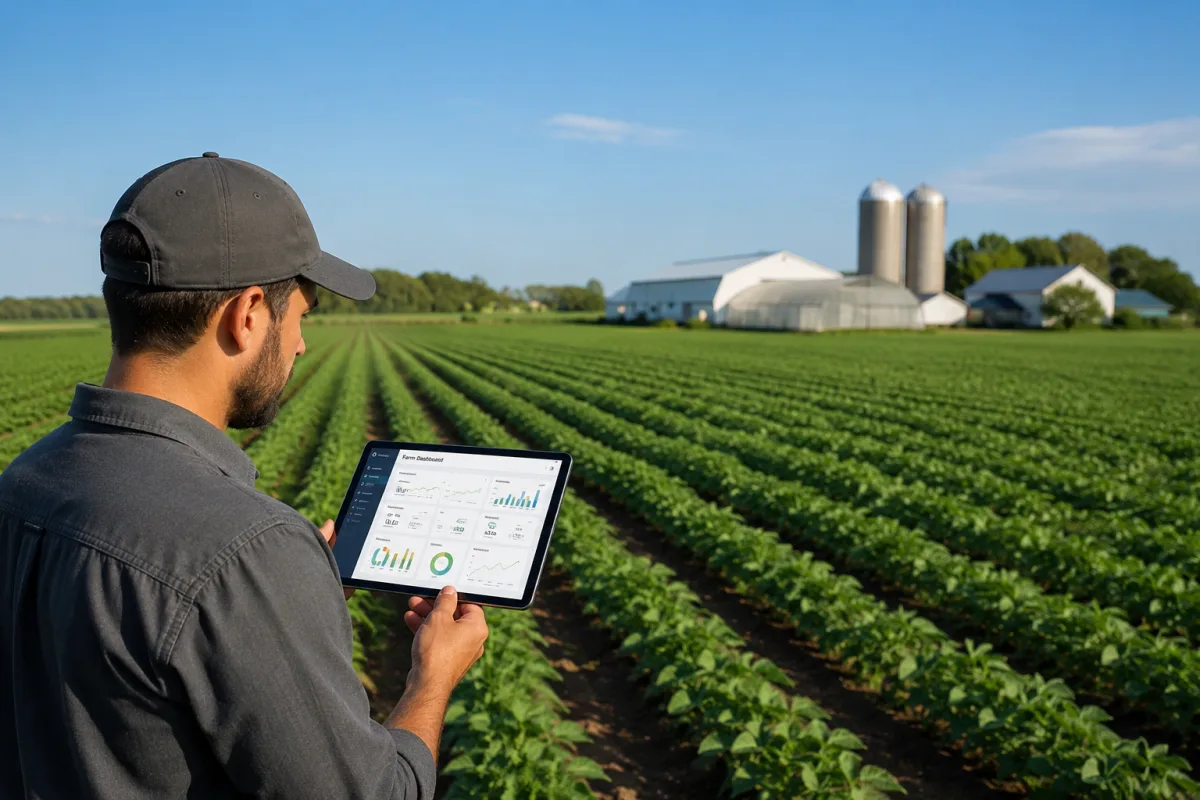
One of the conditions for successful agricultural development is taking its specific characteristics into account.
The specifics of agriculture must be considered during government regulation and support of this industry, as the results of agricultural production depend on changing, often unforeseen conditions, which requires the creation of reserve funds, for example, for feed and seed, a special insurance policy, and government aid. The state must provide assistance to agriculture not only in extreme conditions, because agriculture is not in a position to independently, without significant economic support from the state, meet the growing demand for food products caused by population growth and an increase in people's needs for high-quality food products.
Let us examine the features of agriculture in more detail. 1. The use of land as the main means of production.
A proper attitude towards the land, on which all the successes of economic activity depend, involves careful use and preventing it from being removed from agricultural turnover due to its limited nature, compliance with the requirements of zonal scientifically grounded tillage systems, meeting environmental requirements, and water availability for
Along with land, plants and animals, the development of which is subject to biological laws, are used as means of production in agriculture. In this regard, economic decisions taken must take into account the requirements of both economic and biological laws in their interaction. 2. Dependence on the surrounding natural environment (soil type, climate, microorganisms, natural vegetation, etc.), its unfavorable influence, using the achievements of scientific and technological progress and considering the laws of nature. 3. Seasonality of production and labor use arises as a result of the mismatch between the production time required to obtain products and the working period. In the production process, labor and resources are used unevenly throughout the months of the year. The duration of the working period is shorter. This is the time of direct human impact on the object of labor (ploughing, crop maintenance, harvesting).
The gap between production time and the working period is due to the natural development process of plants and live
Chapter. The importance and features of the industry's development animals. The seasonality of production can be mitigated or weakened, but it is inevitable due to the cyclical nature of the development of plant and animal organisms. 4. Spatial dispersion of production, volume, and perishable nature of products lead to high transportation costs, increase the cost price of products, complicate their sale, require predominantly mobile equipment and significant energy expenditure, and cause losses of crop and livestock production. To reduce such negative consequences, large investments in the industry, rational organization, and improvement of production concentration are required. Under these conditions, transport costs are taken into account. In agriculture, a portion of the produced output is used annually within the industry itself, which reduces the level of marketability and leads to the need for additional funds for creating reserve funds and storage. At the same time, each farm must pay special attention to the quality of the finished product that will be sent to the next production cycle and reduce the costs of obtaining it (seed, feed, replacement livestock). 5. Strong dependence of agriculture on the market of means of production and their prices. With uneven rates of price increases for agricultural products and industrial means of production, energy, and services, a multi-fold disparity arises. Every year, agricultural producers need to sell more of their products to be able to purchase industrial means of production. For example, to buy a combine harvester, it is necessary to sell more grain than in the previous year.
Agribusiness entities act as monopolies in relation to agriculture, which allows them to dictate their terms, in particular high prices. This leads to the deterioration of the material and technical equipment of farms, an increase in the time required to carry out work, product losses, and a weakening of resistance to the adverse impact of the external environment.
Agriculture is characterized by a difference from other industries in the division of labor and, consequently, in specialization.
The conditions of agricultural production require an optimal combination of several sectors in order to rationally distribute and consume resources, generate income evenly, jointly — through crop production and animal husbandry — use waste and by-products, use labor more efficiently and pay for it better, avoid the risk possible with narrow specialization, and accelerate the turnover of working capital.
Agricultural producers who know, correctly, and fully take into account the listed features of the industry achieve high production efficiency. The policy of state support for agriculture (product collateral, commodity credit, a system of subsidies and partial cost compensation, tax benefits, etc.) is also developed with its specifics in mind.
Read next
Economics For students
Economic performance indicators of the use of working capital in an agricultural enterprise
Economics For students
Economic role and structure of working capital of agricultural enterprises
Economics For students